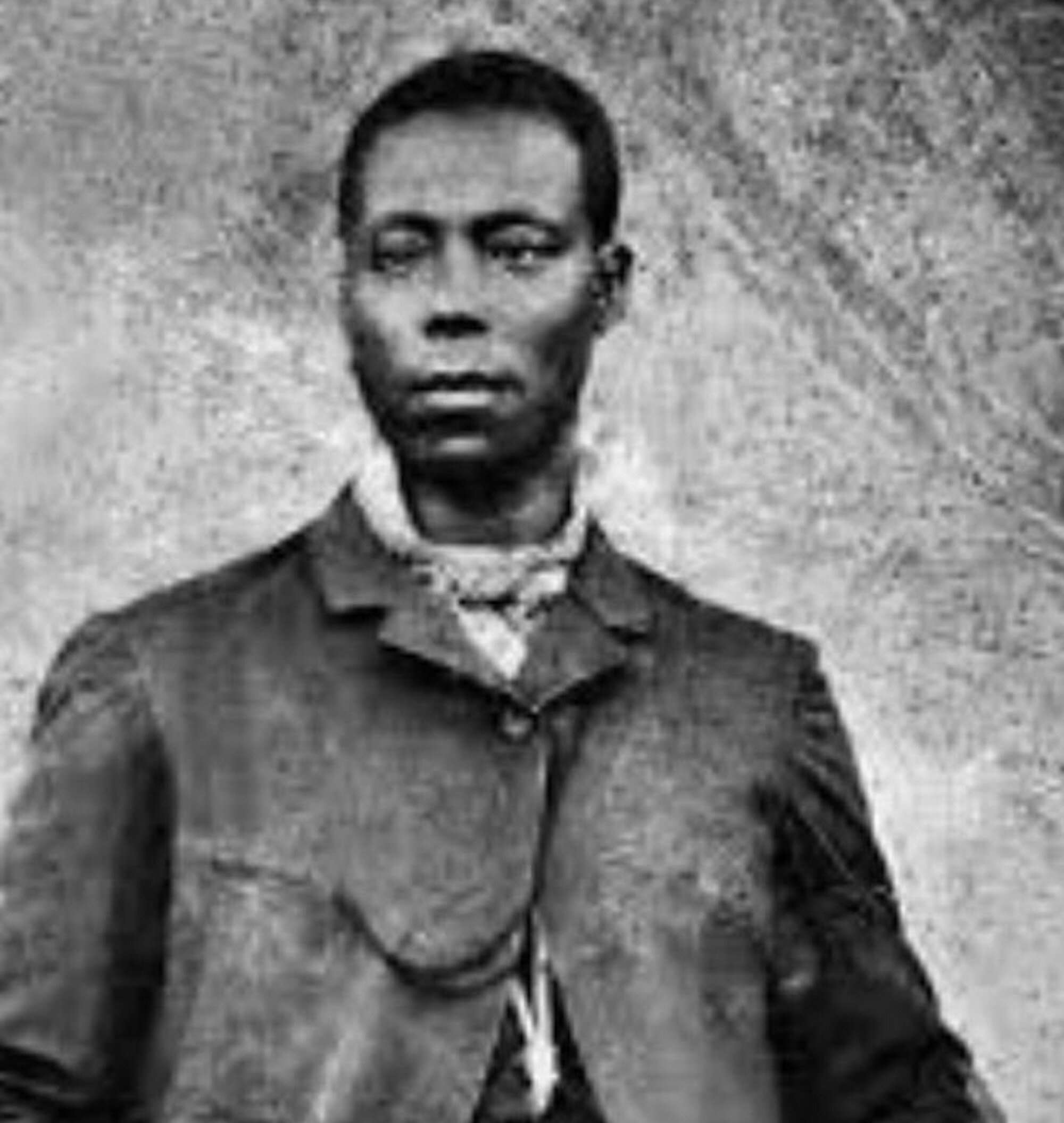
A musk deer, an Indian kingfisher, a young peregrine falcon: the work recorded under John Edmonstone’s name in Edinburgh ranged well beyond a single species. In 1822 he prepared animals for the university’s natural history collection. The surviving reports place him among the craftspeople whose hands gave a museum its visible contents.2
A craft learned in Demerara
Edmonstone had been enslaved in Demerara, in present-day Guyana, by Charles Edmonstone. There he encountered the naturalist Charles Waterton and learned to prepare birds for preservation. Taxidermy required close attention to a creature’s structure: a skin had to be preserved and supported so that the animal’s form remained available for examination.1
Waterton described their early work in his 1825 book, Wanderings in South America. His account is openly condescending, presenting John as a pupil who tested his patience. Yet it also records a substantial change in John’s life. Taken to Scotland by Charles Edmonstone, he became free, left him, and obtained work first in Glasgow and then in Edinburgh. Waterton’s few sentences carry a journey from coerced labour to earning a living through a specialist craft. The account belongs to Waterton; its judgement of John’s ability need not be accepted as an impartial assessment.3
An Edinburgh tradesman
Edinburgh’s 1822 directory listed him as a bird-stuffer at 37 Lothian Street. Research by historian Merle Patchett, published in 2026, identifies more than forty references to his work in museum records between March 1822 and January 1824. These show intermittent commissions, with specimens collected and delivered, rather than a salaried academic appointment. The evidence places his preparation work at his lodgings; it does not establish that the museum supplied a workroom. Edmonstone was participating in the city’s scientific economy as a tradesman with a service to sell.4
One report itemises work on a peregrine falcon and a northern diver from dried skins, alongside a stuffed haddock and a skinned cod. Another records a gnu entering the museum’s Low Room. The range matters: fish, birds and mammals posed different problems of shape and support. These entries describe repeated, practical assignments, rather than a passing association with a collection.2
One guinea for lessons
A letter of 29 January 1826 introduces his best-known pupil. Writing to his sister Susan, Charles Darwin said that he intended to learn bird preparation from a Black man in Edinburgh. He reported a charge of one guinea for an hour each day over two months. It was an affordable arrangement in Darwin’s eyes, but it was also professional instruction for payment. The timetable he described would require repeated practice, with a teacher able to demonstrate the work and correct a beginner’s handling of a specimen.5
Darwin’s letter presents taxidermy as something he wanted to learn, alongside the other activities of his student life. The proposed exchange was straightforward: Edmonstone possessed a useful skill, and Darwin would pay to acquire it. This is a small but unusually clear record of the relationship between a Black specialist and a young man entering natural history.5
A teacher remembered
When Darwin recalled Edinburgh in his autobiography, decades later, he described his instructor’s bird preparation as excellent. He also remembered spending time sitting with him and valued his intelligence and company. That recollection enlarges the relationship beyond the price and schedule in the earlier letter: the teacher was someone Darwin sought out for conversation as well as instruction.6
The contrasting judgements of Waterton and Darwin deserve attention. One complained about a learner; the other praised an accomplished practitioner. Between those encounters lay migration, freedom and years of work. A skill develops through use, and Edmonstone’s later expertise should be understood as an achievement in his own working life.3, 6
Knowledge made by hand
The preservation skills Darwin acquired helped him collect specimens during the Beagle voyage. Edmonstone’s lessons gave him practical training in preparing birds so that they could be preserved and studied.1
His museum commissions offer a more direct measure of his place in science. Prepared animals could be inspected, compared and displayed because someone had made them stable enough to keep. Behind the named specimen stood skilled labour. Edmonstone’s work supplied that essential connection between an animal’s remains and a collection that other people could study.2
Sources and further reading
1. John Edmonstone: the man who taught Darwin taxidermy — James McNish, Natural History Museum.
2. Museum report book, March–September 1822 — William MacGillivray; quoted by Merle Patchett.
3. Wanderings in South America, 1825, p. 158 — Charles Waterton; reproduced by Joe Cain.
4. Work done by John Edmondston — Merle Patchett, British Journal for the History of Science.
5. Letter to Susan Darwin, 29 January 1826 — Charles Darwin, Darwin Correspondence Project.
6. Autobiographical recollection of Edinburgh, written in 1876 — Charles Darwin; reproduced by Joe Cain.
Featured image. A modern view of 41–47 Lothian Street, Edinburgh, photographed in 2018. Edmonstone lived and worked on the same street, at number 37. Photograph: Simon Cobb, 17 November 2018, via Wikimedia Commons. Reused unchanged. Image record · CC0 1.0
