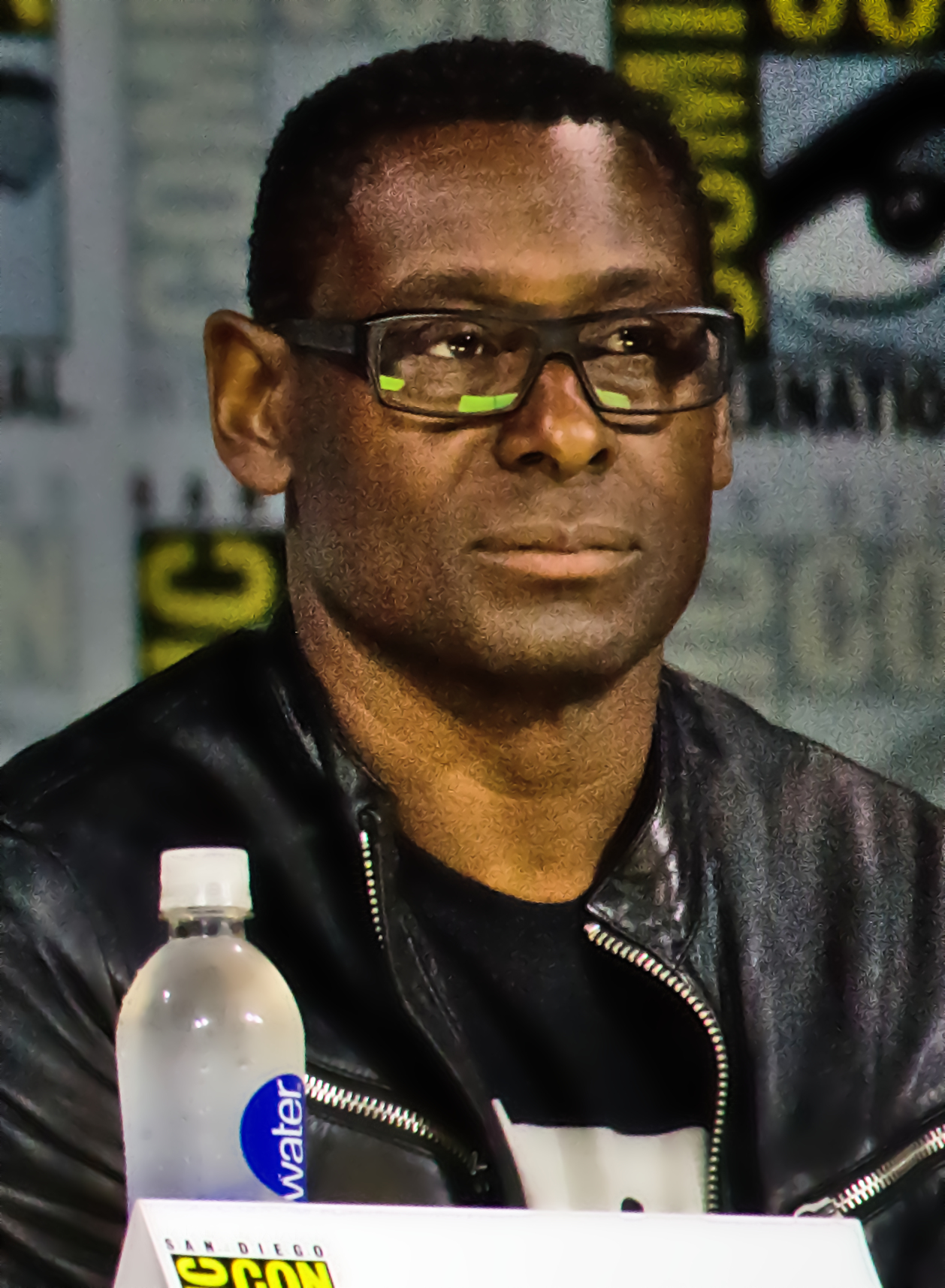
David Harewood’s face is familiar from very different kinds of television: political thrillers, superhero adventures and documentaries in which he asks difficult questions about Britain. His career also has deep roots in theatre. Following the work across these settings reveals an actor interested in the possibilities of character, and a public figure willing to examine the conditions in which people are seen and understood. The relationship between those interests gives his story its particular importance.1
Birmingham and the discovery of acting
Harewood was born in Birmingham in December 1965 to parents who had moved to Britain from Barbados. He grew up in Small Heath, and his account of finding acting begins with a teacher recognising a possibility in the pupil who made people laugh. A suggestion that he consider performing helped redirect that energy towards drama. He applied to the Royal Academy of Dramatic Art and moved to London. The connection between those places matters: a career subsequently associated with international productions began in an ordinary school and depended, at an early stage, on someone taking his potential seriously.2
In a Channel 4 interview, Harewood recalled arriving at RADA and encountering writers whose names were unfamiliar to him. Training opened a new relationship with literature. It also provided a setting in which curiosity could become disciplined work. He remembered enjoying those years, and finding employment soon after leaving. His first professional experiences included playing Romeo with Temba Theatre Company. Black theatre was therefore part of the foundation of his career, providing demanding work at the point when a young actor needed to test his training in public.3
Authority on stage and screen
Harewood graduated from RADA in 1987. A decade later, he became the first Black actor to play Othello at the National Theatre. The distinction belongs specifically to that institution; Black actors had a much longer relationship with the role elsewhere. It remains a telling milestone in the history of access to Britain’s major stages. His screen work would also include Captain Poison in Blood Diamond and David Estes in Homeland, characters whose exercise of power takes very different forms. These parts gave him opportunities to explore authority, violence and responsibility within the circumstances of a particular story.4, 15
The transition between stage and television was uneven. Harewood told Channel 4 that, as he began playing substantial figures on stage, he found it harder to secure equivalent screen roles. Homeland brought a change. As CIA official David Estes, he worked alongside Claire Danes, Damian Lewis and Mandy Patinkin. He described gradually understanding the character’s political loyalties and concealed motives as the scripts developed. That account makes the craft visible: an actor has to discover the reasons behind a character’s behaviour, sometimes as a long-running production is still revealing them. The role required more than an American accent; it required a believable relationship with power.3
The possibilities of a different world
Supergirl introduced Harewood to another audience. He joined the series when it began in 2015, initially appearing as Hank Henshaw, an official at the Department of Extranormal Operations. The story subsequently revealed J’onn J’onzz, the Martian Manhunter, beneath that identity. A character built around transformation creates a particular acting challenge: viewers must recognise continuity even when appearances change. Harewood’s own account also describes the practical difference between a computer-generated character and being able to wear the Martian Manhunter costume. The suit gave him a physical connection to the part. Such details remind viewers that fantasy performance still depends on the actor’s body, imagination and relationship with the production around him.5
The series also provided an opportunity to direct. Harewood’s first episode behind the camera was the nineteenth instalment of its fourth season. His description of the experience emphasised collaboration with the crew and the pleasure of helping shape performances. Directing expands an actor’s responsibility across the scene: the work involves understanding how individual contributions become a coherent piece of storytelling. It was a further development of an established career, made possible within a production he already knew.2
Returning to the argument on stage
In James Graham’s Best of Enemies, Harewood played the American conservative commentator William F. Buckley Jr. The production filmed for National Theatre at Home paired him with Zachary Quinto as Gore Vidal. Set around their televised debates during the 1968 presidential election campaign, the play examines the point at which political argument becomes compelling entertainment. Harewood’s casting as Buckley asked audiences to follow the performance of a real historical figure across the difference between actor and subject. The role offered another study of authority, this time expressed through language, intellectual confidence and the desire to defeat an opponent. It also returned him to the shared space of theatre, where an audience watches a dispute develop in front of them.6
That work adds another dimension to his international screen career. Theatre asks a performer to sustain a character through an unfolding sequence of encounters, with the audience present throughout. In a play about public debate, the room itself becomes part of the experience: spectators watch people trying to command attention while deciding whose account to trust. The production’s subject connects the work of acting with the wider question of how public personalities acquire authority.6
Telling a personal story publicly
Harewood’s documentary work opened another form of conversation. His official account traces Psychosis and Me to a public message he shared on World Mental Health Day in 2017. Responses from people with related experiences helped lead towards a film examining what he had been through as a young man. Broadcast in May 2019, it considered his experience alongside those of others and the services involved in their care. The decision involved speaking in his own name after years spent speaking through characters. Its value lies partly in that willingness to make a subject often surrounded by silence available for discussion, while allowing other people’s experiences into the frame.7
His 2021 memoir, Maybe I Don’t Belong Here, developed the questions of race, identity and recovery further. Harewood described experiencing psychosis at twenty-three and being detained for treatment under the Mental Health Act. The book examines those events through his own recollections and his later effort to understand them. It also explores the effect that racism had on his sense of belonging. The title turns a question about one person’s confidence into a larger question about the society in which he grew up. Where do repeated messages of exclusion leave a young man trying to establish his place? His subsequent career gives the narrative its longer perspective, allowing readers to see a life continuing after a period of profound difficulty.8
Who gets to represent Black lives?
David Harewood on Blackface turned attention towards the history of representation itself. The documentary examined blackface minstrelsy, including its development in nineteenth-century America and its use of music and comedy to circulate racist ideas. For an actor, that history raises direct questions about the images an audience has inherited before a performance begins. The subject also connects entertainment with social power: repeated caricatures can shape what people expect to see and whose humanity they are prepared to recognise. Harewood’s involvement brings the inquiry into conversation with a career spent creating individual characters within popular culture.9
A different encounter with history took place at Harewood House. In 2021, he visited the Yorkshire house while making the Channel 5 series 1000 Years a Slave. In 2023, photographer Ashley Karrell created his portrait for its Missing Portraits project. The initiative sought to include people of African-Caribbean heritage whose histories connect with the house and the Lascelles family. Harewood has discussed discovering that his own surname is connected to ancestors enslaved on a plantation in Barbados. The portrait and accompanying exhibition therefore placed his present-day achievements alongside an earlier history of inequality. They also changed who could be encountered within a collection long dominated by images of wealthy white people.10
Using a public platform
Harewood has also worked with UNICEF UK, participating in Soccer Aid from 2018 and using the event’s audience to support its wider work. A visit to Sierra Leone in 2019 focused on services for children and families, including vaccination and newborn care. In Bangladesh in 2022, he visited a centre supporting children in Dhaka. These visits placed him in the role of listener and communicator. The practical purpose was to bring attention to the work of local communities and services, and to help viewers understand what support could make possible. It is a strand of his public life rooted in particular visits, public appeals and conversations with people doing the work.11
Recognition of his work has included an MBE in 2012 for services to drama and an OBE in the 2023 New Year Honours for drama and charity. On accepting the later honour, Harewood also drew attention to people whose contributions had received little recognition. The statement connected his own achievement with the work of others.4
In February 2024, RADA appointed Harewood its honorary president, with Cynthia Erivo as vice-president. The academy describes these as ambassadorial roles that also support its students, staff and wider community. Harewood connected the appointment to his experience of both success and difficulty, expressing a wish to help students negotiate the transition into professional work. Returning to the institution where he trained gave that intention a concrete setting. It also placed someone who had experienced uncertainty about his own belonging in a position to help others imagine a place for themselves within the profession.12, 13
Coming back to Shakespeare
Harewood returned to Othello in the West End in 2025. Speaking to London Theatre, he described how time had altered his understanding of the character, particularly the relationship with Desdemona. He wanted to find more than anger in the later scenes and to reconsider choices made as a younger actor. He also spoke about reducing the amount of personal pain he drew upon for his work. Those reflections suggest a career still open to revision: experience can change the meaning of familiar lines and the methods used to perform them. His continuing interest in the stage rests on that possibility of discovery, with a new company and audience bringing fresh questions to a role he already knew.14
Directed by Tom Morris, the production brought him together with Toby Jones as Iago and Caitlin FitzGerald as Desdemona. Harewood described the relevance of manipulation and misinformation to the play’s contemporary audience. The familiar tragedy offered a way to examine how confidence can be undermined and falsehood made persuasive.14
Sources and further reading
1. Pan Macmillan: David Harewood — author biography.
2. David Harewood official website: Biography.
3. Channel 4: An interview with David Harewood, 2 October 2012.
4. RADA: David Harewood accepts OBE.
5. David Harewood official website: Supergirl.
6. National Theatre at Home: Best of Enemies: production information and cast.
7. David Harewood official website: Off Script: Psychosis and Me.
8. Pan Macmillan / Bluebird: Maybe I Don’t Belong Here — publication information and synopsis.
9. BBC Select: Dave Harewood on Blackface: The Hidden History of Minstrelsy.
10. Harewood House Trust: David Harewood: What’s in a Name?.
11. UNICEF UK: David Harewood OBE, UNICEF UK Ambassador.
12. RADA: David Harewood and Cynthia Erivo appointed new President and Vice President of RADA.
13. RADA: Annual report and accounts 2023–24: administrative information.
14. London Theatre: David Harewood on returning to Othello — interview by Olivia Rook, 30 October 2025.
15. Shakespeare’s Globe: Othello: Study Day — Ira Aldridge and performance history.
Photograph
David Harewood at San Diego Comic-Con, 22 July 2017. Photo: vagueonthehow, David Harewood photograph, CC BY 2.0. Cropped and adjusted by Wikimedia Commons contributors; no further edits made for this pack.
