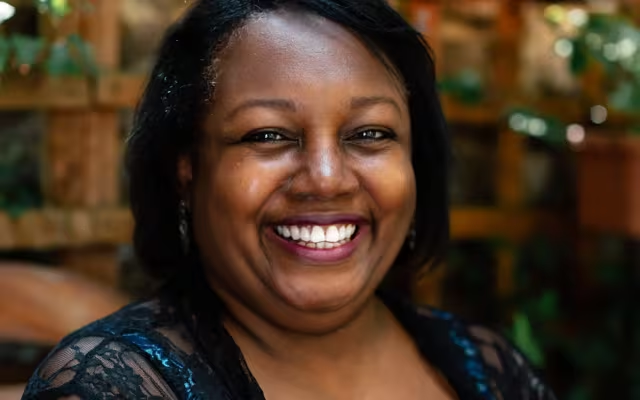
When the British Library opened its exhibition about Malorie Blackman in November 2023, one exhibit recorded the difficulty of becoming a published writer: a ring binder containing more than eighty rejection letters. Elsewhere were drafts, editorial notes and the medallion from her time as Children’s Laureate. Bringing these objects together made the work behind the books visible. The exhibition followed a writer who had continued submitting stories when publishers declined them, and whose characters would eventually become part of the reading lives of children across generations.1
Blackman was born in London in 1962 to parents from Barbados. Before earning her living through stories, she studied computer science at Thames Polytechnic and worked as a systems programmer. Looking back in an interview with the Big Issue, she remembered being preoccupied with reading and writing as a teenager, while also worrying about choosing subjects that would lead to a secure job. Her eventual career brought together a pleasure in language and an interest in how things worked, allowing imaginative questions to develop into carefully constructed plots.2
A reader looking for a place in books
In her 2022 PEN Pinter Prize speech, Blackman described reading as a source of pleasure and escape throughout childhood. Yet she could not remember encountering a book featuring a Black child like herself. That absence helped turn an enthusiastic reader into a writer. She wanted children to find themselves within literature and to discover lives different from their own. For her, recognising a familiar experience and entering an unfamiliar world were both part of reading’s possibilities.3
Her first book, Not So Stupid!, appeared in 1990 through the Women’s Press. The collection followed repeated submissions and revisions. In a Publishing Talk interview, Blackman explained that her early rejections covered eight books across two years. She noticed that some editors began sending longer, more detailed responses, and treated that attention as encouragement to improve. Publication emerged from sustained work on different manuscripts, rather than from a single sudden opportunity or an unbroken run of confidence.4
Adventure, science and difficult choices
Hacker, published in 1992, placed a girl with technical ability at the centre of a mystery. When Vicky’s father is accused of stealing money from the bank where he works, she tries to uncover the evidence that could clear him. Computers become instruments of investigation, and the young protagonist has knowledge adults need. The premise gives practical intelligence a dramatic purpose: Vicky must decide what to do with her skills while facing uncertainty about whom she can trust.5
Pig-Heart Boy, first published in 1997, begins with a very different problem. Thirteen-year-old Cameron needs a heart transplant, and a doctor proposes using a pig’s heart. The fictional procedure could prolong his life, but it also creates difficult questions for him and his family. Cameron wants to participate in everyday activities that illness has made difficult. Starting with those wishes keeps a child’s experience at the centre of a story that could otherwise become an abstract debate about science.6, 7
As news of the operation spreads, the novel examines friendship, privacy and the public reaction to medical experimentation. Cameron must live with the consequences of decisions that other people discuss from a distance. The story gives readers room to consider how competing responsibilities can pull a family in different directions. Its questions concern the way a person is treated, as well as the operation itself, and its open ending leaves those questions with the reader.7
In Cloud Busting, Blackman changes both scale and form. A story told in verse follows Sam, a bully, and Davey, whose imagination gradually opens another way of seeing the world to him. Their friendship remains secret because Sam is unwilling to acknowledge it publicly, with painful consequences. Here the pressure comes from the small social world of children. The book asks what it costs to value someone privately while refusing to stand beside them in front of others, and lets language itself become part of the friendship.8
The world of Noughts & Crosses
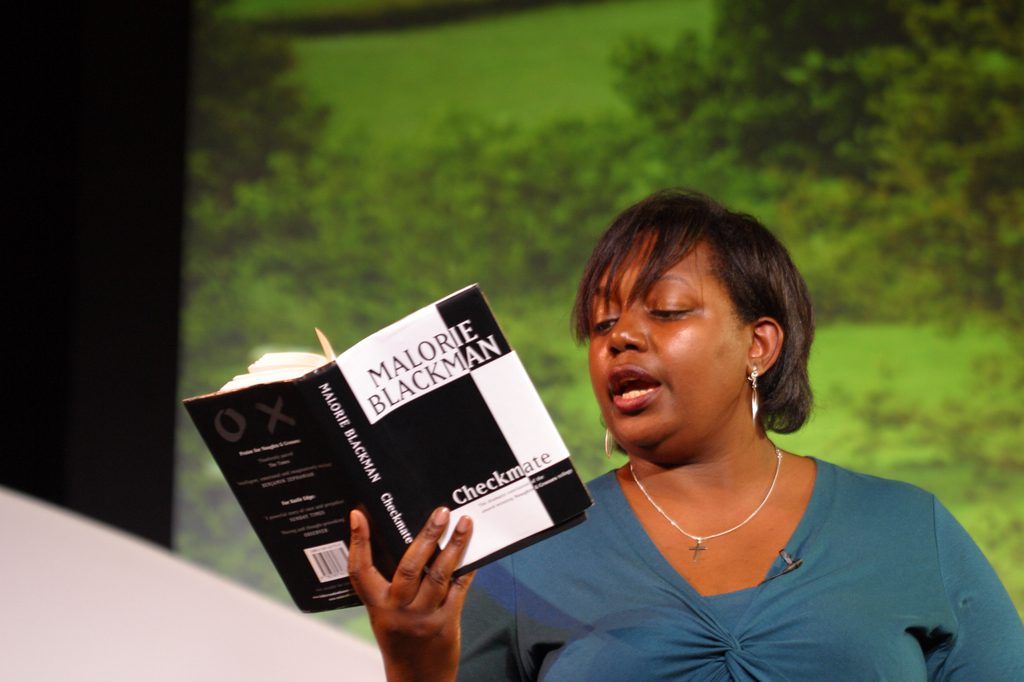
Noughts & Crosses, published in 2001, brought another imaginative structure to questions of belonging. Its fictional society grants power and status to Black Crosses while treating white Noughts as inferior. Sephy, a Cross and a politician’s daughter, grows up close to Callum, a Nought. Their relationship develops within rules and expectations designed to keep them apart. The reversal requires readers to examine discrimination through the experiences of characters whose opportunities have been shaped before they can choose for themselves.9
The relationship matters because it brings a system of inequality into everyday emotional life. Affection does not remove the different positions Sephy and Callum occupy, and good intentions cannot make those differences disappear. Readers are invited to consider who is believed, who belongs and whose ambitions are treated as reasonable. The invented society creates distance from familiar assumptions while giving prejudice recognisable consequences. Its political questions remain connected to people trying to understand each other.9
The sequence continued across two decades, concluding with Endgame in 2021. Later characters inherit a world already shaped by earlier choices, and the final novel combines its continuing personal stories with fictional news reports addressing contemporary concerns. That broader timescale matters: social divisions outlast individual relationships, and changes in one generation create responsibilities for another. Through the series, Blackman could explore the continuing interaction between race, class and politics while allowing readers to follow the consequences of events across several books.10
Different stories for different readers
Boys Don’t Cry approaches family life through two teenage brothers. Dante expects his examination results to open a route towards university, then finds that he must raise a child as a single parent. Adam, who is gay, faces hostility from people around him. Giving both brothers a viewpoint allows the novel to consider expectations of masculinity alongside their different vulnerabilities. Care, acceptance and responsibility become practical matters within a family whose members do not always understand one another immediately.11
Chasing the Stars, published in 2016, carries love and suspicion into space. Olivia and her twin brother have survived a devastating virus aboard their ship; Nathan belongs to another group of survivors. The novel brings them together in a setting where attraction develops amid danger and mistrust. Drawing on Shakespeare’s Othello, Blackman uses science fiction to reconsider a familiar dramatic inheritance. Its setting extends the range of worlds her young readers can enter, with intense personal relationships unfolding far beyond contemporary Britain.12, 13
Younger children encounter a more playful imagination in We’re Going to Find the Monster, illustrated by Dapo Adeola and published in that version in 2021. Two children transform their home through make-believe, with their older brother becoming the monster they seek. Adapted from Blackman’s earlier story Marty Monster, the picture book turns familiar family surroundings into an adventure. Its collaboration between words and pictures shows another part of her work: creating stories that invite children to join in before they can manage a long novel independently.14
The craft behind the imagination
For all this variety, Blackman has described a writing practice grounded in preparation. She plans plots and develops small biographies for her characters so she understands how they might think and act. She also accepts that an idea may need to be abandoned when it cannot be made to work. Her account makes room for revision, editorial discussion and uncertainty. Knowing a character well enough to follow an unexpected direction is part of that preparation, rather than a reason to dispense with it.4
Television offered another form of storytelling. With Chris Chibnall, she co-wrote Rosa, the Doctor Who episode first broadcast on 21 October 2018. It places the Doctor and her companions in Montgomery, Alabama, in 1955, where they meet Rosa Parks and discover an attempt to alter history. The episode brings a historical figure into a science-fiction narrative for a broad audience. Its credit also makes clear that this was collaborative screenwriting, requiring Blackman’s story to work within an established programme and alongside its other characters.15
Taking young readers seriously
As Children’s Laureate from 2013 to 2015, Blackman concentrated particularly on teenagers and reading for pleasure. She helped establish the Young Adult Literature Convention, bringing writers and readers into the wider setting of London’s Film and Comic Convention. Books could sit alongside television, games, comics and other forms of enthusiasm. Looking back for BookTrust, she described speaking to more than 30,000 teenagers at schools and festivals during her tenure. The role involved listening and meeting readers as well as advocating for them publicly.16
Her Project Remix invited teenagers to respond to existing books, poems and graphic novels through their own creative work. They could make stories, comic strips, cover designs, trailers or music. Such choices recognised that reading can lead to many forms of expression. A young person interested in drawing or sound could begin with those interests and find a connection to literature. The project gave readers permission to become makers and to explore how one imaginative work might inspire another.16
A life in words
Her autobiography, Just Sayin’: My Life in Words, appeared through #Merky Books in 2022. It returns to her childhood, the obstacles she encountered and her route into publishing. The move into memoir makes her own life the subject after decades spent creating fictional ones. It also allows readers familiar with her novels to consider the circumstances in which their author learned to write: family history, education, employment and the persistent effort to persuade publishers to make space for her work.17
In the same year, English PEN awarded her the PEN Pinter Prize, the first time it had gone to a writer of children’s and young adult literature. The judges recognised the seriousness of the questions her fiction puts before young people. That recognition matters within a career dedicated to an audience sometimes underestimated by adults. Stories written for children can ask demanding questions about injustice and society while remaining driven by curiosity about what will happen next.18
In her acceptance speech, Blackman argued that children should be able to encounter many kinds of lives in books and become storytellers themselves. She also distinguished a fictional character’s opinions from an author’s own beliefs. Reading, in this understanding, involves meeting perspectives that may be uncomfortable or unfamiliar. Her advocacy connects the freedom to create complex characters with the reader’s freedom to think independently about them.3
The British Library exhibition extended that exchange by involving pupils from Regent High School in Camden. Their poetry and artwork, developed through workshops, appeared within the exhibition alongside Blackman’s materials. Young readers helped shape a public account of an established writer’s career. Placed beside the rejection letters and published books, their contributions showed a continuing conversation: children encounter a story, respond to it in their own terms, and begin to discover what they might want to make next.1
Sources and further reading
1. British Library: Malorie Blackman: The Power of Stories opens at the British Library.
2. Big Issue, interview by Jane Graham: Children’s author Malorie Blackman: ‘As a teenager I had never read any books by Black authors’.
3. English PEN / PEN Transmissions: Just Sayin’: Malorie Blackman’s PEN Pinter Prize 2022 speech.
4. Publishing Talk, interview by Lucy Coats: Interview: Malorie Blackman.
5. Penguin Random House: Hacker.
6. Penguin Random House: Pig-Heart Boy.
7. Scholastic: Pig-heart Boy: About the Book, Read & Respond.
8. BookTrust: Cloud Busting.
9. BookTrust: Noughts & Crosses.
10. BookTrust: Endgame.
11. BookTrust: Boys Don’t Cry.
12. Penguin Random House: Chasing the Stars.
13. Penguin Random House: 7 books inspired by Shakespeare.
14. Penguin Random House: We’re Going to Find the Monster.
15. BBC Studios / Doctor Who: Rosa.
16. BookTrust: Letter from a Laureate: Malorie Blackman.
17. Penguin Random House / #Merky Books: Just Sayin’: My Life in Words.
18. English PEN: Malorie Blackman awarded PEN Pinter Prize 2022.