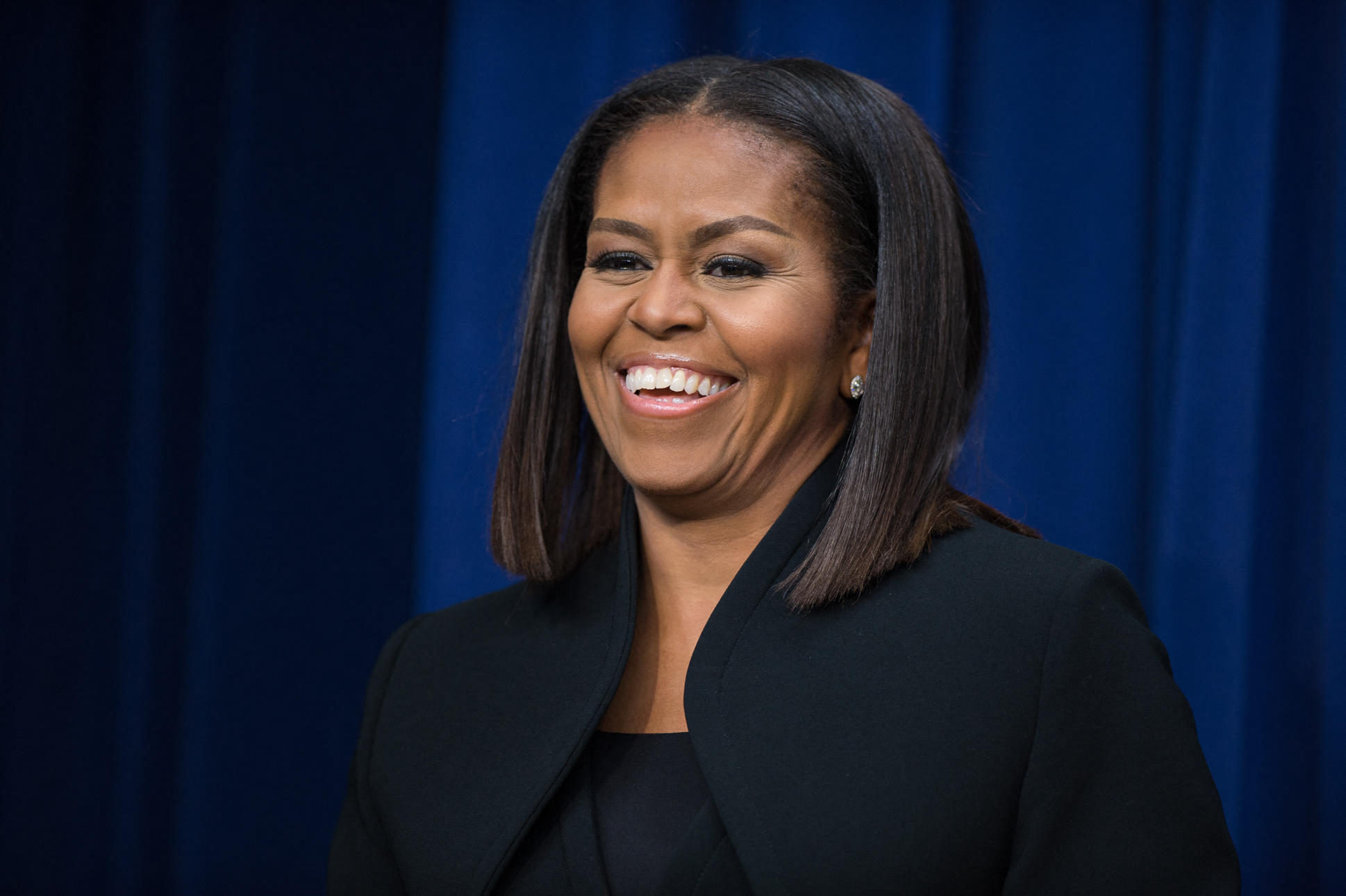
Michelle Obama entered the White House in 2009 with a career already shaped by law, city government and community work. As the first African American First Lady of the United States, she occupied a position with enormous public visibility. Over eight years, she used it to draw attention to children’s health, education and the lives of military families. Those interests also connect her Washington years to the work she had undertaken in Chicago.1
Her story begins in the relationships around a young person: parents, teachers, neighbours and the institutions that can open up opportunities. Following that thread gives a fuller picture of her public life, from working with students and community organisations to bringing the experiences of girls into international discussions about education.4
Growing up on Chicago’s South Side
Born Michelle Robinson in Chicago on 17 January 1964, she grew up with her parents, Fraser and Marian, and her older brother, Craig. Fraser worked as a pump operator, while Marian cared for the children at home. Michelle attended Chicago’s public schools before leaving for university. Her route took her from that family setting to Princeton, Harvard Law School and, eventually, back to her home city.1
At Princeton, where she graduated in 1985, she studied sociology and participated in African American student and service organisations. The university’s Third World Center, now known as the Fields Center, was particularly important to her student life. She served on its governing board and coordinated an after-school programme for children from the surrounding community.2
That combination of academic study and practical involvement is a useful starting point for understanding her later work. The centre offered a place to discuss race and belonging while also taking part in the life of the town. Tutoring children made education a relationship between people, as well as a personal route towards qualifications. Michelle’s interest in young people therefore developed well before her family entered national politics.2
Building a career in public service
After completing her law degree at Harvard in 1988, she joined the Chicago firm Sidley & Austin, where she met Barack Obama. They married in 1992 and later had two daughters, Malia and Sasha. Her professional direction shifted towards public service, including work in Chicago’s city government, as she developed a career alongside a growing family.4
At Public Allies Chicago, she led an organisation that gave young adults experience of public service through placements and leadership training. A contemporary University of Chicago report described a ten-month apprenticeship in a local non-profit organisation or government agency. The approach connected learning with the work of institutions serving the city, giving participants a way to explore careers while contributing to their communities.3
In 1996, the University of Chicago appointed her Associate Dean of Student Services and Director of its University Community Service Center. The appointment built on volunteering that students had already developed. Her task was to coordinate opportunities around the university and across Chicago, bringing the institution into closer contact with its neighbours. This background helps explain a recurring feature of her later initiatives: working through schools, organisations and local leaders who already understood their communities.3
Children’s health and the White House garden
In 2009, Michelle Obama planted a kitchen garden on the White House’s South Lawn with pupils from Bancroft Elementary School in Washington. The garden provided a visible starting point for conversations about food: where it came from, how it was grown and how families could include it in their meals. It linked an everyday activity with a national platform.5
The following February, she launched Let’s Move! Its stated purpose was to address childhood obesity through several connected areas: information for parents, healthier school food, access to affordable nutritious food and opportunities for physical activity. The launch brought together government departments, medical organisations, schools, charities, businesses and sports representatives. Her contribution lay in advocacy and coordination across those groups. The campaign’s design recognised that children’s routines depended on their surroundings, including what schools served and what families could obtain locally.5
Supporting military families
In 2011, she and Jill Biden launched Joining Forces. The initiative focused on service members, veterans and their families, with employment, education and wellbeing as its main concerns. It asked employers, schools, community organisations and public agencies to consider the practical difficulties that could accompany military life.6
Those concerns included career opportunities for military spouses and veterans, professional licensing barriers and the transfer of education between institutions. Schools were encouraged to understand the circumstances of children in military families. The emphasis extended support beyond serving personnel to the wider household, linking public recognition of service with everyday questions about work, learning and access to resources.6
Making further education feel possible
Reach Higher, launched in 2014, encouraged young people to continue their education after secondary school. Its scope included professional training, community colleges and four-year colleges or universities. That range mattered: the campaign presented several routes into further learning, allowing students to connect their plans with different kinds of education and employment.7, 4
The programme also addressed practical steps. It highlighted financial aid, academic preparation, summer learning and the work of school counsellors. College Signing Days invited communities to celebrate students’ decisions to continue studying. Behind the public events was a straightforward message: young people needed encouragement, but also information about applications, costs and the choices available to them. Michelle used her public position to bring attention to the people who could help students make those decisions.7
Her education work had a particular connection with Britain. After visiting Elizabeth Garrett Anderson School in London in 2009, she met pupils again at Oxford University in 2011. She spoke about her own uncertainty on entering university and encouraged the girls to see themselves as people who belonged in such places. She also asked them to share what they had learned with classmates and, in time, to mentor others. The visit made access to university a conversation about confidence, preparation and mutual support.8
Girls’ education across borders
In March 2015, Barack and Michelle Obama launched the government-wide Let Girls Learn initiative. It built on existing work, including a USAID public engagement campaign, and focused attention on adolescent girls attending and completing school. Michelle’s part included working with the Peace Corps to support projects designed with local communities.9
The programme recognised that barriers could extend beyond the classroom. Its framework included health, gender-based violence and early marriage, alongside educational opportunities and leadership. Community involvement was central because the circumstances preventing attendance differed from place to place. The aim was to connect resources and public attention with locally developed responses, while building partnerships between agencies and organisations already working on girls’ education.9
After the White House
In October 2018, Michelle announced the Obama Foundation’s Global Girls Alliance, subsequently known as the Girls Opportunity Alliance. Its launch included an online network through which local leaders could exchange knowledge and a fundraising mechanism to support their projects. This extended her education work beyond the structures of the presidency, with community organisations remaining central to its design.10
The Girls Opportunity Alliance’s stated mission continues to focus on adolescent girls through the leaders and organisations supporting them. Its approach combines convening, public awareness and support for work taking place within communities. This places local experience at the centre of the programme, with Michelle’s visibility helping to bring wider attention to it.11
Her memoir Becoming, published in November 2018, offered another way to engage with her life. It follows her childhood on the South Side, professional work, motherhood and years in the White House. Reading those stages together makes clear how much of the story preceded the presidency. Education, family life and community work were already part of her experience before they became the subjects of widely recognised public initiatives.12
Sources and further reading
1. White House Historical Association: Michelle Obama.
2. Princeton University: Michelle Obama brings service commitment to White House.
3. University of Chicago Chronicle: Obama named first Associate Dean of Student Services, 6 June 1996.
4. Obama White House archive, National Archives: First Lady Michelle Obama.
5. Obama White House archive, National Archives: First Lady Michelle Obama launches Let’s Move, 9 February 2010.
6. Obama White House archive, National Archives: About Joining Forces.
7. Obama White House archive, National Archives: The First Lady’s Reach Higher Initiative.
8. Obama White House archive, National Archives: Remarks at an event with Elizabeth Garrett Anderson students, 25 May 2011.
9. Obama White House archive, National Archives: Let Girls Learn: launch fact sheet, 3 March 2015.
10. The Obama Foundation: Michelle Obama announces Global Girls Alliance, 11 October 2018.
11. The Obama Foundation: Girls Opportunity Alliance: Our Mission.
12. Penguin Random House: Becoming.