A photograph can begin as a paid portrait, a magazine assignment or a record kept among friends, then acquire a second life in a museum. Black British photographic history includes all these routes. The V&A’s Staying Power project, undertaken with Black Cultural Archives, acquired 118 works by 17 artists. Its scope included photographs by Black practitioners and images documenting Black lives. Interviews with photographers, relatives and sitters accompanied the pictures. This approach recognised that an image’s history also resides in the people who can explain its making and use. A collection could preserve both the photograph and accounts that helped viewers understand what lay beyond its frame. 1
Working between Accra and London
James Barnor’s career shows how such images travelled between places and different kinds of employment. At his Ever Young studio in Accra, portraiture was part of the city’s social life, with conversation and highlife music accompanying the business of making pictures. After arriving in London in 1959, he continued his education and assignments for Drum, the South African magazine. His subjects belonged to an African diaspora whose lives extended across national boundaries. London fashion photographs could therefore address readers elsewhere, while the photographer’s studio experience shaped his work outside it. In Barnor’s career, migration involved carrying an established practice into new settings and adapting it to fresh commissions. Britain was one location within a longer photographic life shared with Ghana. 2
The practical range of that work is visible in Barnor’s treatment of colour. His early Accra portraits used painted backgrounds, curtains and retouching to construct a finished likeness. Later, a 1971 photograph of a shop assistant beside colourful bottles served as a test print for calibrating colour-processing machinery. The bright setting had a technical purpose: it supplied colours against which the equipment’s performance could be checked. The image subsequently circulated as an attractive example of his photography, but its original function belonged to laboratory work. Looking at it alongside his London magazine pictures reveals a craft involving preparation, processing and reproduction as well as the instant of exposure. A photograph’s later reputation can obscure the everyday professional problem it was originally made to solve. 3
Knowing a neighbourhood
For Charlie Phillips, familiarity with North Kensington supplied a different working foundation. During the 1960s and 1970s he photographed friends, relatives and the wider neighbourhood: pub gatherings, club regulars, street encounters and local businesses. These pictures record social relationships alongside the racism and poor housing affecting Black residents. Their proximity to everyday life did not guarantee a route into print. After working in Europe, Phillips struggled to obtain assignments and publish his photographs in London. According to London Museum’s account, some editors and galleries even questioned whether he had made them. Publication of Notting Hill in the Sixties in 1991 and museum exhibitions in 2003 and 2005 helped bring the work to wider attention. The photographs had existed long before this institutional recognition. 4
Phillips’s extended study of African Caribbean funerals developed another kind of record. How Great Thou Art followed mourning traditions over fifty years, making death and the social practices surrounding it a sustained photographic subject. Its title drew on a hymn familiar at funerals. The project’s duration allowed ceremonies to be understood as part of community life across generations. When the Centre for British Photography presented it in 2023, the exhibition programme placed photographs with video and music. This arrangement acknowledged that funeral traditions also have an audible and collective dimension. The presentation returned to a project first curated for Photofusion in 2014 by Eddie Otchere and Lizzy King. Its movement between exhibitions gave a long-running body of work successive opportunities to be seen together. 5
Making a record in Birmingham
A sustained relationship with place also underpinned Vanley Burke’s work in Birmingham. He arrived from Jamaica in 1965 and began photographing Black life in Handsworth a few years later. The accumulation of images became a record extending across decades. Rivers of Birminam, a group of 100 black-and-white photographs covering forty years of Caribbean heritage in the city, entered Birmingham Museums Trust’s collection in 2017. Acquiring a substantial group preserved a sequence of work rather than relying on one representative image. It also placed this account of Caribbean Birmingham within the city’s public museum holdings. Burke’s documentation had developed through repeated attention to local life; the acquisition gave that sustained practice an institutional home alongside other material through which Birmingham’s history is interpreted. 6
Burke’s collecting reached beyond photographs. Posters, flyers, records, publications, clothing and domestic objects helped him retain the material traces of cultural and political life. In 2015, Ikon’s At Home with Vanley Burke brought contents from his Nechells flat into the gallery, including furniture and household possessions as well as archival material. Part of his archive was already stored at the Library of Birmingham, while much remained among the things with which he lived. The exhibition made that domestic setting part of the story. A flyer could identify an occasion, a publication preserve a debate, and an object recall habits that a formal record might overlook. Together these materials situated photographic images within a larger record of how people organised, furnished and understood their lives. 7
Photographing a dispersed world
Armet Francis developed a geographic framework that extended beyond any single city. From 1969, his Black Triangle project followed Black lives across Africa, the Americas and Europe. He took the triangular routes of the slave trade as a starting point for thinking about diaspora, then photographed people living within the world produced by that history. His practice included commercial studio work and magazine commissions as well as records of political activity. This breadth resisted a narrow separation between public protest and everyday self-presentation. Fashion, portraiture and demonstrations could all enter his account of Black experience. By arranging work within a transatlantic framework, Francis asked audiences to see British images in relation to lives elsewhere, rather than treating Britain as their only meaningful context. 8
His Brixton Market fashion photographs for 19 magazine in 1973 made a local shopping environment a setting for Black style. Later commissions changed both the subjects and the purpose of the pictures. In 1994, Autograph commissioned Francis to photograph people around Brixton and Lambeth for a project associated with Brixton Underground station. In 2008 he photographed people who had travelled on the Empire Windrush, including Sam King and Lucille Harris. Naming the sitters preserved individual identities within a history often represented by the ship itself. These commissions demonstrate how an institution can actively create a photographic record, deciding that particular people and experiences deserve sustained attention. The archive consequently contains work made to meet new public purposes, alongside images first produced for commercial circulation. 9
Belonging in the landscape
Ingrid Pollard turned attention towards the countryside and the assumptions carried by landscape imagery. Pastoral Interlude (1988) comprises five hand-tinted silver prints. Black figures occupy rural settings, unsettling the familiar allocation of Black life to the city. Pollard’s accompanying account links the apparent innocence of pastoral scenery to questions of ownership, commerce and the economic histories that helped shape England. The individual in the landscape is therefore central to the work’s argument: who appears to belong there, and whose presence seems unexpected? Hand-tinting also draws attention to the photograph as a crafted object. The landscape is presented through a deliberate artistic process, encouraging attention to how an apparently natural view is selected, coloured and invested with cultural meaning. 10
In The Cost of the English Landscape of 1989, Pollard examined the language used to sell the Lake District to visitors. Her subjects included the promotion of Dove Cottage at Grasmere, tourist boat trips and the Sellafield nuclear site. Placing tourism and industry within the same inquiry disturbed an image of rural scenery detached from economic activity. A Black walker entered this idealised landscape, while the proximity of agricultural scenery and nuclear infrastructure complicated its picturesque appeal. The work asks viewers to consider how a place becomes available as an image: what attracts attention, what is presented as natural, and what commercial descriptions make easier to overlook. Photography here investigates the production of heritage itself, including the exclusions embedded in an attractive view. 11
Giving photographs a public life
The setting in which photographs are encountered also changes what they can do. Burke’s A Gift to Birmingham portrayed members of Migrant Voice and formed part of a University of Birmingham project on intercommunal education. After an Ikon presentation in 2022, it travelled to community venues in Aston, Handsworth and Smethwick, reaching The Exchange in 2023. Educational materials designed by Haseebah Ali offered questions and creative exercises about race, language, religion and culture. These gave teachers and pupils ways to discuss the portraits in relation to their own experiences. The project joined making, displaying and learning: a photographic commission could be developed with a public use in mind, while local venues provided settings beyond the conventional gallery visit. 12
Preservation requires further work after an exhibition closes. Autograph’s collection brings together art photography, documentary projects, high-street studio portraits and family albums, retaining negatives, prints, slides and contact sheets. Its holdings are kept in climate-controlled storage with curatorial and conservation care. Commissions add new material, while exhibitions, loans, publications and educational resources return existing images to public view. These activities preserve different stages of photographic work, from the selection visible on a contact sheet to the finished print. They also create routes through which pictures made for an earlier audience can be encountered again. The history remains open to new photographs and new readings, sustained by the practical work of caring for objects, investigating their contexts and making them available in forms people can use. 13
Sources and further reading
1. Staying Power. Victoria and Albert Museum.
2. James Barnor: Accra/London. Serpentine.
3. Studio, street and style: James Barnor. Victoria and Albert Museum.
4. Through the lens of Charlie Phillips. London Museum.
5. Charlie Phillips: How Great Thou Art. Centre for British Photography.
6. Vanley Burke: Rivers of Birminam. Birmingham Museums.
7. At Home with Vanley Burke. Ikon.
8. Armet Francis: Beyond the Black Triangle. Autograph.
9. Armet Francis. Autograph.
10. Pastoral Interlude. Ingrid Pollard.
11. The Cost of the English Landscape. Ingrid Pollard.
12. A Gift to Birmingham at The Exchange. Ikon.
13. Autograph’s collection of photography. Autograph.
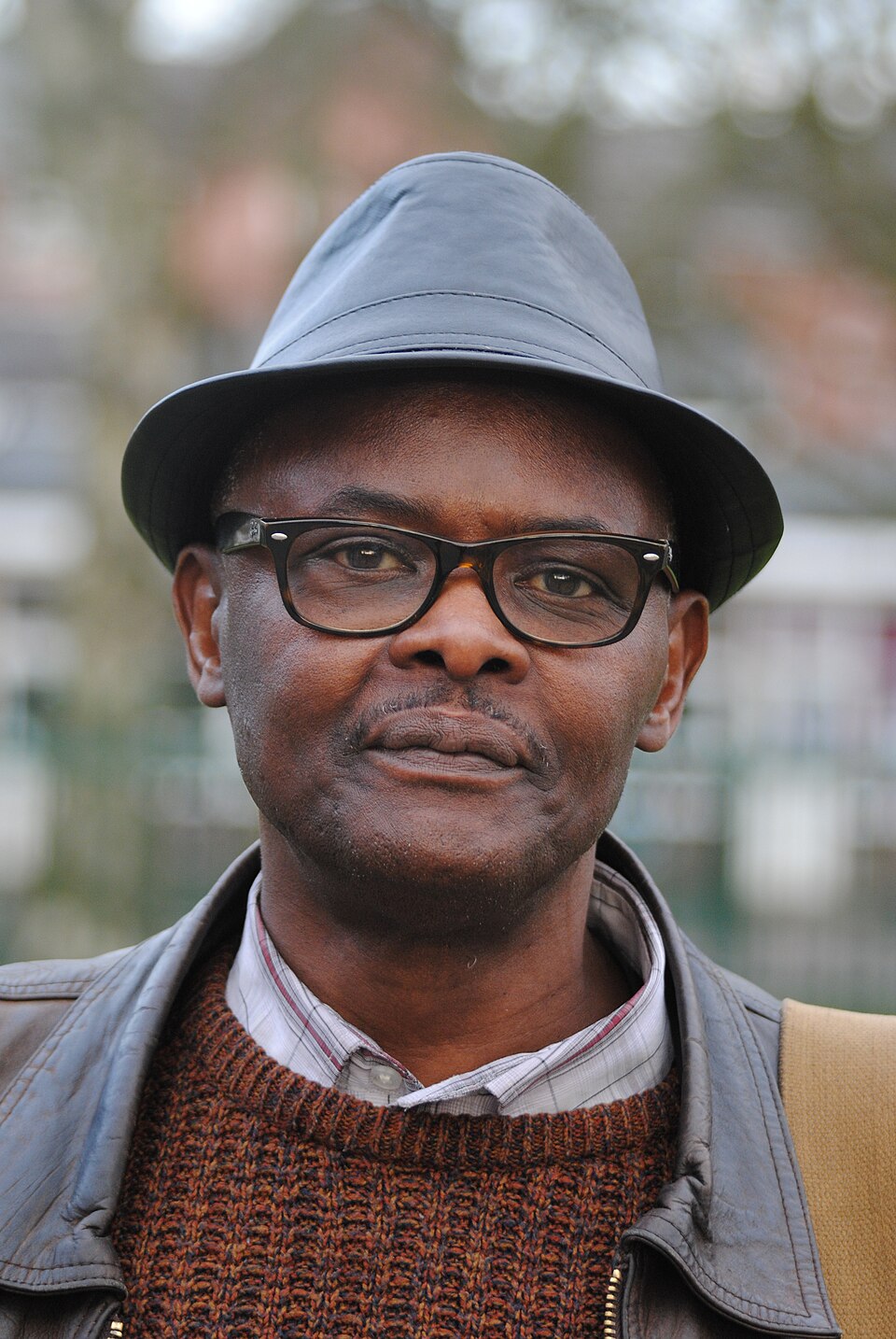
Featured image. Photographer Vanley Burke at the unveiling of a blue plaque for Ida B. Wells at Edgbaston Community Centre, Birmingham, on 12 February 2019. Photograph: Andy Mabbett, 12 February 2019, via Wikimedia Commons. Image record · CC BY-SA 4.0
