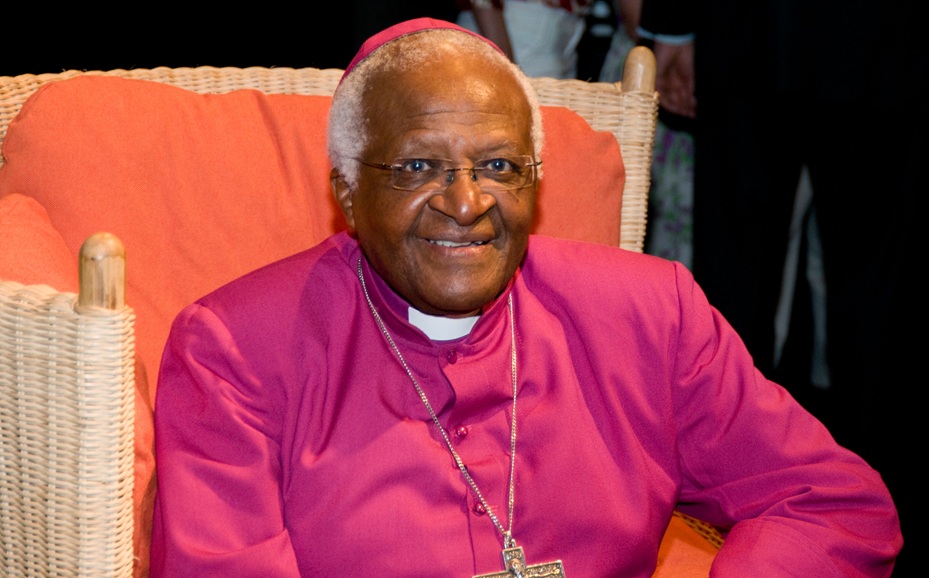
When Desmond Tutu received the Nobel Peace Prize in 1984, South Africa’s apartheid government still controlled the lives of the Black majority. The award recognised a struggle in progress. An Anglican bishop had become an international advocate for people denied an equal political voice, and he was challenging the claim that Christianity could justify racial rule. His importance lay partly in the authority he used and partly in the authority he refused to accept. Neither a government’s laws nor a church’s traditions, he insisted, placed its conduct beyond moral examination.1
A teacher’s refusal
Born in Klerksdorp on 7 October 1931, Desmond Mpilo Tutu followed his father into teaching. He trained at the Pretoria Bantu Normal College and completed a University of South Africa degree in 1954. His early professional life brought him into classrooms where the opportunities available to Black children were already severely restricted. Teaching made the consequences of racial policy immediate: they concerned particular pupils, their families and the futures an education might open.2
The Bantu Education system placed those futures under still tighter state control, preparing Black pupils for subordinate positions in society. Tutu left teaching in protest during the 1950s. The decision cost him an established occupation and sent him towards theological training. It also established a pattern that would recur throughout his life: participation in an institution carried responsibilities, and there were circumstances in which continuing as normal became an unacceptable accommodation with injustice.3
In 1958 he entered St Peter’s Theological College in Rosettenville, Johannesburg. He was ordained a deacon in 1960 and a priest in 1961. These were the beginnings of a demanding working vocation, involving study, parish duties and a growing family. The later international celebrity was built upon years spent learning how to teach, preach and attend to people whose difficulties rarely fitted neatly into separate religious and political categories.2
London, study and the public pulpit
At King’s College London, Tutu completed a theology degree in 1965 and a master’s in 1966. He later remembered the pleasure of access to books, open discussion and encouragement from fellow students. Intellectual freedom mattered alongside academic qualifications. He returned to theological teaching in southern Africa, then worked again in London in theological education. Moving between these settings widened his professional relationships and gave him experience of a church that crossed national boundaries, even while racial hierarchy continued to restrict its life at home.4
His appointments brought increasing visibility. In 1975 he became the first Black dean of St Mary’s Cathedral in Johannesburg. He served as Bishop of Lesotho from 1976 to 1978, then became general secretary of the South African Council of Churches. This ecumenical position gave him a platform beyond a single denomination. He could address the state as a church leader while calling congregations to confront the world outside their doors. His stated demands included equal civil rights and an end to restrictions imposed through the pass laws.5
Tutu’s 1984 Nobel lecture explained apartheid through its damage to ordinary relationships. He described removals from homes, migrant labour and families separated by regulations that determined where Black people could live. He also examined constitutional arrangements that preserved white power while excluding the Black majority. His theology was concrete: if every person possessed a dignity bestowed by God, policies treating people as disposable labour were an offence against that dignity. The argument required listeners to examine how the country functioned, including who benefited from its arrangements. It offered little comfort to those willing to condemn personal prejudice while accepting the institutions that sustained racial inequality.6
Pressure, protection and leadership
His commitment to non-violence included support for economic sanctions. Overseas governments, businesses and citizens therefore faced a practical question about their dealings with South Africa. Tutu wanted outside pressure to help force political change. This approach made his calls for peace demanding: they required action from people whose investments, purchases or diplomatic relationships might otherwise help maintain the existing order.7
He also confronted violence among opponents of apartheid. At Duduza in 1985, Tutu and others intervened to save a man whom a crowd accused of being a police informer. Protecting an individual in such circumstances put his principles under immediate physical pressure. In 1986 he became Archbishop of Cape Town, the first Black leader of the Anglican Church of the Province of Southern Africa. Until his retirement in 1996, he held its most senior office through the final years of apartheid and the difficult beginnings of democracy.8
Leah Tutu’s work belongs in this history too. She campaigned for domestic workers and helped establish the South African Domestic Workers Association. Their household joined two forms of public service: the highly visible interventions of the archbishop and organising around work often performed in private homes. Remembering that contribution broadens the story beyond the assumption that every significant act of resistance took place at a national podium.3
What truth could make possible
In 1995 President Nelson Mandela appointed Tutu to chair the Truth and Reconciliation Commission, with Alex Boraine as deputy. The commission confronted crimes committed during the political conflicts of the apartheid years. It placed victims’ accounts before the public and sought evidence about events that families had struggled to understand. This was an attempt to create an acknowledged record in a country where official denials had helped conceal violence.9
The law establishing the commission created separate committees for human rights violations, amnesty, and reparation and rehabilitation. Amnesty was conditional. Applicants had to disclose relevant facts and demonstrate that an offence was associated with a political objective within the legislation’s terms. Telling a story or expressing regret did not automatically secure immunity. Equally, successful applications could remove criminal and civil liability for the acts covered. That was a profound concession, with painful consequences for victims seeking punishment or compensation through the courts. The commission could recommend reparations; implementing them required government action. Understanding these distinctions is essential to understanding both what Tutu was trying to achieve and why the process provoked disagreement.10
The commission’s account of restorative justice connected public recognition with the repair of human relationships. Ubuntu supplied a language of shared humanity and mutual responsibility. A person injured by political violence needed to be recognised as someone to whom a wrong had been done, with a history and a claim upon society. On this view, justice involved restoring dignity and making good damage as well as establishing responsibility. The commission presented that work as part of a much longer transformation.9
The limits of reconciliation
Tutu understood that a public hearing could not complete that transformation. In his foreword to the commission’s 2003 report, he expressed distress that substantial reparations remained outstanding. People had exposed their pain before the country; the country now owed them material support. He also criticised white South Africans who would not acknowledge having benefited from apartheid. These arguments complicate a comforting memory of Tutu as simply an advocate of forgiveness. His own account linked reconciliation to obligations: recognition, responsibility and the practical repair of lives. He continued to defend the commission while admitting that its work depended on action far beyond its hearing rooms.11
Nor did liberation settle his relationship with the African National Congress. He criticised inequality, violence and corruption under its governments, and in 2013 said he would no longer vote for the party. Past service in the struggle could not excuse present failures. This independence made him an uncomfortable figure for former allies as well as former enemies. His standard remained the treatment of people who possessed the least protection or influence.3, 8
Equality beyond the struggle against apartheid
Tutu applied that standard to sexuality. At the United Nations Free & Equal campaign launch in Cape Town on 26 July 2013, he joined Navi Pillay and Constitutional Court Justice Edwin Cameron in opposing homophobia. Cameron’s account recalls his forceful denunciation of persecution. The event addressed violence, imprisonment and discrimination against LGBT people. For a prominent African church leader to take that position mattered because religious authority was frequently invoked against the same people. Tutu used his standing to make their equal dignity publicly visible.12
He also challenged AIDS denialism and pressed for access to treatment. UNAIDS remembered his opposition to discrimination against people living with HIV and his insistence that medicines should be accessible. In 2011 he co-chaired its commission on HIV prevention. This work brought the moral language of dignity into questions of healthcare, pharmaceutical access and young people’s futures. It extended the concerns already present in his opposition to apartheid: who receives protection, whose suffering is dismissed, and what those with institutional power owe to those without it.13
Internationally, he helped establish The Elders in 2007 and chaired the group until 2013. Its work took him to places including Cyprus, Sudan, Israel and the occupied Palestinian territories. He supported dialogue while addressing humanitarian needs and political injustice. The breadth of these commitments helps explain why retirement from church office did not end his public life. The responsibilities he recognised were not confined by the borders of the country in which he had become famous.7
Tutu died on 26 December 2021, aged 90. His life leaves difficult questions alongside admiration. What does forgiveness require of a person who has suffered? What must a society repair before its promise of equality becomes credible? His example gives those questions public weight. It also leaves room to judge his answers, just as he insisted that powerful institutions should submit their own conduct to examination.14
Sources and further reading
1. The Nobel Peace Prize 1984: Presentation Speech. Nobel Prize.
2. Desmond Tutu: Curriculum Vitae. Nobel Prize.
3. Our Founders. Desmond & Leah Tutu Legacy Foundation.
4. Archbishop Desmond Tutu. King’s College London.
5. Desmond Tutu: Biographical. Nobel Prize.
6. Desmond Tutu: Nobel Lecture. Nobel Prize.
7. Desmond Tutu. The Elders.
8. Archbishop Emeritus Desmond Tutu: 1931–2021. University of Cape Town.
9. Truth and Reconciliation Commission Report, Volume One. Truth and Reconciliation Commission / Department of Justice.
10. Promotion of National Unity and Reconciliation Act 34 of 1995. South African Department of Justice.
11. Truth and Reconciliation Commission Report, Volume Six: Foreword by Archbishop Desmond Tutu. Truth and Reconciliation Commission / Department of Justice.
12. Justice Edwin Cameron on the United Nations Free and Equal Campaign. Oxford Human Rights Hub.
13. The global AIDS response has lost a great champion. UNAIDS.
14. Secretary-General on the passing of Archbishop Desmond Tutu. United Nations.