Black British fashion has developed through the choices of wearers as well as the work of professional designers. A church outfit, a carefully selected jacket and a garment made for dancing could each express how somebody wished to appear in public. In his account of the V&A’s 2004–05 exhibition Black British Style, cultural historian Michael McMillan emphasised this range of everyday, religious and political dress. Curators Carol Tulloch and Shaun Cole placed garments beside photographs, films and oral testimony. Such material reveals fashion as a practice: choosing, combining and wearing clothes within particular circumstances. It also changes the questions asked of a designer. The issue becomes how clothing carries experience into its cut, fabric and presentation, as well as whose name appears on its label. 1
From cloth to the finished garment
The textile industry offered one route through which Black creativity reached British wardrobes. Althea McNish’s work in the 1950s depended on an understanding of industrial printing as well as a distinctive use of colour. Training in screen printing helped her discuss production with manufacturers; expertise in repeats and colourways gave her control over how a drawing became lengths of cloth. A repeat is the unit of a pattern reproduced across fabric, while colourways are its alternative colour combinations. Commissions from Liberty brought her designs into both clothing and furnishings. Work for Ascher carried printed silks into couture collections, including Christian Dior’s. These relationships placed a designer between an original image, the technical demands of a factory and the garments eventually made from its products. 2
Another route lay in the tailoring workshop and the varied worlds that required its skills. Joe Casely-Hayford dressed the Clash and U2 while developing collections for men and women shown in London, Paris and Tokyo. He also became creative director of Gieves & Hawkes, the long-established Savile Row house associated with establishment dress. His career moved between stage clothing, a designer label and formal tailoring rather than remaining within one market. Skills passed through a working studio as well as through colleges: his son Charlie apprenticed there before studying at Saint Martin’s, learning technique and the history of menswear. The family’s account describes a professional education grounded in making clothes and understanding the traditions they could alter. 3
Tailoring for different audiences
Ozwald Boateng likewise made the established language of British tailoring available for reinterpretation. Self-taught, he began tailoring at sixteen and presented at the Paris menswear collections in 1994. The V&A identifies that appearance as the first by a Savile Row tailor at those collections. In 2003 he was appointed creative director of menswear at Givenchy. The museum’s 2005 Fashion in Motion presentation brought his work before another audience through live modelling within a public collection. Its account stresses detail, finish and the relationship between bespoke tailoring and his individual approach. Here, innovation operated through the discipline of a fitted garment. A suit could retain the construction associated with British tailoring while entering international fashion houses, museums and the wardrobes of performers. 4
The scale and purpose of a commission could change that work substantially. Boateng’s British Airways collection reached operational ground staff in May 2023, followed by customer-facing teams later that year. The airline reported involving more than 1,500 employees in workshops, prototype feedback and wearer trials. Its range contained 96 garments, including dresses, skirts, trouser suits and a jumpsuit, alongside a three-piece suit with different trouser fits. Patterns also served a corporate purpose: scarves and ties carried an airwave design, and the suiting fabric referred to the airline’s speedmarque. Such work required the coordination of repeated manufacture, recognisable branding and choices for people doing different jobs. It shows a Black British designer shaping everyday working dress on a scale far beyond the individual bespoke client. 5
Reconsidering the male silhouette
Menswear could also be changed by unsettling its familiar proportions. Martine Rose established her London label in 2007, beginning with a tightly focused collection of shirts. Her account of the practice places silhouette, unexpected textures and references to subcultures at its centre. Silhouette means the overall outline made by a garment on the body: changing it can make an otherwise familiar type of clothing appear unfamiliar. Rose’s work investigates masculinity through this tension with accepted dress codes, paying attention to character and mood as well as fabric. The development from a small shirting range into a wider brand matters to that process. A recognisable starting point becomes material for continued experimentation, allowing menswear to carry the sensibility of particular social worlds into a commercial collection. 6
Grace Wales Bonner approached related questions through an explicitly researched conversation between European and African ideas of luxury. Her 2015 collections drew on Black visual culture, with the V&A identifying painter Kerry James Marshall and filmmaker Melvin Van Peebles among her references. Ebonics, presented through Fashion East, considered exoticism and nineteenth-century representations of Black men. Crushed velvet, cowrie shells, crystals, high-waisted flares and jewelled headwear appeared together. These were decisions about surface, proportion and how a male body could be adorned. The museum presentation also allowed visitors to inspect the clothes closely in an installation reflecting her research. The collection’s cultural references therefore entered both the making of garments and the circumstances in which an audience encountered them, beyond the brief passage of a conventional runway look. 7
For Bianca Saunders, research could begin much closer to home. In a Royal College of Art interview, she recalled designing an early collection around male relatives who belonged to a funk band. She described the importance her family attached to dressing well and her father’s preference for fewer, better-made purchases. Those memories informed an approach to menswear that sought freedom within forms customers might find unusual. Saunders also explained why she wanted her own label: it gave her autonomy to choose collaborators and work across media. In 2020 that practice included a collection presented through the GucciFest film programme and a zine released during London’s digital Fashion Week. Family knowledge, college experimentation and independent publishing became different means of developing and communicating the same design practice. 8
Clothing tested through movement
The relationship between a body and its clothes takes another form in Saul Nash’s work. Raised in north-east London, Nash founded his label in 2018 with technical garments designed to support movement. His practice brings fashion and dance into the same process, combining the practical demands of sportswear with expressive detail. The V&A describes his interest in genderless sportswear and in reconsidering familiar athleisure conventions. Rather than treating a garment only as a static outline, this approach makes its behaviour during movement central to its design. In 2022 Nash received the International Woolmark Prize and the Queen Elizabeth II Award for British Design, recognition spanning material innovation and the broader field of British design. 9
For the V&A’s Fashion in Motion programme in March 2026, Nash made a performance within the Raphael Court. Eight dancers, many of them established collaborators, appeared across three public performances with a live sound installation by Azekel. They wore pieces from the spring–summer 2026 collection. Nash’s retrospective account describes their shared movement and the relationship between performers and audience within the gallery. This format made the presentation itself part of the work: clothing was encountered through gesture, rhythm and proximity. The public museum offered a setting in which the design could be understood through bodies in action, alongside the historic art and architecture surrounding them. 10
Designers as editors and curators
A designer’s way of arranging images and objects can extend beyond clothing altogether. Nigerian-born British designer Duro Olowu launched his womenswear label in 2004, developing garments distinguished by their fabrics, patterns and construction. In the 2020 exhibition Seeing Chicago, he applied that visual practice to public and private art collections. Working with the Museum of Contemporary Art Chicago, he brought photographs, paintings, sculpture and film into dense arrangements that also incorporated his own designs. Connections crossed periods and places rather than following a single chronological sequence. This form of curation made looking itself a creative method. The exhibition invited viewers to consider relationships among works normally separated by medium or institutional categories, while giving a London-based fashion practice an international setting beyond the shop and runway. 11
Who is included in the record of British design has consequently become part of the history itself. Somerset House’s The Missing Thread, which opened in September 2023, organised Black British fashion through home, tailoring, performance and nightlife. Curated by the Black Orientated Legacy Development Agency, it placed clothes beside art, photographs, music and memorabilia. Its presentation of Joe Casely-Hayford’s archive was the first of its kind in a UK exhibition. New commissions from Nicholas Daley, Bianca Saunders and Saul Nash set earlier work beside contemporary practice. The curators sought to address exclusion and misrepresentation within established fashion histories. Their choice of material made the archive larger than a collection of famous outfits: it included the spaces, images and cultural exchanges through which fashion acquired its meaning. 12
The conditions for continuing the work
Recognition also raised practical questions about entering the profession. In October 2023 the British Fashion Council announced the Joe Casely-Hayford MA Scholarship, with Nottingham Trent University student Taya Francis as its first recipient. It supported students from Black or mixed-heritage backgrounds studying, or offered a place on, an eligible master’s course. Selection considered both a portfolio and financial circumstances. Mentoring from the Casely-Hayford family and team accompanied funding and access to the BFC Scholars programme. This arrangement put different needs alongside one another: time for study, money to make that study possible and access to experienced practitioners. Its association with a designer’s legacy gave remembrance a practical form, supporting the conditions under which another generation could develop its own work. 13
Sources and further reading
1. Revisiting Black British Style: Dr Michael McMillan. University of the Arts London.
2. Althea McNish – an introduction. Victoria and Albert Museum.
3. Design Legacy. Casely-Hayford.
4. Fashion in Motion: Ozwald Boateng. Victoria and Albert Museum.
5. Serving in style: British Airways launches its new uniform. British Airways.
6. About Martine Rose. Martine Rose.
7. Fashion in Motion: Grace Wales Bonner. Victoria and Albert Museum.
8. Finding her own aesthetic in menswear: Bianca Saunders. Royal College of Art.
9. Fashion in Motion: Saul Nash. Victoria and Albert Museum.
10. Fashion in Motion At V&A. Saul Nash.
11. Duro Olowu: Seeing Chicago. Museum of Contemporary Art Chicago.
12. The Missing Thread. Somerset House.
13. Joe Casely-Hayford MA Scholarship: launch and first recipient. British Fashion Council.
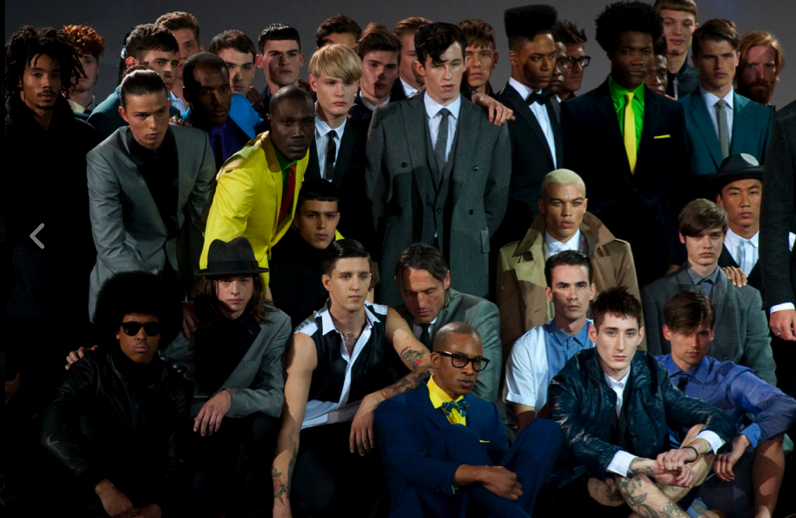
Featured image. Ozwald Boateng’s show at London Fashion Week in 2010. Image: Miles Warren and Ozwald Boateng, via Wikimedia Commons. Image record · CC BY-SA 3.0
