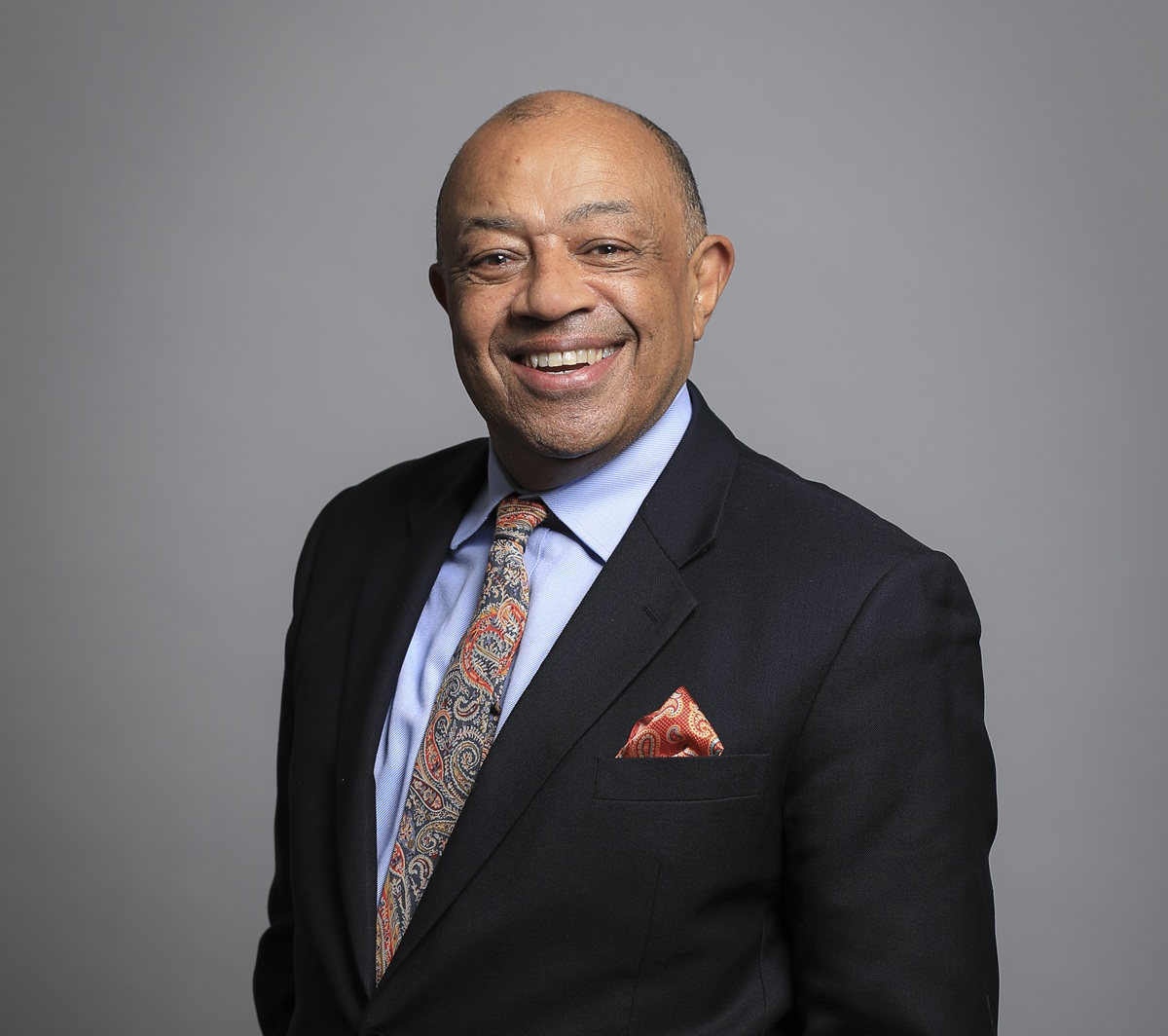
On 26 June 1987, Paul Boateng stood in the House of Commons for his maiden speech. The debate concerned foreign affairs, but the new MP for Brent South turned to the families visiting his constituency surgery. He described overcrowded homes, children sharing beds and a mother bringing up three children in a single room in temporary accommodation. National housing policy, he argued, had consequences that could be seen in the circumstances of particular people. His parliamentary introduction began with those people and with the question of what an elected representative could tell them about their prospects.1
London, Ghana and legal training
Paul Yaw Boateng was born in Hackney on 14 June 1951, to a Ghanaian father and a Scottish mother. His family moved to Ghana while he was young. His father, Kwaku, was a lawyer who became a minister after independence. The military coup of 1966 brought his father’s arrest and imprisonment, and Boateng returned to Britain with his mother and sister. Political upheaval had directly changed the family’s life.2, 3
Boateng attended Accra Academy in Ghana and Apsley Grammar School in Hertfordshire before studying law at the University of Bristol. He began practising as a solicitor at Paddington Law Centre, then joined B. M. Birnberg & Co., where he became a partner. His professional life was rooted in civil liberties work before he entered Parliament.2, 4
Law in the community
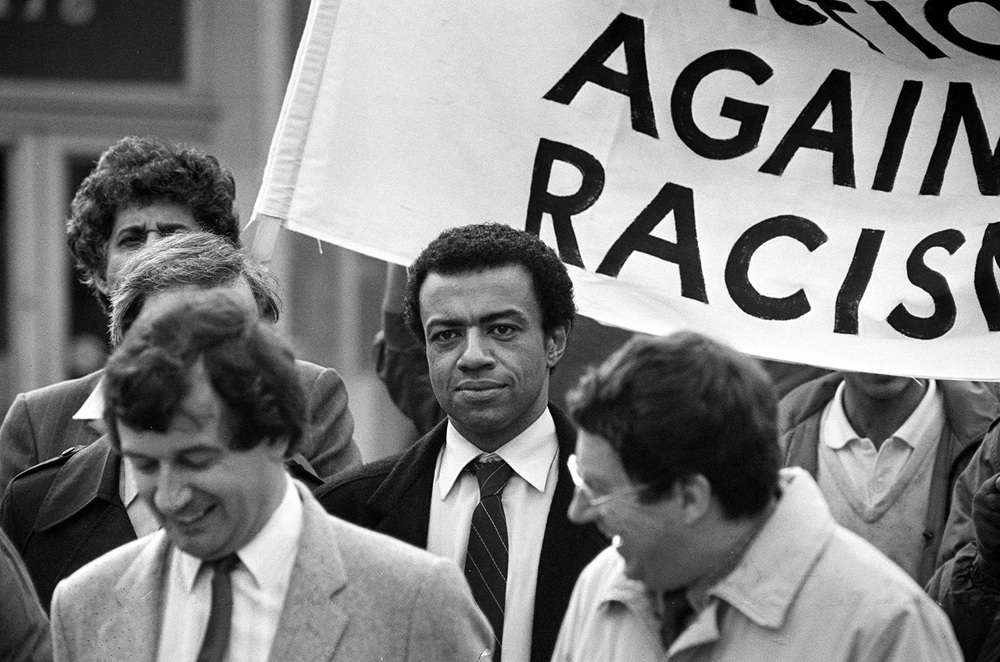
Boateng’s professional work overlapped with organised campaigning. He served on the executive of the National Council for Civil Liberties and was legal adviser to the Scrap Sus campaign between 1977 and 1981. Among those he represented was Cherry Groce, who was shot and paralysed during a police raid on her home in 1985. The shooting precipitated the Brixton disturbances that year. His later qualification as a barrister, in 1989, extended a legal career already closely connected to disputes over how public power was exercised.5
Looking back in his first Lords speech, Boateng recalled accompanying a group of Black women from Lewisham to Parliament in December 1978. They wanted a hearing about the use of the sus laws against young people, many of them Black. Their efforts had not secured the Commons debate they sought, despite support from their MP, Chris Price. A Lords debate initiated by Lord Avebury gave them an opportunity to be heard. Boateng remembered the respect shown to the women, including by Lord Pitt, and credited their campaigning in the eventual abolition of the legislation.6
From London government to Westminster
In 1981, Boateng was elected to the Greater London Council for Walthamstow. As chair of its police committee and vice-chair of its ethnic minorities committee, he pressed for greater accountability in the Metropolitan Police and challenged racism affecting Black and Asian Londoners. The roles placed policing and the treatment of minority communities within the work of elected local government. His legal practice and political activity addressed related questions, even as the institutions through which he pursued them changed.5
The 1987 general election brought Boateng into the Commons alongside Diane Abbott, Bernie Grant and Keith Vaz. The House of Commons Library identifies their election as ending the long interval since 1929 in which no MPs from minority ethnic backgrounds had been elected. Their arrival widened representation within national politics, although each had a distinct constituency and political career. For Boateng, Brent South became the base from which he entered parliamentary debate and, eventually, government.7
In his 1987 speech, Boateng proposed linking housebuilding to employment. He pointed to unemployed construction workers in Brent alongside families without homes, arguing that money spent on temporary accommodation could instead help finance new housing and jobs. His argument allowed a role for housing associations and owner-occupation as well as councils. He challenged the government’s reliance on the market to address the needs of overcrowded households and young couples seeking an affordable first home. His account of the constituency’s problems also set out choices about how public resources should be used.1
His responsibilities within Labour developed during the party’s years in opposition. He became a Treasury and economic affairs spokesman in 1989, moving to legal affairs in 1992. These appointments brought him into opposition policy and parliamentary scrutiny before Labour returned to office in 1997.2
Taking responsibility in government
Boateng entered government in 1997 as a Parliamentary Under-Secretary at the Department of Health. In the Commons that May, he addressed the stigma surrounding mental illness and the need to work with voluntary organisations. He also identified a practical difficulty: people could fall between the responsibilities of the NHS and local authorities. His answer promised discussions with both services and attention to whether public money produced effective support. The exchange shows a minister confronting the problem of coordination between institutions, alongside the political argument about resources.8
By November 1998 he was a Minister of State at the Home Office. The department’s work brought him back to the criminal justice system from the position of a government minister. Parliamentary answers in February 1999 record him explaining Labour’s commitment to reduce delays in dealing with persistent young offenders. The stated objective was to halve the average time from arrest to sentence from the 142 days recorded in 1996. He was now answering for the performance of a national system, including the speed with which cases moved through the courts.9, 10
A place at the Cabinet table
After serving as Financial Secretary to the Treasury from 2001, Boateng became Chief Secretary in 2002, succeeding Andrew Smith. The appointment made him Britain’s first Black Cabinet minister. It was a specific milestone in the country’s political history, reached fifteen years after his election to the Commons. His new position placed him within the government’s central decisions about expenditure, with responsibility for explaining and defending how money was allocated and what public services were expected to deliver.11, 12, 13, 14
At Treasury questions in December 2002, MPs challenged him about whether increased spending was producing sufficient improvement in the NHS. Boateng defended the government’s record, argued that resources should be accompanied by reform and emphasised departments’ responsibility for reporting progress against their public service agreements. The exchanges reveal the substance of the job behind the historic appointment: explaining the relationship between budgets, targets and services, and defending the government’s choices under questioning in Parliament.14
Children’s services were also part of his work. Boateng was among the ministers responsible for the 2004 programme Every Child Matters: Change for Children. Its framework sought to organise services around children and families, improve cooperation between agencies and intervene before difficulties became crises. It drew together schools, health services, local government and voluntary organisations. The document’s emphasis on shared responsibility gives a concrete example of the relationship between Treasury work and social policy. Funding decisions were bound up with the question of whether separate services could work together around a child.15
Representing Britain in southern Africa
Boateng left the Commons in 2005 and became British High Commissioner to South Africa, serving until 2009. The appointment transferred his work from domestic government to diplomacy. In May 2005, his successor in Brent South, Dawn Butler, used her maiden speech to acknowledge his parliamentary career and wish him well in South Africa. The constituency he had represented for eighteen years now passed to another Black Labour MP.3, 16, 17
The diplomatic record includes practical cooperation on environmental law. The Foreign and Commonwealth Office’s report for 2006–07 records British support for training 450 environmental management inspectors in South Africa, known as the Green Scorpions. It includes Boateng signing the memorandum of understanding to establish the project. The programme aimed to strengthen enforcement against environmental offences. This was one part of the work carried out through the High Commission: supporting a partnership whose everyday results depended on the skills and authority of inspectors working within South Africa’s own institutions.18
His responsibilities also extended to the neighbouring kingdom of Swaziland, where he served as non-resident High Commissioner. A Foreign Office memorandum submitted to Parliament in 2009 records his concern that elections excluding political parties could not be regarded as free and fair. The same document describes regular engagement with the government and attention to restrictions on political activity, trade unions and freedom of expression. Maintaining diplomatic relations involved raising disagreements about rights and keeping contact with civil society, as well as meeting ministers.19
Returning to Parliament
On 1 July 2010, Boateng was introduced to the House of Lords. His title, Baron Boateng of Akyem in the Republic of Ghana and of Wembley in the London Borough of Brent, brought together places associated with his family history and parliamentary career. He took the oath and entered a different chamber, five years after leaving the Commons.20
His maiden Lords speech later that month returned to children at risk and children in care. He asked that the effects of the Budget and Spending Review on them, and on the voluntary organisations serving them, receive specific attention. He also argued for a stronger Children’s Commissioner, answerable to Parliament. The speech connected his experience of developing children’s policy with the task of examining a new government’s decisions. He warned that financial changes affecting councils and charities could weaken the support available to children already facing disadvantage.6
Books, education and remembrance
Boateng’s work outside Parliament has included Book Aid International. After serving as chair, he continued as Vice Patron in 2022. He also chairs its International Advisory Board, whose members come from the charity’s partner network and advise on its direction and programmes. The charity reported shipping more than one million books in 2021, with its partners distributing them to 3,335 libraries, schools, higher education institutions, prisons and refugee settings. His continuing involvement places him alongside librarians and educators working to make reading and learning available in communities with limited resources.21, 22
He became Chancellor of the University of Greenwich in 2019 and served two terms. In May 2026, Greenwich announced that, as it joined the University of Kent in the London and South East University Group, he would continue as Pro-Chancellor from August. The change marked another stage in his involvement with higher education. The honorary position was distinct from the executive management of the university, while keeping him involved with an institution serving students and communities across the region.23
As chair of the Memorial Gates Council, Boateng also participates in the work of public remembrance. The charity’s educational programme and annual commemoration recognise service by people from Africa, the Caribbean, the Indian subcontinent and other parts of the Commonwealth, alongside Nepal. Its work places these histories within the account of Britain’s armed forces and the world wars. Through commemorations in Green Park, the council brings historical education together with the upkeep of a physical memorial in London.24
Sources and further reading
1. UK Parliament, Hansard: Foreign Affairs: Paul Boateng’s maiden Commons speech, 26 June 1987.
2. Encyclopedia.com: Boateng, Paul.
3. National Portrait Gallery: Paul Boateng: biographical record.
4. Memorial Gates Council: The Lord Paul Boateng.
5. 1 MCB Chambers: Lord Paul Boateng.
6. House of Lords Library: Maiden Speeches: Lord Boateng, 22 July 2010, debate on poverty.
7. House of Commons Library: Ethnic diversity in politics and public life.
8. UK Parliament, Hansard: Commons Chamber: Mental Illness, 20 May 1997.
9. UK Parliament, Weekly Information Bulletin: Her Majesty’s Government, November 1998.
10. UK Parliament, Hansard: Written Answers: persistent young offenders, 11 February 1999.
11. UK Parliament, Historic Hansard: Mr Paul Boateng: constituencies and offices.
12. UK Parliament, Weekly Information Bulletin: Ministerial changes: Noticeboard, 15 June 2002.
13. UK Parliament: The House of Lords marks Black History Month 2022.
14. UK Parliament, Hansard: Treasury questions: public spending, 12 December 2002.
15. HM Government, Department for Education and Skills; copy hosted by Frodsham Town Council: Every Child Matters: Change for Children, 2004.
16. UK Parliament, Hansard: Public Appointments: written answer, 7 December 2006.
17. UK Parliament, Hansard: Dawn Butler’s maiden Commons speech, 24 May 2005.
18. Foreign and Commonwealth Office: Departmental Report, 1 April 2006–31 March 2007: Green Scorpions project.
19. House of Commons Foreign Affairs Committee: Human Rights Annual Report 2008: FCO memorandum on Swaziland, evidence pages 54–55.
20. UK Parliament, Hansard: Introduction: Lord Boateng, 1 July 2010.
21. Book Aid International: Our International Advisory Board.
22. Book Aid International: BookLinks, June 2022, issue 34.
23. University of Greenwich: Greenwich and Kent universities announce senior executive team and Chancellor, 13 May 2026.
24. Memorial Gates Council: About the Memorial Gates and its Council.