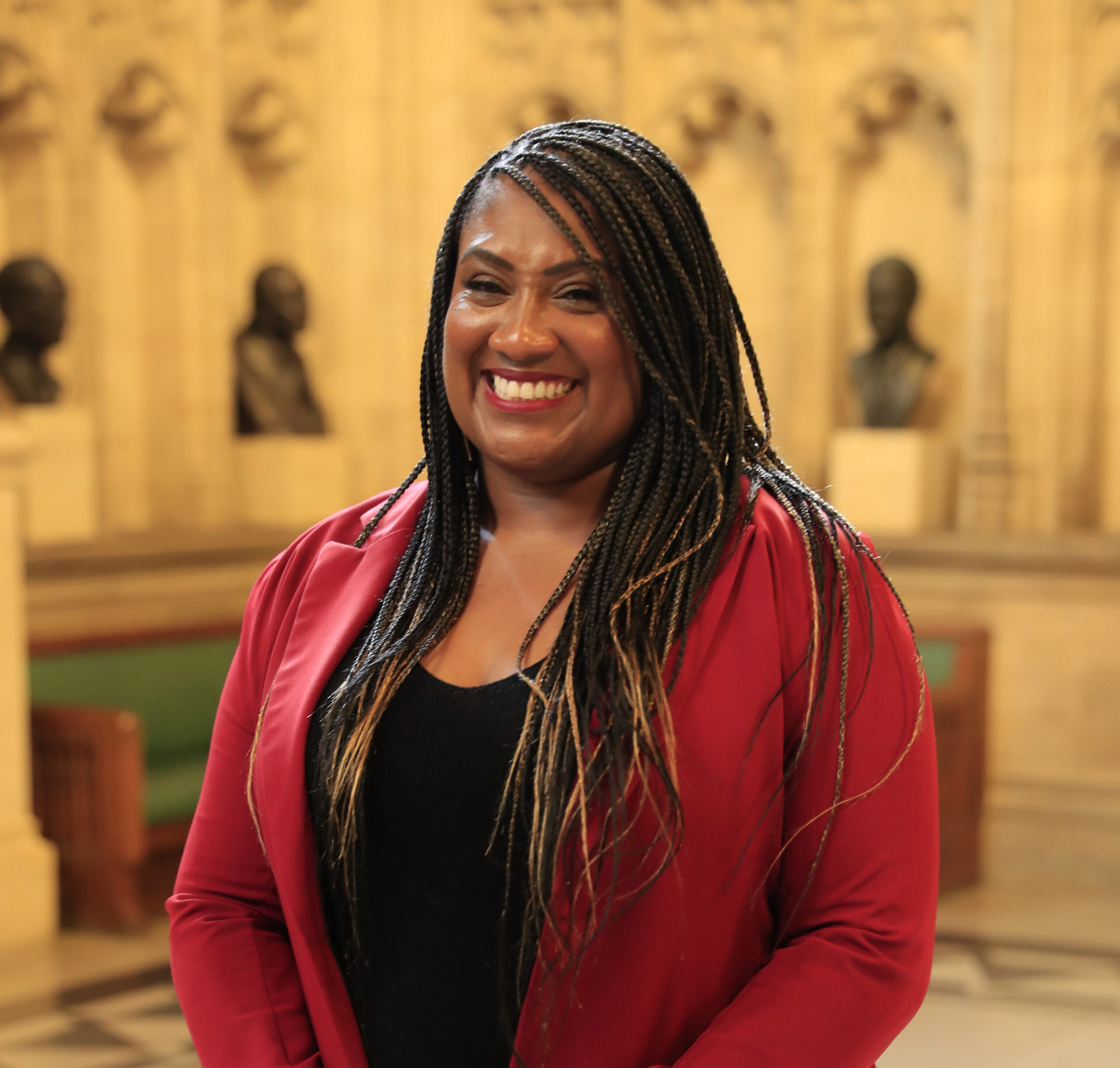
Marsha de Cordova brought experience of voluntary organisations and local government into parliamentary politics. Born with nystagmus, an eye condition, and registered blind, she has made disability rights a central part of her public work. Her campaigning addresses the arrangements that shape people’s access to education, employment and public life. 2
Education and the right to participate
In her maiden Commons speech in July 2017, de Cordova recalled her mother’s determination that she should attend a mainstream school. A primary headteacher had recommended a special school; her mother challenged that advice. De Cordova connected this family history with her later campaigning. Access to education, public transport and jobs, she argued, affected whether disabled people could participate fully in society. 3
Before becoming an MP, she worked in the voluntary sector for more than ten years and served as a Labour councillor in Lambeth. Her stated priorities as Battersea’s representative have also included housing, environmental issues and opportunities for young people. 2
Representing Battersea
De Cordova won Battersea for Labour in June 2017 and was returned at the general elections of 2019 and 2024. She became Shadow Minister for Disabled People in October 2017, then Shadow Secretary of State for Women and Equalities in April 2020. The latter appointment lasted until September 2021. These were opposition posts, involving scrutiny of ministers and the development of Labour’s policies. 1
Her first speech also addressed the housing pressures of her constituency. She described insecurity among private tenants and the gap between expensive new developments and what many residents could afford. She called for public investment and decent housing accessible to working people. The speech placed disability rights within a wider account of representation, including the homes, services and opportunities available to Battersea’s residents. 3
Employment and social security
In a written question tabled in April 2025, she asked whether ministers would assess employers’ compliance with disability duties in recruitment and employment. The reply referred to the Equality Act, reasonable adjustments, legal remedies and guidance for employers and applicants. Her question focused on how workplace rights operated when people sought or held a job, and on whether compliance itself should receive closer government attention. 5
During debate on the Universal Credit and Personal Independence Payment Bill on 1 July 2025, de Cordova criticised benefit cuts proposed by her own party’s government. She raised concerns about different treatment for future claimants and argued for reforms developed with disabled people. She wanted ministers to await relevant reviews of disability benefits and employment before proceeding. At the same time, she welcomed proposals intended to make trying work less risky for claimants, and argued that people who wanted employment should receive effective support. Her position combined criticism of the bill with support for changes designed around disabled people’s circumstances. 6
Making Parliament accessible
Giving evidence to the Commons Modernisation Committee in April 2025, she explained the social model of disability: barriers in institutions and surroundings can prevent participation. She applied that argument to her own workplace. Poor lighting, glass doors without sufficiently clear markings, and lifts without audible floor announcements made moving around the parliamentary estate harder. She asked for practical changes to the building and its equipment. 4
Access also affected parliamentary business. De Cordova described improvements in the provision of large-print Order Papers and explained how a music stand had helped her read documents at the Despatch Box. Her evidence connected physical design with the ability to prepare, speak and move independently. It presented accessibility as part of how Parliament organised its work. 4
A wider parliamentary office
In October 2024, de Cordova was appointed Second Church Estates Commissioner. The role includes answering MPs’ oral and written questions about the Church of England. Subjects can range from safeguarding and the appointment of bishops to the circumstances of rural parishes. The commissioner also acts as a link between Church bodies, government and Parliament, including advising on contact with MPs. 7
The position brings responsibilities in the consideration of Church legislation. Its holder belongs to the General Synod’s Legislative Committee, which prepares legislation for Parliament, and serves on the parliamentary Ecclesiastical Committee. This adds a distinct institutional role to the work of a constituency MP: explaining Church business in the Commons and helping it pass through parliamentary procedures. 7
By October 2026, de Cordova remained Labour MP for Battersea and Second Church Estates Commissioner. Her parliamentary record also included service on the Work and Pensions Committee, the Petitions Committee and the joint committee examining the draft Mental Health Bill. 1
Sources and further reading
1. Marsha de Cordova: Parliamentary Career. UK Parliament.
2. About Marsha. Marsha de Cordova MP.
3. Scheduling of Parliamentary Business, 17 July 2017. House of Commons Hansard.
4. Modernisation Committee Oral Evidence, 1 April 2025. House of Commons.
5. Disability Employment Question 43928. UK Parliament.
6. Universal Credit and Personal Independence Payment Bill, 1 July 2025. House of Commons Hansard.
7. Second Church Estates Commissioner. Marsha de Cordova MP.
Featured image. Marsha de Cordova in her official parliamentary portrait from October 2024. © House of Commons, 14 October 2024, via Wikimedia Commons; source-provided crop. Image record · CC BY 3.0
