Joseph Knight’s dispute with John Wedderburn involved a straightforward ambition: to live with his wife and earn enough to support a household. Wedderburn had dismissed Annie Thomson, another servant, after she became pregnant. He would neither take her back into service nor provide a home where she and Knight could live together. 1
Knight resolved to leave. Wedderburn insisted that he could not, because he had bought him in Jamaica. What followed was a struggle over whether that purchase could bind Knight to one man’s service for the rest of his life in Scotland. 2
From Jamaica to a Scottish household
Knight had been taken from Africa to Jamaica as a child. The historical report of his case describes him as apparently about twelve or thirteen when a ship’s commander sold him to Wedderburn. The account records a transaction, rather than the circumstances in which the child had first been seized or separated from his family. 2
Wedderburn subsequently brought Knight to Scotland as a personal servant. Years of work followed. In the language of the dispute, Wedderburn treated the purchase in Jamaica as a continuing title to Knight’s person. Knight’s later demand to leave challenged the assumption that crossing the Atlantic could carry that power intact into another legal system. 2
Knight learned to read and write, was baptised and married in Scotland. His memorial referred to the 1772 Somerset ruling in England, which had prevented forcible removal for sale. That case helped open a possibility, but Knight needed a remedy in the Scottish courts for the particular control Wedderburn continued to claim over him. 1
Refusing a lifetime of service
When Wedderburn learned that Knight intended to leave, he obtained a warrant for his apprehension. Knight acknowledged his intention before the justices of the peace. They decided that Wedderburn was entitled to his services and that the arrangement should continue. His first encounter with the legal process therefore confirmed the constraint he was trying to escape. 2
Knight persisted. He petitioned the sheriff in Perthshire, asking for a decision that he could neither be held in slavery nor compelled to serve indefinitely. He also wanted protection against being sent abroad. Freedom to change employment and protection from forced removal were connected parts of the claim. 2
The sheriff rejected Wedderburn’s demand for perpetual service, holding that slavery was inconsistent with Scots law and that Jamaica’s regulations did not extend to Scotland. When challenged, he maintained his decision. The dispute then moved to the Court of Session in Edinburgh, where the arguments were heard at length. 2
What purchase could not justify
Wedderburn’s case relied on the recognised place of slavery in British colonial commerce. His lawyers argued that property acquired under one country’s law should not vanish when brought into another. They presented his demand for Knight’s lifelong service as a limited claim, distinct from the more violent powers exercised over enslaved people on plantations. 2
Knight’s side challenged that distinction. A lifetime of compulsory work without wages remained slavery, whatever name was given to it. The argument also returned to his childhood. He could not have freely contracted himself into enslavement as a boy; an exchange of money between other people could not supply the consent that had never existed. 2
His lawyers questioned the idea that an injustice became acceptable because commerce profited from it. They also invoked a Scottish statute of 1701 protecting people against removal from the country without consent. Knight was asking the court to recognise that the protections of the place where he lived applied to him. 2
The decision of 15 January 1778
The judges were divided. Lord Hailes’s report preserves arguments in favour of continuing an enslaver’s rights as well as arguments against them. Lord Kames rejected the idea that Scottish judges should enforce the injustices permitted by Jamaican law. Other judges defended ownership or lifelong service. The outcome was reached through disagreement, not a shared judicial rejection of slavery. 3
On 15 January 1778, the court upheld the result in Knight’s favour. The reported decision denied Wedderburn a right to his service for any period and denied a right to send him out of Scotland against his will. Knight had defeated both the demand for compulsory labour and the threat of removal. 2, 3
That result went beyond deciding the destination of a single ship. It rejected the attempt to preserve slavery in Scotland under the name of perpetual service. Its territorial limits also mattered: the court was deciding what rights could be enforced in Scotland. Enslavement on Britain’s Caribbean plantations continued. 2
The freedom at stake
The surviving case papers preserve competing descriptions of Knight’s marriage, education and conduct. His own legal claim makes the practical stakes clear. A man who wanted to support his family was being told that his labour belonged permanently to somebody else. His challenge removed that obstacle. 1
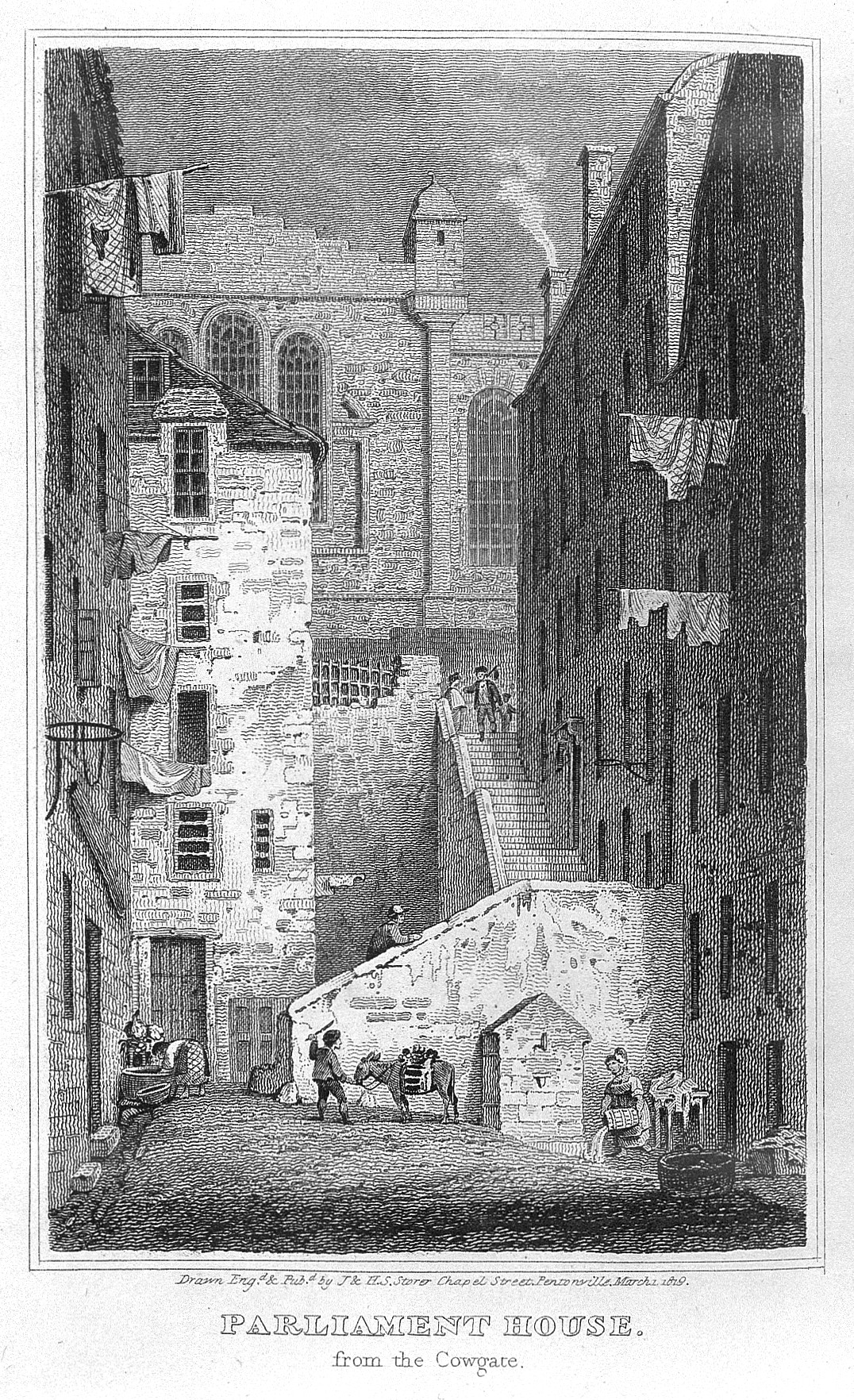
In December 2022, a plaque commemorating the case was unveiled at Parliament House in Edinburgh. Its account returns to the central result: Knight no longer had to remain a perpetual servant in Wedderburn’s household. The setting connects his struggle with the institution whose decision helped secure his freedom. 4
Knight’s petition asked for room to build an ordinary life: to leave, to work and to remain in the country where he had made a family. Those demands took years to establish. They gave the Scottish court a concrete question it could not answer without confronting the power claimed over a Black man. 2
Sources and further reading
1. The Joseph Knight case. National Records of Scotland.
2. Joseph Knight against John Wedderburn: historical report. Dictionary of Decisions extract reproduced with Somerset’s case. 1778 case; historical compilation. Public-domain historical text.
3. Knight v Wedderburn, Hailes 776. BAILII, Scottish Court of Session Decisions. 1778-01-15; historical report. Public-domain historical text.
4. Plaque marks historic slavery case at Court of Session. Judiciary of Scotland. 2022-12-06.
Featured image. An early nineteenth-century engraving of Parliament House, Edinburgh, viewed from the Cowgate. It provides a later view of the setting of Scotland’s senior courts. J. and H. S. Storer; Wellcome Collection, L0023641, via Wikimedia Commons. Reused unchanged. Image record · CC BY 4.0
