From a London prison in 1767, Jonathan Strong sent for people he hoped would help him. First he contacted his godfathers, John London and Stephen Nail. They came, but were refused access. He then sent for Granville Sharp, a man who had helped him recover from serious injuries. Strong was being held so that he could be shipped to Jamaica and sold. 1, 2
His imprisonment interrupted a life he had begun to rebuild. He had found work carrying medicines for an apothecary’s household. A former enslaver’s decision to reclaim him threatened to sweep that life away. The messages Strong managed to send were his means of resisting it. 1
From Wapping to a hospital ward
David Lisle had brought Strong from Barbados to England as an enslaved servant in 1765. In his history of abolition, published in 1808, Thomas Clarkson described Lisle’s violence towards him at lodgings in Wapping. One assault with a pistol injured Strong’s head; his sight and ability to walk were badly affected. Lisle then abandoned him when he could no longer work. 1
Strong sought medical help from William Sharp, a surgeon who treated people unable to pay. That visit brought him into contact with William’s brother Granville. Seeking treatment was an immediate act of self-preservation: before the later arguments about freedom, Strong needed care for injuries that had made ordinary movement difficult. 1
Barts Health’s archive identifies Strong as a patient at St Bartholomew’s Hospital for more than four months in 1765. His recovery therefore involved sustained hospital treatment. The length of that stay gives some measure of how far his story extended beyond the moment of an assault and the eventual court hearing. 3
Afterwards, employment with the family of an apothecary named Brown gave him a place in London’s working life. Clarkson records that he carried out medicines. Strong was moving around the city on practical errands, doing work on which other people depended. It was while he was employed that Lisle saw him again. 1
A working life under threat
Lisle’s renewed interest followed Strong’s improvement in health. The man he had discarded was now someone from whom he expected to profit. A sale to a Jamaican purchaser named Kerr was arranged for £30. Strong was summoned to a public house in Fenchurch Street and seized by men who took him to the Poultry Compter, a City of London prison. 1
Clarkson names those involved as the prison keeper John Ross and William Miller, an officer under the Lord Mayor. Their participation matters. The attempt to remove Strong was carried out through people connected to the city’s machinery of detention, even though there was no warrant for holding him. A private claim of ownership was being enforced through a prison. 1
The people he called upon
Strong’s first appeals went to his godfathers. Their role shows that he had connections beyond the Sharp family and the household that employed him. When London and Nail could not get inside, he tried another route. His contacts did not immediately secure his release, but he persisted in reaching people outside the walls. 1
Sharp was also initially refused access. He insisted that the keeper produce Strong before a magistrate and approached the Lord Mayor, Sir Robert Kite, who arranged a hearing. The essential demand was to make those holding Strong explain themselves publicly. Without that intervention, a man doing ordinary work in London could disappear into an Atlantic voyage. 1
What the Lord Mayor decided
At the hearing, the purchaser’s representatives argued that Strong remained property. They included David Laird, captain of the Thames, the vessel intended to take him to Jamaica. A legal opinion associated with Philip Yorke and Charles Talbot was invoked to support the claim that arrival in Britain did not end an enslaver’s rights. 1
Kite ordered Strong’s discharge because he had been detained without a warrant. The immediate result was release from unlawful custody. It was not a general judgment abolishing slavery or settling the status of every Black person in England. For Strong, however, this distinction in legal scope did not diminish the practical importance of being allowed to leave. 1
Even that order did not finish the confrontation. According to Clarkson, Laird seized Strong in the room and again claimed him. Sharp responded by charging the captain with assault in front of the witnesses. Laird let go. The episode exposed the gap between an official decision and the physical protection needed to make it effective. 1
After the hearing
The case pushed Sharp into a prolonged examination of English law. In 1769 he published his argument against tolerating slavery in England. Yet that later campaigning began with Strong’s particular circumstances: injury, employment, seizure and a demand for help. Strong had made people confront a claim of ownership that might otherwise have gone unchallenged. 1
A short entry in Sharp’s surviving diary records Strong’s death on 19 April 1773. Sharp identified him as the man whose freedom he had helped secure in 1767. Strong had lived for several years after the attempt to send him to Jamaica, although the diary offers little about his later daily life. 2
Strong’s place in this history rests on more than the influence he had on a campaigner. He sought treatment, returned to work and called on a network when his freedom was threatened. The hearing mattered because a living person had refused to disappear quietly into the transaction others had made over him. 1
Sources and further reading
1. History of the Abolition of the African Slave-Trade, volume I. Project Gutenberg; original London edition. 1808. Public-domain historical text.
2. Granville Sharp’s diary, 19 April 1773. Gloucestershire Archives, D3549/13/4/2; Appendix O, transcript 2. 1773; modern archival transcription. Public-domain historical text.
3. Connections to slavery: research guide. Barts Health Archives and Museums.
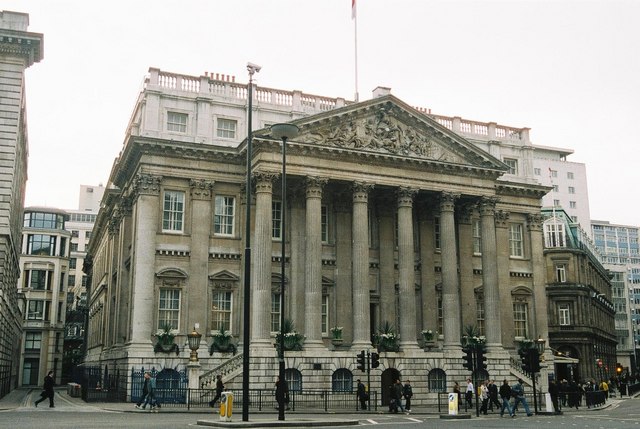
Featured image. Mansion House, the Lord Mayor’s official residence in London, photographed in 2005. Strong challenged his detention before Lord Mayor Sir Robert Kite in 1767. Photograph: Chris Downer / Geograph, 21 January 2005. Reused unchanged. Image record · CC BY-SA 2.0