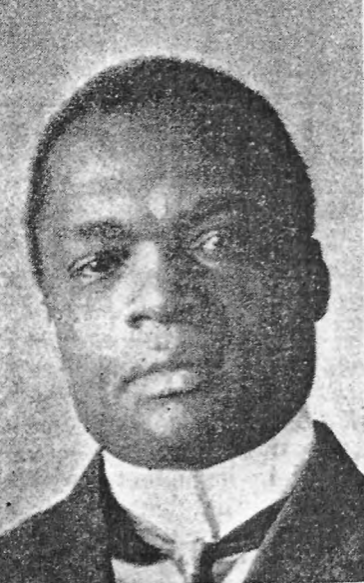
In July 1900, delegates gathered in London to discuss the position of Africans and people of African descent across the world. Henry Sylvester Williams had helped bring them together. The Pan-African Conference gave participants a forum for comparing racial discrimination, colonial government and the economic pressures facing their communities. Its organisation required contacts across national and imperial boundaries, as well as a place to meet in Britain.3
A working life across the Atlantic
Williams grew up in Arouca, Trinidad, in a working-class family. His route to London passed through the United States and Canada, including a period of study at Dalhousie University in Nova Scotia in the 1890s. He eventually qualified as a barrister in London and also practised in Cape Town. His legal and political work brought him into contact with people challenging the treatment of African communities under colonial rule.1
Building an association
The African Association, established in London in 1897, sought to publicise injustice and advance the interests of African peoples. Williams worked as an organiser and secretary, roles that involved sustaining relationships and communicating a common programme. The association supplied an organisational base from which the 1900 conference could be developed. A declaration of solidarity required a continuing body capable of circulating information and maintaining contact with supporters.2
South African activist Alice Kinloch was also involved in the association’s foundation. Her participation connected Williams with campaigning that originated in Africa and had reached a British audience. The organisation’s beginnings were therefore a collaboration between people bringing different experiences of racial hierarchy and colonial power. Women’s participation belonged to the formation of this political network, even where later accounts concentrated on its male representatives.7
What the conference demanded
The conference’s address, drafted by W. E. B. Du Bois, challenged the use of racial difference to deny opportunity and rights. It condemned economic exploitation in Africa, defended education and self-development, and called on Britain to move towards responsible government in its African and Caribbean colonies. It also demanded respect for independent Black states, including Haiti and Liberia. These appeals combined criticism of imperial practices with an attempt to hold powerful governments to their own declared principles. The document addressed the relationship between wealth, political authority and racial inequality across several parts of the world.4
Delegates considered subjects ranging from the consequences of slavery to the social and political conditions of Black communities and Africa’s place in world history. A committee planned a permanent Pan-African association with branches overseas. The gathering’s ambitions thus extended beyond the presentation of papers: participants wanted arrangements through which their discussions could continue after they left London.3
Branches, print and limited resources
In 1901 Williams travelled to Trinidad and Jamaica to establish branches, and promoted the cause in the United States. Back in London, he published a monthly journal, the Pan-African. It survived for only a few issues. Shortage of money hampered the wider organisation, and the proposed second conference did not materialise. Maintaining an international movement demanded resources that enthusiasm and an agreed programme could not supply on their own.2
Representation in London and southern Africa
Williams also entered local electoral politics. In 1906 he won a seat on St Marylebone Borough Council as a Progressive, an affiliation aligned with the Liberals. Municipal office added a different form of representation to his work. He was now participating in a London governing institution while retaining connections with campaigns extending far beyond the borough.6
Those connections had a concrete expression in 1907, when he assisted a deputation from southern Africa that included Josiah Gumede. The visitors sought land rights in the Orange River Colony. Williams received them in London, presented their claims to the Colonial Office and joined their meeting with the colonial secretary, Lord Elgin. He argued that their status as British subjects should carry elementary rights, including the ability to purchase land. The deputation challenged restrictions that prevented African people from owning or leasing it. Their case brought the distance between imperial claims about subjecthood and the operation of colonial law directly before ministers. Williams’s role involved preparing and presenting a specific grievance on behalf of people who had travelled to seek redress.5
Williams returned to Trinidad in 1908 and died there in 1911. His final return followed years of movement between the Caribbean, North America, Britain and Africa, during which legal practice, political organisation and representation had repeatedly overlapped.1
Sources and further reading
1. Review of Origins of Pan-Africanism — New West Indian Guide; Winston James.
2. Henry Sylvester Williams — Encyclopedia of World Biography; Gale.
3. The Pan-African Congresses, 1900–1945 — BlackPast; Saheed Adejumobi.
4. To the Nations of the World, 1900 — W. E. B. Du Bois; BlackPast transcription.
5. No equality under the Union Jack, 1900–1910 — South African History Online.
6. Henry Sylvester Williams — St Marylebone Parish Church.
7. Alice Kinloch — Black Plaque Project.
Featured image. Henry Sylvester Williams in a photograph published in 1905. Photograph: Ernest Herbert Mills, Review of Reviews, 1905, p. 250, via Wikimedia Commons. Public domain. Image record · Public domain
