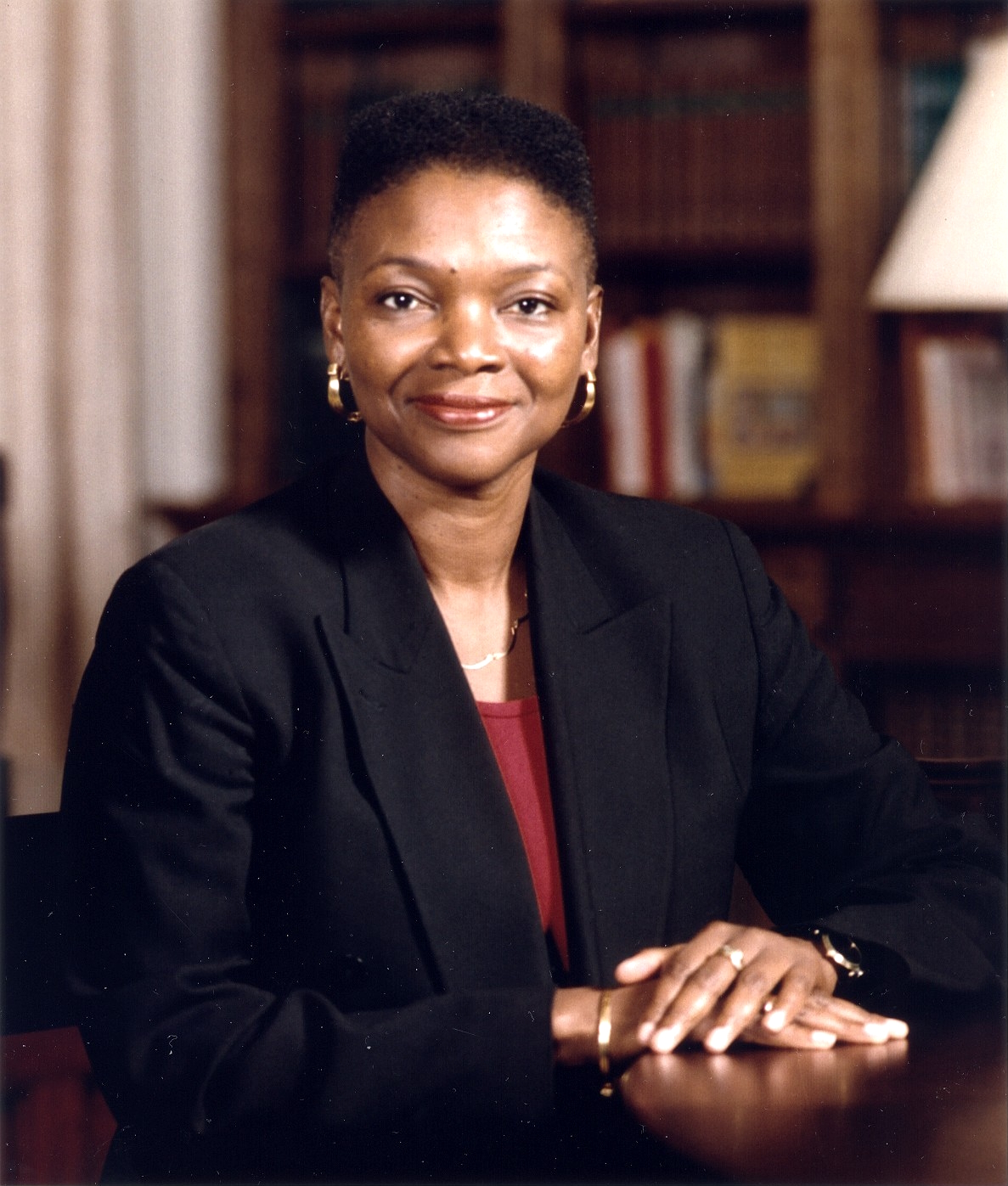
Valerie Amos became the first Black woman to sit in the British Cabinet. Her route there passed through local government, equality administration and international advisory work. Later appointments took her into diplomacy, humanitarian coordination and university leadership, making her career a history of several different forms of public responsibility. 1
Education and equality work
Born in Guyana, Amos grew up in a family in which both parents were teachers. She attended school in Bexleyheath and went to Warwick to study sociology during the 1970s. In a later interview, she recalled the appeal of courses in women’s studies, international relations and race relations. Further study followed at Birmingham and East Anglia. Education remained a recurring part of her work: she would eventually lead institutions whose cultures and opportunities she wanted to examine, as well as their academic performance. 2
Before entering the Lords, she worked in local government and became chief executive of the Equal Opportunities Commission. She also advised Nelson Mandela’s government on leadership and organisational change. These roles gave her experience of equality administration and organisational change before she entered national government. She later served as British High Commissioner to Australia, before taking up her United Nations appointment. 1
Entering government through the Lords
Amos entered the House of Lords on 24 September 1997. Her ministerial responsibilities developed in stages: she served at the Foreign and Commonwealth Office from June 2001, then became Secretary of State for International Development on 12 May 2003. That appointment lasted until October, when she moved to become Leader of the House of Lords and Lord President of the Council. She held those posts until June 2007. The sequence distinguishes a relatively short period at the development department from nearly four years leading the government’s business in the upper chamber. 3
An international humanitarian role
In July 2010, the United Nations announced her appointment as Under-Secretary-General for Humanitarian Affairs and Emergency Relief Coordinator. Foreign Secretary William Hague publicly welcomed the appointment and identified the importance of the UN’s humanitarian work. The post placed her at the head of the Office for the Coordination of Humanitarian Affairs, concerned with organising responses to major emergencies. Hague emphasised the value of strong leadership in international organisations and presented humanitarian coordination as an important part of Britain’s contribution to the United Nations. 4
The difficulty of that work is visible in the UN’s briefing of 9 March 2012. After a two-day visit to Syria, Amos pressed its government to consider a proposal allowing humanitarian organisations to reach people, evacuate wounded patients and deliver essential supplies. She also visited facilities for displaced Syrians in Turkey’s Hatay province and met the Turkish foreign minister to discuss regional preparations. The account shows that access itself had to be negotiated. Identifying urgent needs and having supplies available could not, on their own, ensure that relief workers could reach people. Her proposal sought regular arrangements, rather than access limited to one visit. 5
Universities and institutional culture
As SOAS director in June 2020, Amos addressed staff and students after the killing of George Floyd. She connected racism with structural inequality and acknowledged that SOAS still needed to change despite its teaching and research on rights and justice. Her statement identified the Race, Accountability and Listening project, whose recommendations had entered the university’s equality strategy, alongside work on organisational culture. She also pointed to the Africa at SOAS review as a basis for reconsidering relationships with African institutions. Her message placed the experiences of staff and students alongside institutional policies. She also offered routes to staff and student support services, connecting the wider discussion of racism with immediate needs within the university community. 6
Amos’s directorship at SOAS ran from 2015 to 2020. On 1 September 2020 she began as Master of University College Oxford, succeeding Ivor Crewe. The college’s welcome placed her educational leadership alongside her earlier Cabinet and United Nations responsibilities. The move brought another change of scale: after coordinating international affairs and leading a university, she took responsibility within an individual Oxford college. Its announcement identified academic excellence, opportunity and inclusion among the priorities associated with her arrival. 7
Sources and further reading
1. Valerie Amos (United Kingdom). United Nations Foundation.
2. Master and Companion: Dame Valerie Amos and her journey from Guyana to the Garter. University of Oxford.
3. Parliamentary career for Baroness Amos. UK Parliament.
4. Foreign Secretary welcomes United Nations role for Baroness Amos. Foreign & Commonwealth Office.
5. Noon briefing of 9 March 2012. United Nations.
6. SOAS Director Valerie Amos addresses the killing of George Floyd in the US and racial injustice. SOAS University of London.
7. Univ welcomes Baroness Valerie Amos. University College Oxford.
Featured image. Valerie Amos in an official government portrait from around 2001. Department for International Development / Crown copyright, UK Government Web Archive, via Wikimedia Commons; source version with border removed and brightness and contrast adjusted. Image record · Open Government Licence 3.0
