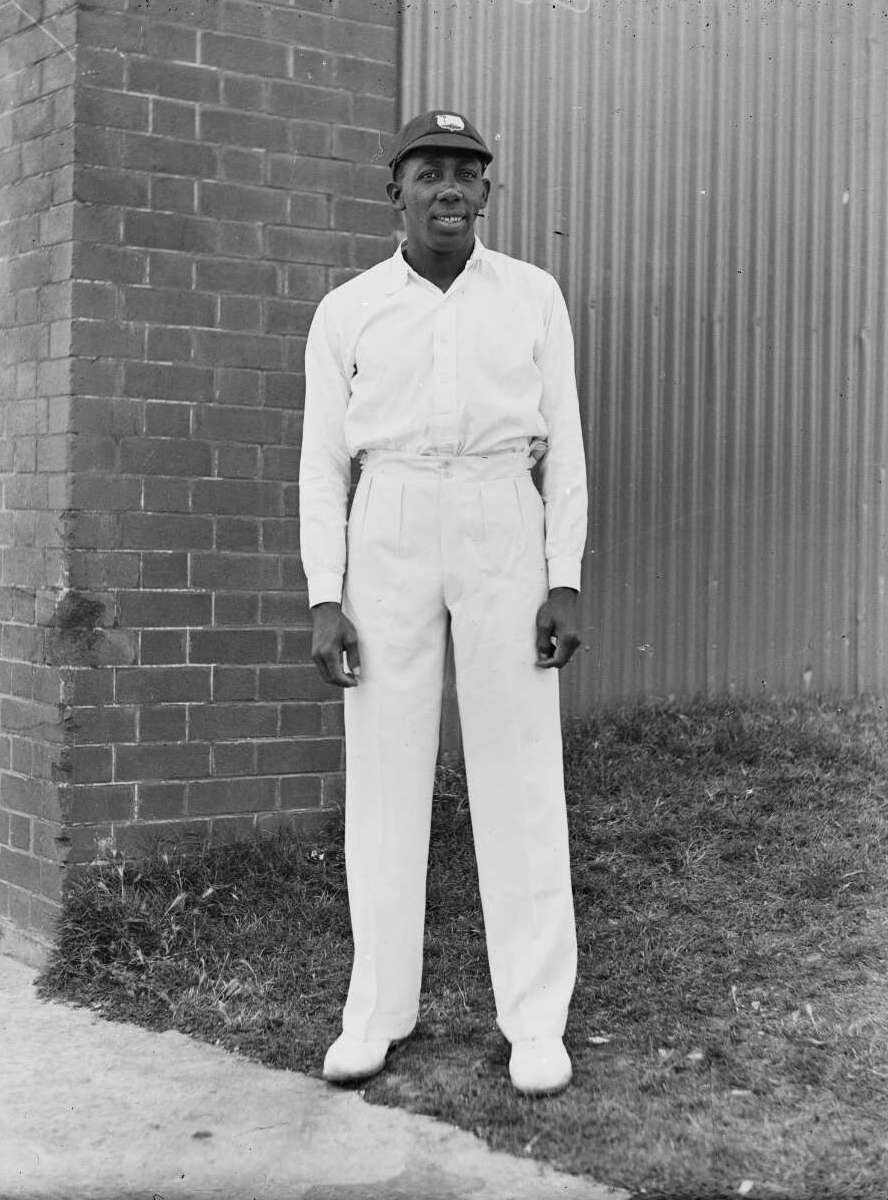
When Learie Constantine became Britain’s first Black life peer in 1969, he brought experience of ministerial office and diplomacy into the House of Lords. His political career had developed between Britain and Trinidad and Tobago. It included the practical responsibilities of government, representation overseas and a continuing concern with racial discrimination.3
Public standing and everyday exclusion
Constantine’s cricket career brought him to Nelson in Lancashire in 1929, where he played professionally for ten seasons. During the Second World War, he worked for the Ministry of Labour as a welfare officer concerned with West Indian workers. Supporting people who had come to Britain for work became part of his public responsibilities. Sporting recognition existed alongside these less celebrated demands of community work.1
In 1943 the Imperial Hotel in London refused to honour the full stay that Constantine had booked. He challenged the refusal and won damages in court the following year. He also addressed discrimination in print. His book Colour Bar, published in 1954, examined racial prejudice in Britain, extending an argument he had pursued through campaigning and personal legal action. He criticised the Queen for holding a banquet in Bermuda without any Black guests. The example connected his criticism of everyday prejudice with the conduct of prominent institutions.1
Law and organised representation
Constantine joined Middle Temple in 1944 and qualified as a barrister in 1954, maintaining work in cricket journalism during his studies. He chaired the League of Coloured Peoples between 1947 and 1951. These activities involved different forms of representation: legal training prepared him to work within the courts, while leadership of the League involved collective campaigning against racial inequality. Qualification came after a decade of study alongside other commitments.2
In Trinidad and Tobago, he entered government as minister of works and transport in 1956. He also participated in negotiations leading towards independence. Public office gave him responsibilities for the administration of a country moving out of colonial rule, alongside the political task of negotiating its future relationship with Britain.2
Representing an independent country
After independence in 1962, Constantine served as Trinidad and Tobago’s first high commissioner to Britain, holding that position until 1964. The role placed him in London as the representative of a sovereign Caribbean state. His later life peerage was created in March 1969, and he entered the Lords that month. These appointments took his work into institutions with quite different responsibilities: diplomacy required representation of a government, while membership of the Lords offered a personal parliamentary voice.3
Appointments in Britain
In November 1968 the home secretary announced Constantine’s appointment to the Race Relations Board under the new Race Relations Act. Mark Bonham Carter chaired the body, with Constantine among a group of members appointed for two years. The list also included Mota Singh and Mizanur Rahman. Constantine was taking a place in a collective statutory institution dealing with the subject around which he had long campaigned. His public work now extended from voluntary organisation into formally appointed national responsibilities.4
He also served as rector of the University of St Andrews from 1967 to 1970. There was already a family connection: his daughter had graduated from the university in 1949. Constantine hoped to be an active rector, but ill health limited his involvement. The appointment belongs to a period in which demands on his time extended across public bodies, while his health increasingly restricted what he could undertake.5
Caribbean livelihoods in the Lords
In his speech on 10 March 1971, Constantine addressed the consequences of Britain’s proposed entry into the European Economic Community. He urged peers to consider families dependent on sugar, bananas and citrus, rather than treating trade as a matter of government revenue alone. Britain, he argued, had encouraged Caribbean production for its own market and therefore carried continuing responsibilities towards those producers. He wanted acceptance of the Commonwealth Sugar Agreement made a condition of British entry. His argument connected a proposed change in European trading arrangements with employment, credit and the risk of hardship in the Caribbean. It also asked Britain to recognise how earlier imperial economic decisions continued to shape the choices available to independent countries. The speech turned diplomatic knowledge into a specific demand about the terms Britain should seek in negotiations.6
Sources and further reading
1. Learie Constantine — English Heritage.
2. Learie Constantine — Inner Temple.
3. Learie Constantine: The First Black Life Peer — House of Lords Library; Sarah Tudor.
4. Race Relations Board membership, 25 November 1968 — House of Commons Hansard.
5. Cricketer, comedians and campaigners: Rectors 1967–93 — University of St Andrews; Rachel Hart.
6. EEC, Commonwealth and Brussels negotiations, 10 March 1971 — House of Lords Hansard.
Featured image. Learie Constantine during the West Indies cricket team’s 1930–31 visit to Australia, around November 1930. Image: National Library of Australia collection, via Wikimedia Commons. Public domain. Image record · Public domain
