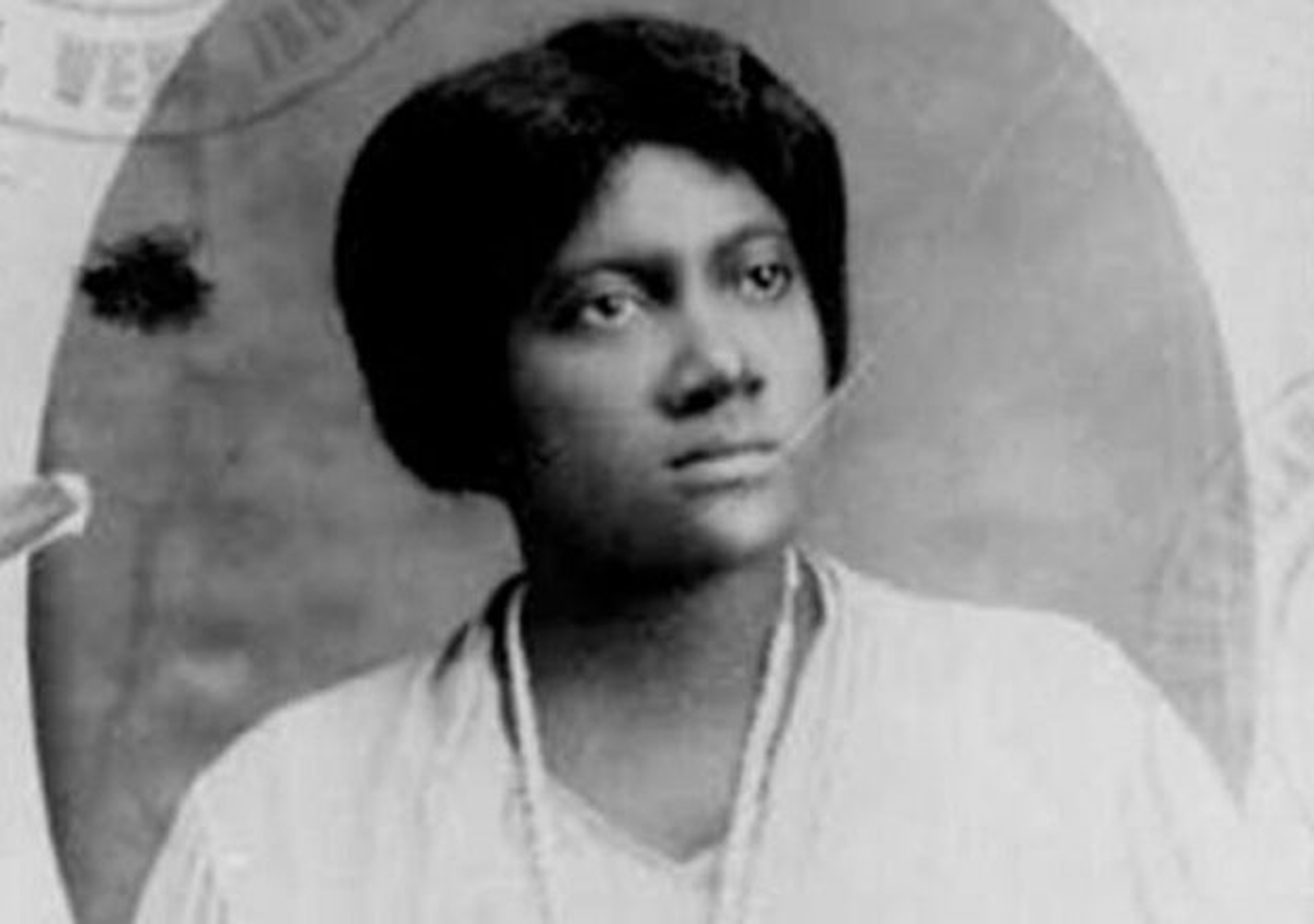
Amy Ashwood Garvey helped found the Universal Negro Improvement Association in Jamaica in 1914. Her subsequent political work extended through organisations, correspondence and writing across several countries. Building relationships, maintaining an organisational presence and developing accounts of Black history all formed part of her activity over the following decades.2
From Jamaica to organisational responsibility
Born in Port Antonio, Jamaica, in 1897, Ashwood Garvey spent part of her childhood in Panama and attended Westwood High School in Jamaica. By 1919 she was working in New York as the UNIA’s general secretary and serving as a director of its Black Star Line shipping venture. She helped establish the women’s auxiliary and worked on the Negro World newspaper. These responsibilities placed her within the practical administration and communications of a growing movement, with women’s organisation among its activities.1
Confronting racist accounts of Africa
In London in 1924, she supported Ladipo Solanke when he challenged a racist newspaper account of Nigeria. Solanke’s protest appeared in the magazine West Africa, and the two became close friends. The episode connected opposition to racist reporting with relationships between Caribbean and African campaigners in Britain. Representation in the press was itself a political issue: accounts circulated to British readers could reinforce the assumptions through which African societies were judged. Supporting this protest was one way Ashwood Garvey participated in the exchanges from which further organising developed.6
A cultural venue with political connections
During the mid-1930s, Ashwood Garvey and the musician Sam Manning established the Florence Mills Social Parlour in London’s West End. Named after the African American performer, the venue brought jazz and calypso into a setting where West African and West Indian arts and ideas circulated. Its social character mattered. Cultural life provided occasions for people to gather, sustain friendships and exchange views across national backgrounds. The parlour belonged to a Black London in which music, sociability and political discussion could occupy the same rooms. Ashwood Garvey’s work therefore included creating a place in which connections could be maintained, alongside participation in more explicitly political associations.3
Women’s work at the Manchester congress
At the Pan-African Congress in Manchester in October 1945, Ashwood Garvey challenged the marginal position commonly assigned to Black women. In her intervention on 19 October, she drew attention to women’s work in Jamaica, including teaching, postal employment and agriculture. She argued that women agricultural workers received less pay than men for the same work, and criticised the failure of men to help secure better wages. She also pointed to women’s participation in migration to Cuba, Panama and the United States. Her contribution placed labour, economic inequality and political participation together. Within a meeting concerned with colonial rule and collective rights, she insisted that women’s position required direct attention. Women appeared in her account as workers and participants in public life, whose circumstances could not be adequately addressed by treating them primarily as mothers.4
Organising across borders and within London
Between 1946 and 1949, Ashwood Garvey travelled in West Africa. Her political relationships continued to extend between Africa, the Caribbean and Britain after the Manchester gathering. Travel and organisational work remained interwoven through a career that could not be confined to the country in which she happened to be living.1
In 1953 she helped establish the Afro-Women’s Centre, later known as the Afro-People’s Centre. Its aims joined women’s spiritual, social and political advancement. Creating a body with women’s needs at its centre continued the concern she had brought to international debate. It also placed that concern within a London organisation. Her activity moved between large congresses and the work of sustaining smaller institutions, where the terms of participation could be shaped around people whose interests received less attention elsewhere. The centre’s programme treated women’s public position as connected with several aspects of their lives.5
Writing as part of political work
Ashwood Garvey also produced writings on African customs, slavery and the Pan-African movement, alongside drafts of her own life story. Her correspondence included exchanges with African public figures, and her papers preserve photographs of meetings and relationships developed through her travels. These were forms of work through which she recorded experience and kept in contact across distance. Writing about her own activities gave her a place as an author of political history as well as a participant in it.2
Sources and further reading
1. Amy Ashwood Garvey, 1897–1969 — BlackPast; Allison Espiritu.
2. Papers of Amy Ashwood Garvey, 1919–1975 — Dobkin Family Collection.
3. Black Sound, 1930–1990 — Black Cultural Archives.
4. Colonial and Coloured Unity: Discussions, 19 October — George Padmore, editor; 1947 congress report.
5. Archiving the Life of Amy Ashwood Garvey — Black Women Radicals; Nydia Swaby interviewed by Karla Méndez.
6. Making a Movement: Ladipo Solanke — University College London.
Featured image. Amy Ashwood Garvey’s former home, with its commemorative plaque, photographed in May 2020. Photograph: Megalit, 26 May 2020, via Wikimedia Commons. Image record · CC BY-SA 4.0
