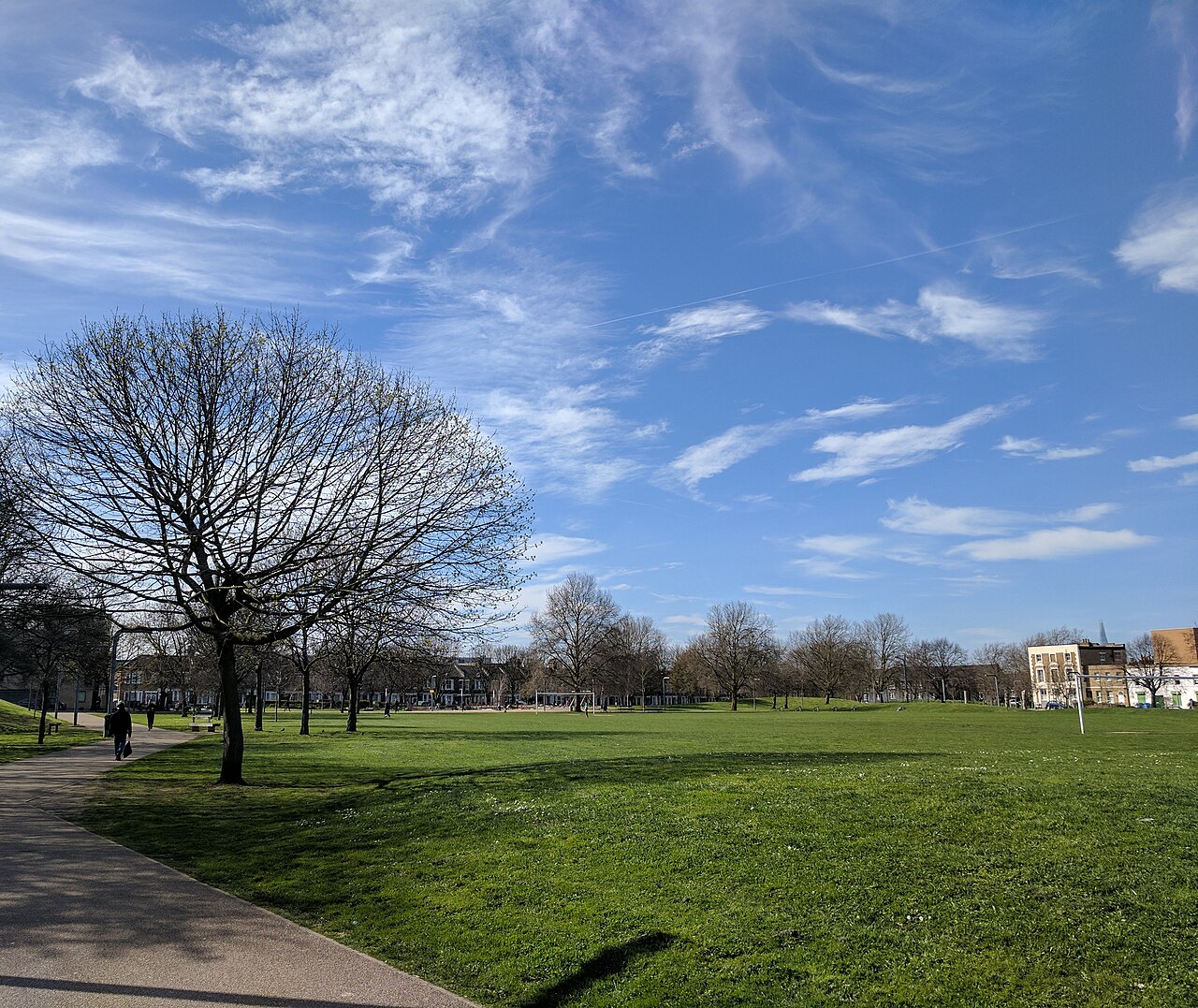
On Monday 2 March 1981, people assembled in Fordham Park, New Cross, before setting out across London. Choosing a working day was deliberate. The Black People’s Day of Action would bring the response to the New Cross fire into the city’s ordinary business, taking a demand for attention far beyond the neighbourhood where the tragedy had happened.1
The lives behind the march
The fire at 439 New Cross Road on 18 January had devastating consequences. Some victims died that morning; others died in hospital in the following weeks, bringing the toll to thirteen before the march. The names included Yvonne Ruddock, Paul Ruddock and Glenton Powell. A survivor, Anthony Berbeck, died in July 1983 and is remembered as the fourteenth victim. The chronology matters to the remembrance: thirteen lives were being mourned on the Day of Action, while later memorials include fourteen.2
Many in the community suspected a racist attack. Their fears arose in an area marked by racist violence and deep distrust of the police. The fire’s cause has never been conclusively established. What campaigners could already challenge was the response: an investigation they considered inadequate, media reporting that blamed partygoers, and a lack of the public sympathy they believed the deaths deserved.3
Building a national response
The New Cross Massacre Action Committee was formed on 20 January, chaired by publisher and activist John La Rose. It set about supporting the bereaved, challenging the investigation and organising public pressure. Its Fact Finding Commission collected testimony from survivors and families. This work provided an organised means for people directly affected by the fire to question accounts being offered by institutions with much greater resources and authority.4
The response reached beyond south-east London. People travelled from Birmingham, Manchester and other places to join the demonstration, with participants also coming from France. Estimates of the crowd vary, but it numbered many thousands. The journey into the capital connected dispersed communities through a shared public action. People who lived far from New Cross made the treatment of its families a matter that concerned them too.5
Through the city
From Fordham Park, the demonstration made its way towards central London and eventually Hyde Park, a journey lasting about eight hours. Its scale and timing made it a sustained presence in the streets. The choice of a Monday required participants to place the march within the working week, giving its demands a visibility that organisers had consciously sought.1
A delegation headed by La Rose, including relatives of the victims, delivered the Declaration of New Cross to Downing Street, the Metropolitan Police Commissioner and Parliament. This delegation was distinct from the main procession. It took the campaign’s concerns directly to the institutions whose conduct was being questioned while the wider demonstration continued through London.4
The passage through the city was contested. At Blackfriars Bridge, attempts by police to channel the procession led to confrontation and some marchers pushing ahead. Fleet Street, then the centre of the national newspaper industry, became another point of conflict. Historian Aaron Andrews shows how hostile coverage concentrated on disorder and vilified protesters, continuing the struggle over how the victims and their supporters were represented.6
Carrying the victims’ faces
Marchers carried portraits of those who had died, and relatives helped carry a coffin symbolising the lost lives. These objects gave public form to mourning. They presented identifiable people, with families and individual histories, to a city being asked to recognise the scale of the loss.6
Vron Ware photographed the demonstration. Her images preserve the people taking part, the signs they carried and the collective character of the day. Now held by Autograph, the photographs have been conserved, digitised and exhibited, including through a collaboration with Goldsmiths in 2017. They provide a record through which the demonstration can be encountered beyond the newspaper accounts that appeared immediately afterwards. The photographic archive carries the march’s public act of remembrance into later generations.7
The campaign after 2 March
The search for answers continued through the courts and through years of family campaigning. The inquests in 1981 and 2004 both returned open verdicts. The Day of Action had made the demand for accountability visible, but the unresolved cause remained at the centre of the families’ experience.3
The march established a powerful expression of collective political action in Britain. Its participants made the loss of young Black lives a public claim upon the institutions governing, policing and reporting the country.5
Sources and further reading
1. The Black People’s Day of Action 1981: online exhibition — UCL, Sarah Parker Remond Centre.
2. New Cross Fire: 45th Anniversary Memorial Service — Lewisham Council.
3. The New Cross fire — London Museum.
4. New Cross Massacre Campaign — George Padmore Institute.
5. Black People’s Day of Action, 1981 — University of Bristol, Department of History.
6. Truth, Justice, and Expertise in 1980s Britain: the Cultural Politics of the New Cross Massacre — History Workshop Journal / Oxford University Press.
7. Vron Ware: The Black People’s Day of Action, 1981 — Autograph.
Featured image. Fordham Park in New Cross, photographed in 2017. The Black People’s Day of Action march began here in 1981. Photograph: WillSV, 25 March 2017, via Wikimedia Commons. Image record · CC BY-SA 4.0
