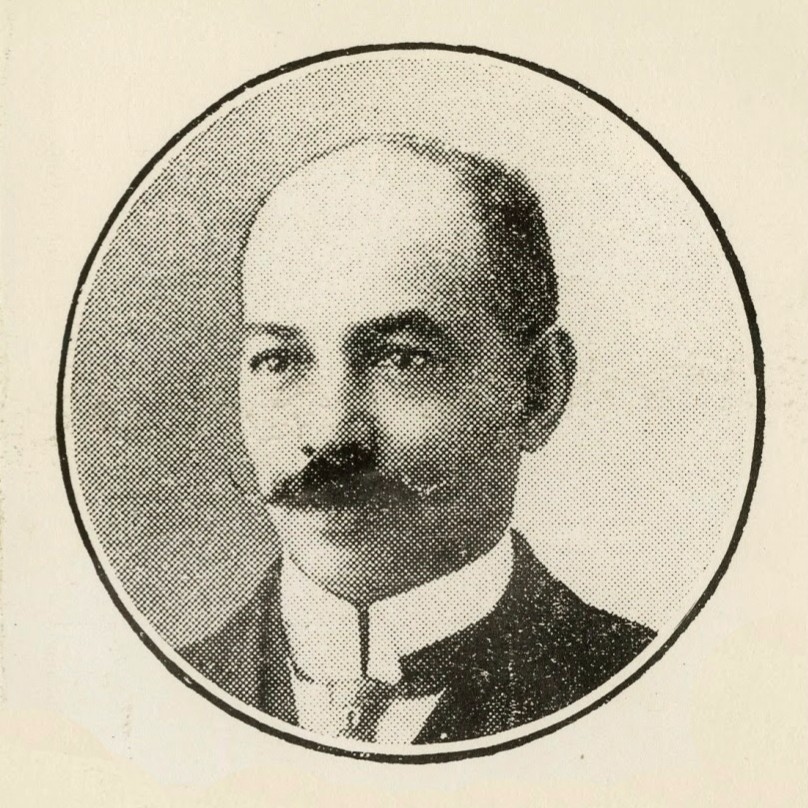
The vote that made John Archer mayor of Battersea in 1913 was decided by a majority of one. He became the first Black mayor of a London borough. The result brought attention to a politician whose public life already included an election victory, a defeat and a return to the council. His position had been built through local politics. 1
A life established in Battersea
Archer was born in Liverpool in 1863. His father, Richard, was a ship’s steward from Barbados; his mother, Mary, was Irish. By the 1901 census, Archer and his Canadian wife Bertha were living at 55 Brynmaer Road in Battersea. The census described his occupation as professional singer. He subsequently ran a photographic studio on Battersea Park Road, making portraits as well as entering public life. 2
Battersea’s Progressive politics brought together reformers, trade unionists and Liberals. Archer entered the council in 1906. His work included its baths, health and works committees: the everyday institutions through which a borough shaped residents’ lives. Swimming and sanitation belonged to public policy as much as the speeches and ceremonies associated with municipal office. 2
Answering the question of belonging
In his acceptance speech, reported by the Wandsworth Borough News, Archer answered speculation about his origins with a precise account of his family. He was born in Liverpool, he told his listeners, and was a Lancastrian. His father came from the Caribbean and his mother from Ireland. He also rejected the claim that she was Burmese. The speech made his ancestry public because others had made it a test of his fitness to belong. 3
Archer used humour in calling Liverpool an obscure village. Behind the joke was a refusal to let assumptions about appearance supply his biography. The new mayor did not present himself as someone who had just arrived to claim recognition. He asserted a British birthplace and family history on his own terms. 3
Black politics after the war
Archer’s inaugural address to the African Progress Union in 1918 made clear that his attachment to Liverpool and his commitment to Black people across the world belonged together. He recalled seeing a company of African American performers in Uncle Tom’s Cabin as a child. In his account, that performance helped form his opposition to the treatment of Black people. The memory connected a Liverpool boy’s experience of theatre to the politics of his adult life. 4
He then turned to the First World War. People from Africa, the Caribbean and the United States had fought alongside Britain and its allies. Governments that had spoken about freedom and national self-determination, he argued, should be judged by their treatment of people under their own authority. His challenge included Britain’s empire as well as the United States, France and Belgium. 4
Archer rejected the familiar postponement of equality on the grounds that colonised people were supposedly unprepared for it. He connected that argument to the history of enslavement and demanded better treatment and wider educational opportunity. The speech brought the language of the peace settlement into a meeting organised by Black people in London. 4
An organisation with practical purposes
The union’s aims gave this politics a social setting. Archer described a London meeting place where members could gather, bring friends and develop their knowledge. Lectures, papers and publications would circulate African history and the achievements of people of African descent. Welfare and intellectual life were joined in the same programme. An association needed places to meet and means of sharing information if its wider ambitions were to become sustained collective work. 4
Working through elections and public service
In 1922 Archer served as election agent for Shapurji Saklatvala in Battersea North. Saklatvala was the official Labour candidate and also a Communist Party member, at a time when those affiliations could overlap. He won the seat. Their work belonged to a constituency with a strong radical tradition and a substantial Irish population, where opposition to imperial rule had an organised political audience. Archer’s role placed him within the labour movement’s practical business of returning a candidate to Parliament. 5
Archer was still serving Battersea as deputy Labour leader on the council in 1931. His responsibilities also included the Polytechnic and the Wandsworth Board of Guardians, where he pressed for assistance for people in poverty. He died in 1932, aged 69. Alongside the mayoral portrait stands this longer record of committee work, education and persistent advocacy for residents seeking help. 1
Sources and further reading
1. John Archer’s Battersea. Wandsworth Heritage Service. 2020-10-31.
2. John Archer, 1863–1932. British Library; preserved copy.
3. Archer’s mayoral acceptance speech. Wandsworth Borough News; reproduced by Spartacus Educational. 1913-11-14. Public-domain historical text.
4. African Progress Union inaugural address. John Archer; reproduced by Spartacus Educational. 1918. Public-domain historical text.
5. Shapurji Saklatvala: An anti-colonialist in the heart of empire. People’s History Museum. 2022-11-01.
Featured image. John Archer in a photograph dated to about 1913, the year he became mayor of Battersea. Unknown photographer; image sourced through the Battersea Arts Centre archive and Wikimedia Commons. Public-domain original. Image record · Public domain
