Among Beryl Gilroy’s papers is an issue of Beckford Infants Magazine, made with the children she taught. It contains their drawings and creative writing. Beside it in the archive are her own reflections on teaching and a worksheet about helping young children write. The collection brings teacher and writer together in a particularly direct way. 1
Gilroy is often introduced through her appointment as a Black headteacher in London. Her papers reveal a much broader working life: correspondence, novels, stories for children and writing about education. The classrooms and the books were connected by her sustained interest in how people understood themselves and made their experiences heard. 2
Learning began before the classroom
Born in British Guiana in 1924, Gilroy grew up within an extended family. Her grandmother, Sally Louisa James, was a reader and storyteller who encouraged observation and curiosity. Peepal Tree Press, which later published several of Gilroy’s books, records the lasting influence of this informal education on her ideas about learning. 3
She went on to qualify as a teacher and work in British Guiana. The distinction matters: when she moved to Britain, she already brought professional experience. Her education had developed through family knowledge and formal training, and she would continue to draw on both. 3
In the early 1950s she came to London to study child development. Britain offered opportunities for further study while placing obstacles in the way of employment. The country that attracted her as a student did not readily accept her as a teacher. 4
Qualified, experienced and refused work
Racism prevented Gilroy from obtaining teaching posts for a time. She supported herself through work outside the classroom, including clerical employment and domestic service. Her later memoir followed those experiences alongside the demands of raising two children and establishing a life in Britain. 4
This was a waste of professional knowledge as well as a personal injustice. A woman trained to teach had to persuade employers that she should be allowed to do the work for which she was qualified. The colour bar operated through ordinary decisions about who would be interviewed, trusted or appointed. 4
In 1976 Cassell published Black Teacher. The title placed the occupation and the racial identity together, insisting that readers consider both. Gilroy could describe the education system from inside it while also recording the experience of having been kept outside. The memoir made a Black woman’s working life a subject she could define for herself. 5
A school where children could be authors
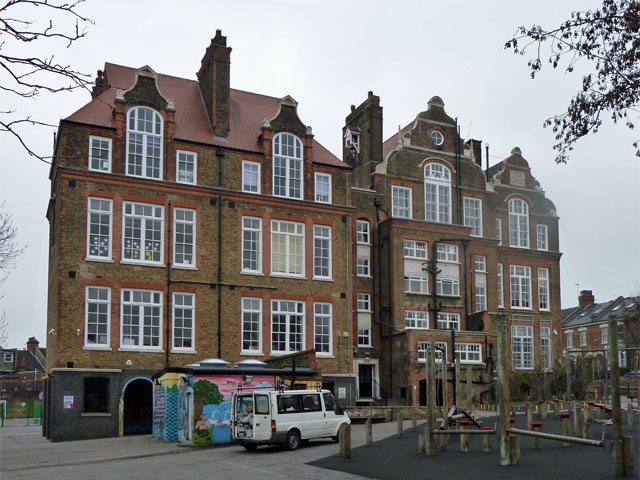
Gilroy became headteacher at Beckford in north London in 1969, one of London’s first Black headteachers. Her appointment was a public milestone, but a school was also a place of repeated responsibilities: children arriving each morning, relationships with families and the practical work of helping pupils learn. 6
The surviving magazine is a reminder that the children were makers of things, not simply recipients of instruction. Their pictures and writing were gathered into something that other people could read. Gilroy’s worksheet on creative writing points to the preparation behind that activity: encouraging expression was work that could be thought through and taught. 1
Her papers also include reflections on teaching and writing about counselling in primary schools. The archive connects learning with the emotional lives children brought into the classroom. It shows a professional thinking about her practice and leaving material through which others could examine it. 1
Writing for young readers and adults
Gilroy wrote for the Nippers and Little Nippers series. The manuscripts preserved at the British Library include Rice and Peas, The Paper Bag and Bubu’s Street. These are books addressed to children, with the particular demands that places on a writer’s language and attention. 7
The collection contains edited typescripts and pages with her annotations. They make the work of revision visible. A book written for an early reader does not arrive effortlessly because its sentences are short. Word choice, rhythm and clarity still require decisions; the papers preserve evidence of those decisions being made. 7
Her first published novel, Frangipani House, appeared in 1986. Set in an older people’s home in Guyana, it examines ageing and the desire for freedom. Gilroy’s concerns extended across generations, from the children learning to read to adults whose independence could be overlooked. 3
The archive also holds an annotated typescript of In Praise of Love and Children. Preserving work at this stage matters because a published book can conceal the labour that produced it. Here Gilroy remains visible as an author returning to her language, making changes and shaping a manuscript. 8
Her final novel, The Green Grass Tango, follows older people from different backgrounds who meet through their dogs in a London park. Friendship and the possibility of love emerge alongside ageing and loss. Its setting makes space for lives that can be pushed to the edge of accounts of the city. 9
The novel also broadens the image of Gilroy’s writing. Her subjects include pleasure, companionship and the small encounters through which people become important to one another. A literary career concerned with racism and migration could still make room for comedy and the unexpected attachments of later life. 9
Listening, recognition and a continuing readership
Gilroy’s later professional work included psychotherapy, particularly with Black women and children. Listening to experience remained part of her practice beyond school. She died in April 2001, after a career that had connected education, care and creative work. 3
At the Institute of Education she worked as a multicultural researcher. The Institute awarded her an Honorary Fellowship in 2000. This was recognition from an educational institution of work whose scope had always exceeded a single job title. 10
The publication history of Black Teacher continued too. The British Library holds both the original Cassell edition and a signed copy of the 1994 edition from Bogle L’Ouverture. Different publishers helped carry her account to later readers, allowing a personal record of post-war Britain to enter new conversations. 5
In July 2022 an artwork by Fipsi Seilern was unveiled outside Gilroy’s former school, by then called West Hampstead Primary. It drew on material in the British Library archive. The commemoration connected her public history with the place where children and families had known her through daily school life. 6
Gilroy’s work is worth returning to at that everyday scale: a child’s story collected into a magazine, a manuscript revised, an experience described by the person who lived it. These were ways of taking people seriously. Together, they give substance to the words teacher and writer. 2
Sources and further reading
1. Writing on Teaching. British Library Archives and Manuscripts Catalogue; Beryl Gilroy; catalogue description by the British Library.
2. Beryl Gilroy Archive. British Library Archives and Manuscripts Catalogue; British Library.
3. Beryl Gilroy. Peepal Tree Press; Her publisher.
4. Black Teacher. Faber; Publisher’s description of Beryl Gilroy’s memoir.
5. Black Teacher (Printed). British Library Archives and Manuscripts Catalogue; Beryl Gilroy; catalogue description by the British Library.
6. One of London’s first Black headteachers is celebrated with artwork. Greater London Authority, London City Hall.
7. Nippers, Little Nippers and other writing for children. British Library Archives and Manuscripts Catalogue; Beryl Gilroy; catalogue description by the British Library.
8. In Praise of Love and Children. British Library Archives and Manuscripts Catalogue; Beryl Gilroy; catalogue description by the British Library.
9. The Green Grass Tango. Peepal Tree Press; Publisher’s description of Beryl Gilroy’s novel.
10. Black Teacher by Beryl Gilroy with Darla Gilroy. UCL Institute of Advanced Studies / Sarah Parker Remond Centre.
Featured image. Beckford Primary School in West Hampstead, where Beryl Gilroy became headteacher, photographed in January 2011. The school is now called West Hampstead Primary School. Photograph by Robin Webster, 29 January 2011, Geograph Britain and Ireland. Image record · CC BY-SA 2.0