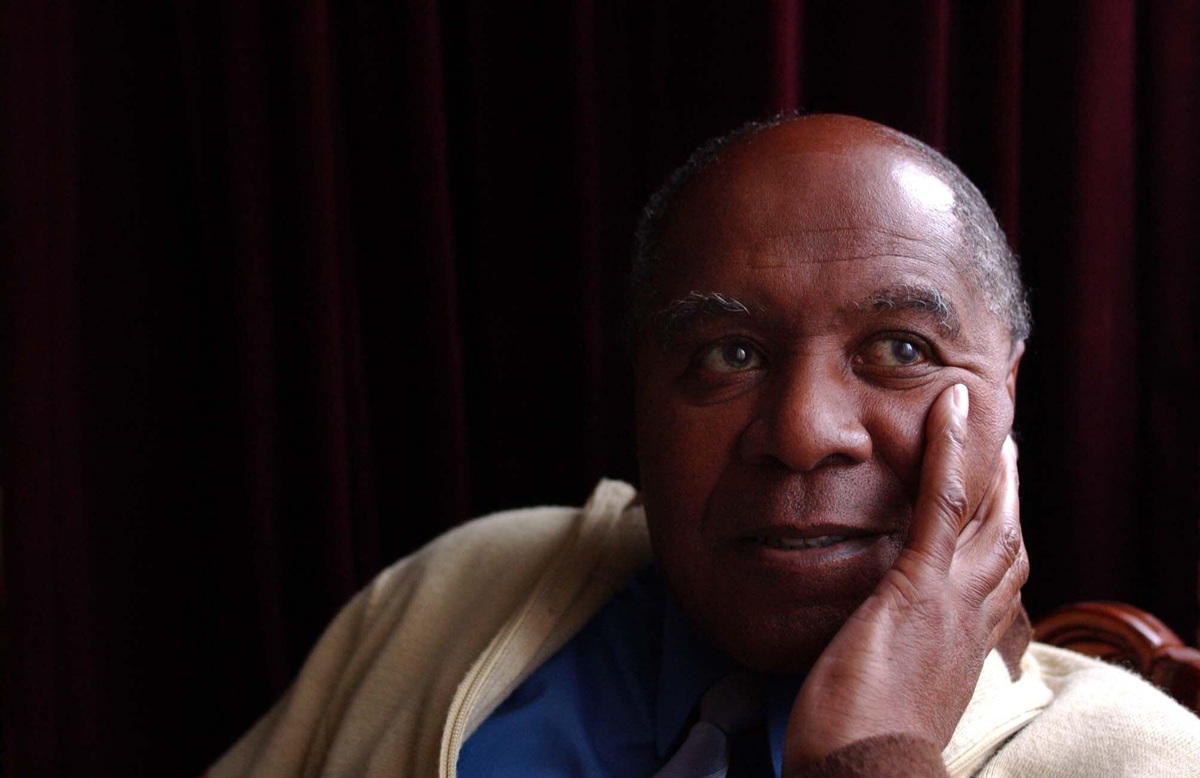
For Paul Stephenson, equality could be tested in ordinary places: at a job interview, on a bus or at the counter of a pub. In Bristol during the 1960s, those encounters could expose a system of racial exclusion that was openly defended. His response combined careful organising with a willingness to make discrimination visible. The Bristol Bus Boycott became the best-known part of that work, bringing an everyday employment injustice to national attention.1
A Black English childhood
Stephenson was born in Essex in 1937, more than a decade before the arrival of the Empire Windrush. He attended Forest Gate Secondary School in London, where he was the only Black pupil. His experience belongs to the longer history of Black life in Britain. He joined the Royal Air Force in 1953 and served for seven years, before studying youth and community work at West Hill College in Birmingham. That change of direction took him towards the profession through which he would become involved in Bristol’s public life.2
Appointed as a youth worker by Bristol City Council, Stephenson became the city’s first Black social worker. The job placed him in contact with young people whose opportunities were affected by discrimination. Youth work and the campaign for equality were closely connected in his career. Helping people to develop confidence and ambition had practical limits if employers could exclude them because of their colour. His work in Bristol brought him into a community already seeking ways to challenge those barriers.3
Organising against the employment colour bar
Roy Hackett, Owen Henry, Audley Evans and Prince Brown had formed an action group to oppose discrimination. Stephenson became its public spokesman. This collective background matters: the campaign grew from relationships and organising within Bristol’s Caribbean community. The Bristol Omnibus Company refused to employ Black and Asian drivers and conductors, and the local bus workers’ union had supported the exclusion. Challenging the policy meant confronting an established arrangement involving both the employer and representatives of its existing workforce.4
Guy Bailey’s experience brought the policy into focus. He and Stephenson arranged an interview with the bus company, but when Bailey attended he was turned away because he was Black. His account, recorded in the University of the West of England’s honorary degree citation, describes the rejection directly. The incident gave campaigners a specific injustice around which to organise. Bailey was a young man seeking an opportunity to work; the company’s response showed how the colour bar could close that opportunity before his abilities were considered.5
The boycott asked supporters to stop using the company’s buses. Such a request involved real inconvenience for people who relied on public transport to reach work and other commitments. Stephenson helped take the case to the press, while the campaign attracted wider political support. Local MP Tony Benn, Labour leader Harold Wilson and the cricketer and diplomat Learie Constantine supported the campaign. Their involvement increased its reach, connecting a dispute over Bristol employment with a national argument about racial discrimination.1
The people who sustained the protest
Young people took part alongside established organisers. Joyce Morris-Wisdom was fourteen when she joined the protests. Speaking at a University of Bristol event in 2023, she recalled taking time away from school and fearing for her safety amid racist violence. She also remembered the support of university students who marched with the boycotters. Her testimony widens the view of the campaign beyond the names usually printed in headlines. The protest depended on people whose participation demanded time, determination and, sometimes, considerable personal courage.6
The campaign drew inspiration from Rosa Parks and the Montgomery bus boycott in the United States, while addressing Bristol’s own employment policy. Its protests remained peaceful. On 28 August 1963 the bus company announced that it would end the colour bar, following a vote by bus workers to abandon the restriction. In September, Raghbir Singh began working as a conductor. The change made the campaign’s demand tangible: workers previously excluded could begin joining the crews. A policy that had been defended as normal had been overturned by organised public pressure.4
The human story continued after that announcement. Bailey declined a job with the company, according to his university citation. His role in the boycott had helped open an opportunity that others could take. That detail gives the victory a broader meaning than the success of one application. The campaign had challenged a rule governing who was allowed to work, changing the terms on which Black and Asian applicants could approach the employer in the future.5
From a Bristol campaign to national change
The boycott added to pressure on Parliament for legislation against racial discrimination. It formed part of a wider campaign pursued by community organisations, activists and parliamentarians. Connecting the Bristol victory with the law therefore requires attention to both local action and the broader movement. Stephenson and his fellow campaigners supplied a public example of the injustice people faced and of their determination to change it. Their achievement helped make racial equality a question that national political institutions had to address.7
The Race Relations Act 1965 prohibited racial discrimination in specified public places and made incitement to racial hatred an offence. Protection concerning employment and housing was extended through the Race Relations Act 1968. The distinction is important in understanding the boycott’s place in history. The 1965 Act began a legislative process; it did not immediately provide all the protections sought by campaigners challenging discrimination at work. Change came through successive measures, alongside the continuing efforts of people who pressed for those measures and for their application in everyday life.8
Stephenson also challenged exclusion at Bristol’s Bay Horse pub. Refused service, he would not leave without being served. He was arrested and faced a court case, but was acquitted. The episode carried the issue of racial equality into another ordinary setting. His action asked whether a Black customer could enter a public house and expect the same treatment as anyone else. The bus boycott had addressed access to employment; this protest confronted access to a shared social space.2
Youth work beyond the boycott
His work later took him to Coventry and London, where he continued in community relations. As a school governor, he persuaded Muhammad Ali to visit Tulse Hill School in Brixton. He and the boxer subsequently established the Muhammad Ali Sports Development Association. Sport offered a way to create opportunities and bring young people together. Stephenson also established the Cleo Laine Schools Music Awards, extending his interest in young people’s development into the arts. Education, cultural participation and the chance to build confidence remained practical concerns throughout his career.9
He served on bodies including the Commission for Racial Equality, the Sports Council and the Press Council. These roles carried his experience into institutions concerned with public life and opportunity. His OBE in 2009 recognised a career extending far beyond the bus campaign. The range of that career helps explain the relationship between protest and public service in his life: confronting a discriminatory rule was one part of the work, while supporting young people and contributing to institutions demanded continuing involvement over many years.10
Making sure the history survived
Stephenson understood that history also needed to be recorded. With Lilleith Morrison, he wrote Memoirs of a Black Englishman. He helped establish the Bristol Black Archives Partnership and supported efforts to preserve Black Bristolians’ experiences. The partnership produced exhibitions, calendars and material for schools. These activities gave communities ways to see their lives reflected in the historical record. They also made the boycott available as something people could study, question and learn from, with its participants’ experiences forming part of the evidence. Stephenson died in 2024.3
Bristol Archives holds photographs, newspaper cuttings, letters and other material relating to Stephenson and the boycott. Such records allow later readers to move between public accounts of the campaign and the traces left by those involved. A newspaper cutting can show how an event was presented; a letter can preserve an exchange that would otherwise disappear. Keeping this material made further research possible and helped give the community’s history a place within the city’s public collections.11
A continuing presence in Bristol
In 2015 the University of Bristol dedicated its Stoke Bishop transport hub to Stephenson. The choice connected a place used for daily journeys with a campaign that had changed the city’s transport workforce. At the dedication, he emphasised the continuing importance of community action and the work still required to put equality into practice. His response looked beyond the honour itself, towards what another generation might do with the history being remembered.12
His memoir and the learning resources developed around it provide ways of following the full span of his contribution. The story moves from youth work and the boycott to sport, public service and the teaching of history. Across those settings, a consistent concern emerges: Black people should be able to participate in the life of their city, develop their abilities and have their experiences recognised as part of its history.10
Sources and further reading
1. Historic England: The Story of the Bristol Bus Boycott.
2. University of Bristol: Paul Stephenson, OBE: honorary degree oration, 18 July 2014.
3. British Library: Paul Stephenson: history maker, in Bristol and beyond.
4. Trades Union Congress: Bristol bus boycott.
5. University of the West of England Bristol: The Honorary Graduand: Guy Bailey OBE.
6. University of Bristol: Bristol Bus Boycott activists inspire at 60th anniversary event.
7. UK Parliament: 1965 Race Relations Act.
8. UK Parliament: Race Relations Act 1965.
9. Journey to Justice: Dr Paul Stephenson OBE and Journey to Justice.
10. Bristol Bus Boycott 1963 history project: Black Englishman: Memoirs of a Black Englishman.
11. Bristol Archives: Papers of Mr Paul Stephenson, reference 42840.
12. University of Bristol: University dedicates transport hub to local racial equality pioneer.