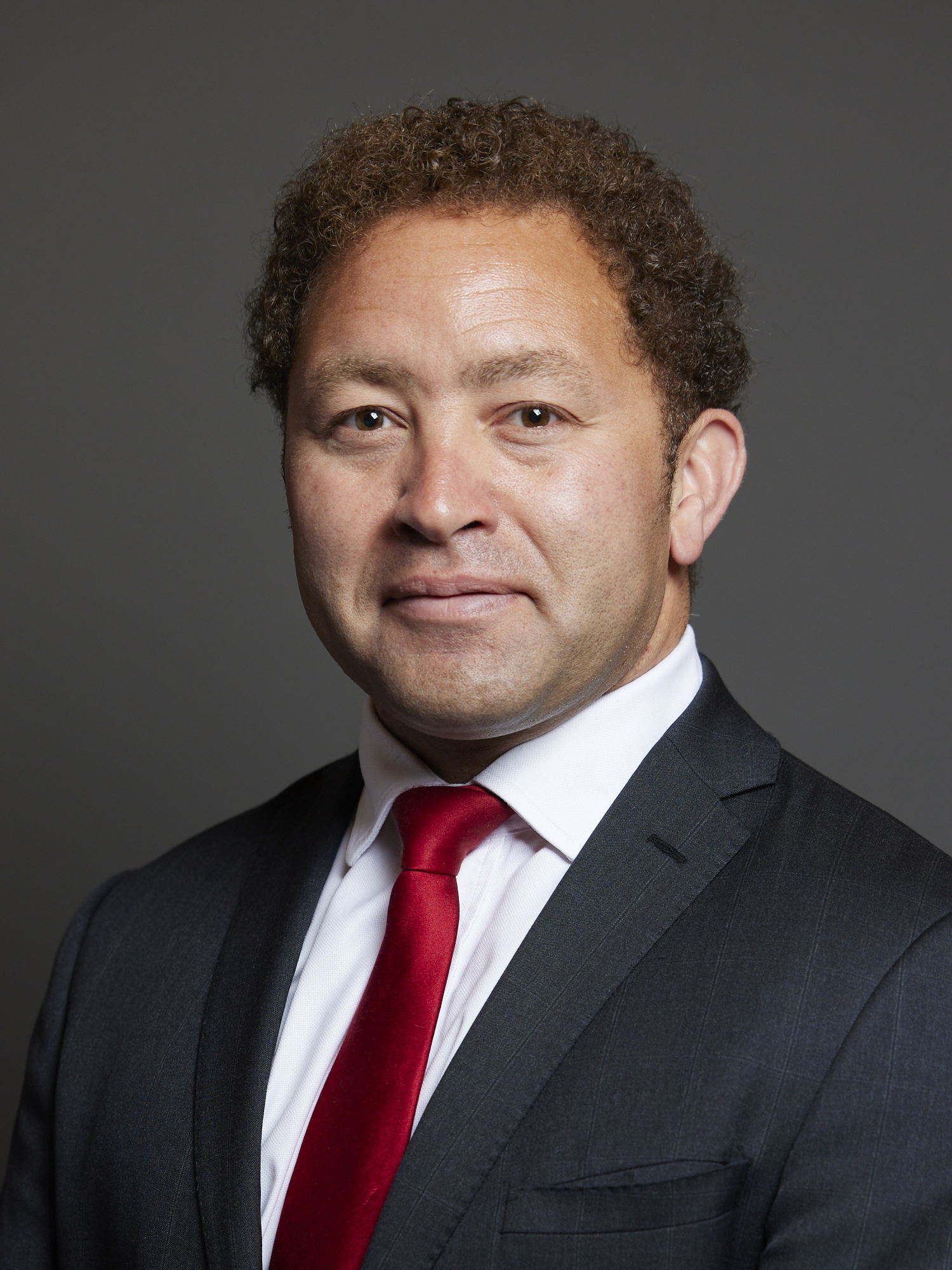
Calvin Bailey became Labour MP for Leyton and Wanstead at the general election of July 2024. Less than two years later, on 12 June 2026, he was appointed Minister for Veterans and People. The move changed his position within the defence world: an MP scrutinising government became a minister responsible for explaining and implementing its decisions. His parliamentary career is still developing, but its concerns are already clear: the conditions in which people serve, the opportunities available to younger generations, and whether public institutions respond to the people who depend on them.1
From Zambia to south-east London
Bailey was born in Zambia and grew up in Plumstead after his family moved to London. In his account of those years, racism was an immediate threat. He was close friends with Stuart Lawrence, whose older brother Stephen was murdered. Bailey has described how that killing shaped his understanding of safety and public responsibility. His later emphasis on young Black people having a voice in decision-making grew partly from experiences in which their fears and needs seemed insufficiently understood.2
Education opened another route. An RAF scholar, Bailey studied engineering and engineering management at the University of Exeter, graduating in 1999. He later completed a master’s degree in war studies at King’s College London in 2017. His training combined technical understanding of machines with the study of conflict, strategy and decisions about using military power.2, 3
Transport aircraft and the work of an air force
Commissioned as an RAF pilot in 1999, Bailey flew principally the C-130 Hercules and A400M Atlas. His deployments took him to Afghanistan, Haiti, Cyprus, Sudan and Iraq. Air transport gave him experience of military work in several settings, including conflict and emergency relief. Personnel, equipment and supplies had to move across long distances, often when events on the ground were changing rapidly. His appointment as an MBE appeared in the operational honours list published on 26 February 2015, when he held the rank of squadron leader.3, 4
One operation brought that work into particularly sharp focus. In August 2014, Bailey was among the RAF aircrew delivering aid to Yazidis trapped on Mount Sinjar in northern Iraq after fleeing Daesh. Hercules aircraft dropped water, shelter and other supplies. In a 2020 RAF account, he recalled the continuing emotional force of those flights. By then he had returned to Operation Shader as commanding officer of 903 Expeditionary Air Wing. His reflection placed particular emphasis on personnel whose work behind the aircraft allowed operations to continue: the achievement depended on a much wider team than those visible in the cockpit.5
On 14 May 2021 he took command of LXX, or 70, Squadron at RAF Brize Norton. The unit operated the Atlas transport aircraft and comprised nearly 250 personnel. Its role within the Air Mobility Force was to help deploy, sustain and recover people and equipment over considerable distances. Command involved developing that collective capability, as well as maintaining readiness for tasks that could arrive with little warning. The squadron’s mixture of technical skill, organisation and operational judgment would soon be tested by the collapse of the Afghan government.6, 7
The evacuation from Kabul
When Kabul fell to the Taliban on 15 August 2021, Bailey served as detachment commander of the deployed Air Mobility Forces during Operation Pitting, overseeing flying operations. The evacuation brought RAF personnel together with 16 Air Assault Brigade in a multinational emergency. More than 15,000 eligible Afghan and British nationals were taken to safety through the British operation. Bailey subsequently joined a December 2021 discussion at the Royal United Services Institute about lessons from the air effort, alongside colleagues with medical and air-and-ground support experience.7
The airlift required far more than available aircraft. Teams had to load passengers, provide security, recover equipment and care for people needing medical assistance. The RAF’s account of the operation describes contributions from its Air Mobility Wing, RAF Police, RAF Regiment and Tactical Medical Wing. At a medal presentation in June 2022, Bailey also acknowledged the families whose support had made service possible. Remembering those contributions gives a fuller account of the evacuation: responsibility was distributed across crews, specialists and people at home, while those being evacuated faced an uncertain future.8
Black service history and belonging
Alongside operational duties, Bailey chaired the RAF’s Black, Asian and Minority Ethnic Network. Reflecting on the service’s 2021 Black History Month activities, he explained that he had once questioned the need for a separate month. Learning more about earlier Black personnel changed his understanding. He realised that he had served for years without knowing enough about people like himself who had served before him. For Bailey, that omission affected a sense of belonging: recognising their contribution connected present personnel with an inherited place in the institution’s history. He helped lead a commemoration at Runnymede that October.9
Alongside work on racial representation, Bailey helped establish the Armed Forces Chronic Conditions and Disabilities Network. This concerned people whose health or disability could affect working life. It anticipated his later parliamentary emphasis on the experiences of different groups within the services, and on the support available to them.3, 11
A different kind of responsibility in Parliament
His maiden speech, on 24 July 2024, brought local community life into a debate about military aircraft. Bailey spoke about Whipps Cross Hospital, the food bank and youth work supported by Cann Hall Mosque, and the contribution of Leyton Orient. He also challenged the way major defence programmes were managed. Discussing the Global Combat Air Programme, he argued that government needed greater scientific understanding and that industry should be encouraged to innovate while remaining accountable for public money. His support for military capability came with demands about how it was purchased and delivered.10
In November 2024, debating the Armed Forces Commissioner Bill, he examined the limitations of treating complaints as isolated incidents. Repeated cases could reveal a wider pattern, he argued, and a system focused only on settling each dispute might leave damaging conduct in place. He also pressed for secure communication and protection for people raising concerns. His speech identified the differing experiences of women, ethnic minority personnel, people without UK passports and LGBT+ personnel. The argument connected fairness with organisational effectiveness: trust in leadership could be weakened when people did not believe that reporting a problem would lead to a fair response.11
He pursued a related question on the Defence Committee in January 2026. Local air cadet units had substantial participation from ethnic minorities, yet Bailey questioned why that interest was not reflected more strongly in recruitment to the services. He asked the Chief of Defence Staff about community outreach and support for staff networks. Sir Richard Knighton disputed parts of his characterisation, while acknowledging the need to improve recruitment and the value of networks. The exchange exposed a practical gap between an institution’s stated ambition to recruit widely and its ability to turn local interest into sustained participation.12
Hospitals, buses and international work
Military experience did not remove the everyday pressures of representing an east London constituency. When the government announced delays to its hospital rebuilding programme in January 2025, Bailey described the delay affecting Whipps Cross as disappointing. He asked about funding for repairs and maintenance while the hospital waited, and about discussions on alternative funding routes. These were questions about both the eventual redevelopment and the condition of services people needed immediately. A promise of a new hospital could not settle the problem of keeping the existing one functioning.13
The following day he presented a petition concerning changes to the W12 and W14 bus services. He described children struggling to reach school on time and older and disabled constituents having difficulty getting to Whipps Cross. The petition called for Transport for London to reconsider the changes. It was a reminder that access to healthcare depends on connections outside the hospital itself. A building programme and a bus timetable operate through different public bodies, but for a patient trying to attend an appointment their consequences meet in the same journey.14
Bailey also undertook international economic work as a trade envoy. On 6 and 7 May 2025 he led a delegation of more than 20 British businesses to Angola. The programme covered infrastructure, agriculture and financial services, with visits including Luanda’s new international airport and special economic zone. The embassy reported investment discussions and developing business relationships. Those activities show the practical work of a delegation; they do not, by themselves, establish the long-term value of investment or the distribution of its benefits. That requires evidence beyond the visit and its announcements.15
From scrutiny to government
His appointment as Minister for Veterans and People brought responsibility for many questions he had previously raised from the back benches. The portfolio includes recruitment and retention, support during the move to civilian life, service housing, families, veterans’ policy and the complaints system. It also covers aspects of defence culture and inclusion. Those responsibilities make the quality of everyday administration central to the role: whether support can be found, whether applications are handled properly, and whether the people concerned understand the decisions affecting their lives.16
In September 2026 Bailey announced the completion of a ministerial review of whistleblowing in defence. The government concluded that the central problems concerned how existing arrangements operated, rather than a structural or legal gap, and proposed practical improvements to clarity, access and trust. That was the review’s assessment, rather than proof that the problems had been resolved. Bailey’s earlier Commons speeches had asked how people could raise concerns safely and how patterns of wrongdoing would be recognised. His ministerial work now places him among those accountable for the answers and for whether the arrangements work in practice.17
Sources and further reading
1. UK Parliament: Parliamentary career for Mr Calvin Bailey.
2. Calvin Bailey MP: About Calvin.
3. Ministry of Defence: Calvin Bailey MBE MP: biography.
4. Ministry of Defence: Operational Honours and Awards List: 26 February 2015.
5. Royal Air Force: Reflections on Six Years of Operation SHADER.
6. Royal Air Force: New Officer Commanding for LXX Squadron.
7. Royal United Services Institute: Recording: The RAF Experience During Op PITTING.
8. Royal Air Force: Afghanistan evacuation heroes honoured.
9. Royal Air Force: RAF reflects on Black History Month and supporting events.
10. Hansard, UK Parliament: International Immunities and Privileges: maiden speech, 24 July 2024.
11. Hansard, UK Parliament: Armed Forces Commissioner Bill, 18 November 2024.
12. House of Commons Defence Committee: The work of the Chief of Defence Staff: oral evidence, 12 January 2026.
13. Hansard, UK Parliament: New Hospital Programme Review, 20 January 2025.
14. Hansard, UK Parliament: W12 and W14 bus service in north-east London, 21 January 2025.
15. British Embassy Luanda: UK-Angola trade mission strengthens economic ties.
16. Ministry of Defence: Minister for Veterans and People: responsibilities.
17. UK Parliament: Whistleblowing in Defence: written ministerial statement, 9 September 2026.