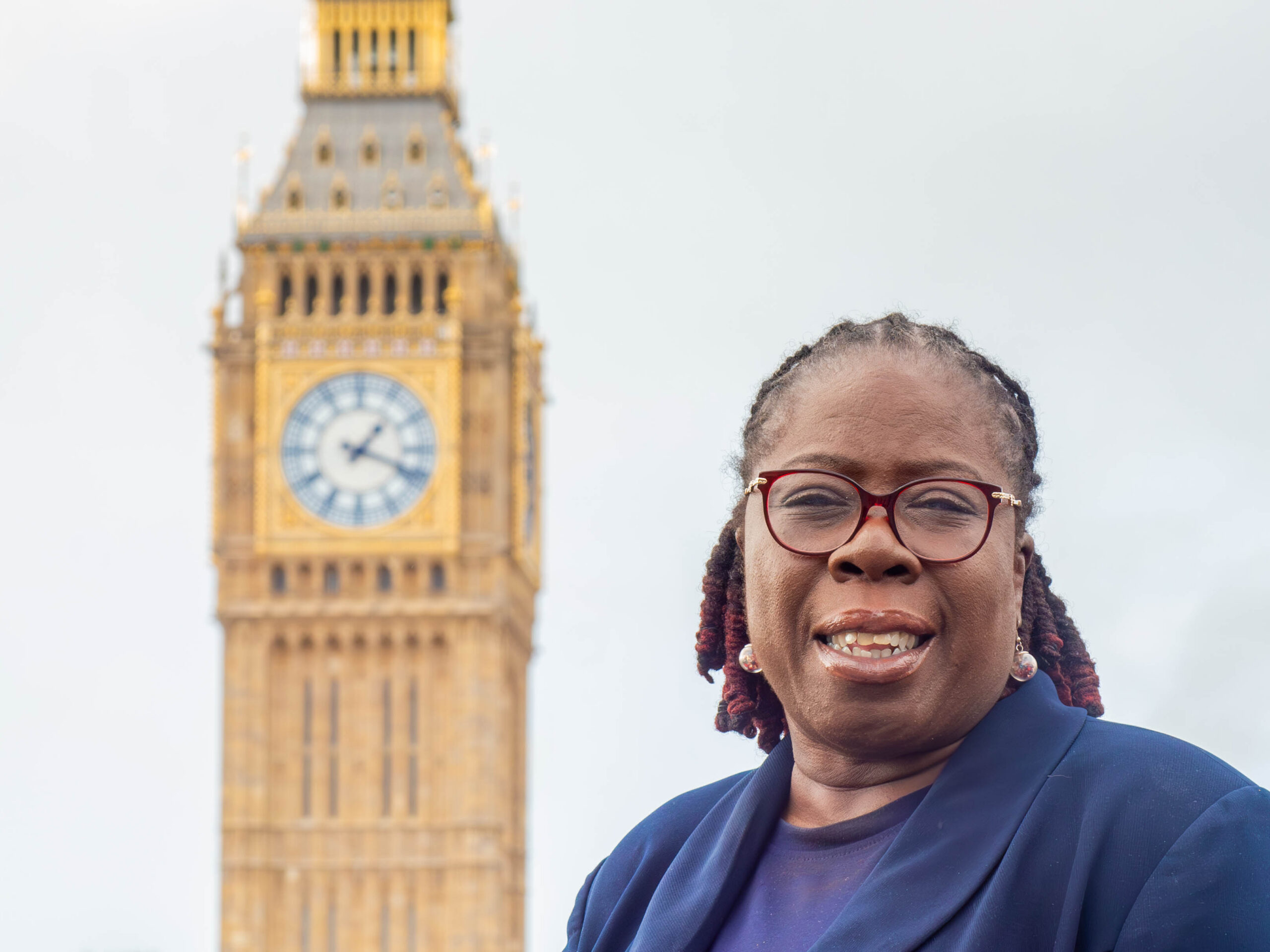
Paulette Hamilton became Birmingham’s first Black MP when she won the Erdington by-election on 3 March 2022. Re-elected in July 2024, she remains the constituency’s Labour representative. Her route to Westminster ran through nursing and Birmingham City Council, bringing local services experience into national politics. Health, housing and public institutions are central to her parliamentary record: who receives care, whose experience is heard, and how those making decisions can be held responsible.1, 2
Growing up in Handsworth
Hamilton grew up in Handsworth in a family of Jamaican heritage. In a Change Us oral history, she recalled her parents arriving in England in the early 1960s and working in factories. At school, she remembered low expectations for Black pupils and being placed in a lower stream. A mathematics teacher at Handsworth Wood Girls School recognised her potential and helped her move into a higher stream. Catching up required additional study in a crowded household. She gained seven O-levels, contradicting the assumptions that restricted her opportunities.3
Nursing gave her a profession rooted in everyday contact with people needing support. Hamilton spent 25 years in nursing, including district care, and worked for several years at the health centre on Warren Farm Road in Kingstanding. Her constituency biography also records longstanding family connections to Erdington, where her children grew up. The geography matters: her later representation of the area drew on familiarity with its neighbourhoods and services acquired through work and family life.4
From nursing to the council
Fellow Birmingham politician Yvonne Mosquito encouraged her to stand for the council. Elected in 2004, Hamilton initially combined council duties with nursing and raising a family. She eventually left nursing as those demands became difficult to sustain. Her appointment as cabinet member for health and social care followed in 2015, expanding her responsibilities to decisions about services across the city.3
The COVID-19 pandemic made inequalities in those services particularly urgent. Hamilton helped inspire a West Midlands inquiry into its impact on Black, Asian and minority ethnic communities, alongside Baroness Lawrence; Liam Byrne MP established the inquiry. Its work involved speaking with 200 people about their experiences. Hamilton and Byrne later presented the findings to a Local Government Association event. Testimony about fear, bereavement and mistrust informed recommendations for ministers, the NHS and local health bodies. The inquiry sought to explain differences in people’s experiences of the pandemic and identify changes that could better protect communities in future emergencies.5
Her council work received the Local Government Information Unit’s Resilience and Recovery award for England and Wales in 2021. Aston University followed with an honorary degree in July 2022, recognising her contribution to health equality. The university’s account connected the honour with both her nursing background and her work on the pandemic inquiry.2, 6
Representing Erdington
In her maiden Commons speech on 16 May 2022, Hamilton paid tribute to her predecessor, Jack Dromey, and his concern for local jobs. She then set out priorities shaped by her own work. Having served as Birmingham’s mental health champion since 2013, she described increasing pressures on services and particular concern for young people. Housing conditions and the future of Erdington High Street also featured. Alongside these problems, she described religious celebrations, parks and community organisations. Her account of the constituency combined its needs with the activities and relationships that sustained neighbourhood life.7
Housing remained an active concern. In June 2026 she launched a petition seeking stronger implementation of supported housing reforms. The proposals included planning permission for exempt accommodation, consultation with neighbours, and powers for councils to consider how concentrated such schemes were in particular areas. She also wanted closer consideration of their relationship with existing policies on houses in multiple occupation. These were requests for government action. Their underlying concern was how decisions about individual buildings accumulated across a neighbourhood, affecting residents, the availability of family housing and the responsibilities placed on local councils.8
She also pressed for a national discussion of policing on high streets. Applying for a backbench debate in April 2025, Hamilton described older residents avoiding Erdington’s shops and people losing confidence that reporting crime would produce a response. She argued that this could create a damaging cycle: fewer reports meant a weaker official picture of the problems residents experienced. Drawing on the local Operation Fearless initiative, she made the case for visible policing and cooperation between agencies. Her presentation linked public safety with whether people felt able to use local shops and shared spaces.9
Examining the health service
Committee work gave Hamilton a sustained role in scrutinising healthcare. She joined the Commons Health and Social Care Committee in July 2022 and returned to it after the 2024 election. As of October 2026, she also serves on the Modernisation Committee. These positions involve different responsibilities: examining government policy and services in one, and the organisation and accessibility of Parliament itself in the other. Both extend her work beyond the interests of a single constituency.1
Hamilton served as interim chair during the Health and Social Care Committee’s 2025 inquiry into Black maternal health. Its September report described serious failures in leadership, training, staffing and data, alongside racism and the dismissal of women’s concerns. The committee called for meaningful, compulsory cultural competency training and stronger accountability for senior leaders. It also warned that gaps in ethnicity and complications data made it harder to understand where care was failing. Funding arrangements required scrutiny too, so maternity services would not lose priority within wider budgets. The report connected treatment in individual consultations with decisions about recruitment, resources and organisational responsibility.10
Listening to mothers formed part of that investigation. On 16 June 2025, Hamilton met service users and staff from Tower Hamlets and Newham at East London NHS Foundation Trust. Women described seeking mental health support during pregnancy and afterwards. The trust was participating in pilot work to improve access for Black African, Black Caribbean and mixed-heritage women. The visit brought clinical and personal accounts together, drawing attention to difficulties that could be missed if an inquiry considered birth only as an event in a hospital ward.11
The government’s response in December 2025 produced agreement on some measures and disagreement on others. Hamilton welcomed the promised development of a system for recording and analysing serious maternity complications. However, ministers rejected the recommendation for mandatory, continuing cultural competency training for all midwives, pointing instead to a programme aimed at leaders and consultants. She questioned that decision and asked how better information would produce accountability when services failed. Her response demonstrated that membership of the governing party did not settle the issues raised by the committee: she wanted an explanation of how national commitments would change women’s experiences of care.12
The people and money behind care
In January 2026, questioning health minister Stephen Kinnock about palliative care, Hamilton concentrated on rural access and hospice funding. She asked how additional money had been calculated when information about need remained incomplete. She also distinguished funding for buildings and equipment from recurring money needed to run services. Kinnock explained that capital funds had been found within departmental budgets and argued that better commissioning could improve provision. Hamilton pressed him on whether money was being distributed fairly and on the pressures facing local health commissioners. She also asked about hospices’ role in providing the data used to assess need, bringing their knowledge of patients into the discussion of funding. Her questioning exposed the limits of announcing an extra sum without explaining its distribution or how services would meet continuing costs.13
The nursing workforce remained another concern. At a parliamentary event organised by Nursing in Practice in June 2026, she discussed the publisher’s findings on general practice nurses’ pay and employment conditions. Hamilton argued that plans to deliver more care in communities required greater recognition of the nurses doing that work. She called for government to work with the Royal College of Nursing and other partners to address their position. Her intervention connected workforce policy with the practical capacity to change services: expanding what primary care was expected to provide depended on the people available to provide it.14
Making institutions easier to use
Her Modernisation Committee work considered barriers inside Parliament. At a June 2025 hearing on access to the Commons, Hamilton invited witnesses to expand on how parliamentary communication could become more accessible. Gillian Rudd called for formats including accessible summaries, captions and British Sign Language interpretation, with feedback to check whether changes worked. Fazilet Hadi argued for a Parliament where disabled people could participate without treating their needs as an afterthought. The discussion concerned more than navigating a building: understanding debates and contributing evidence also depend on how information is presented and whether different ways of participating are accommodated.15
Hamilton returned to the question of effective change in July 2026, when she questioned Baroness Amos about maternity services. Referring back to the Black maternal health inquiry, she asked whether cultural competency training could begin immediately or would have to await further organisational reforms. Amos supported urgent action but stressed that training had to be tested for quality and effect; organisations also needed to acknowledge and discuss racism. The exchange moved beyond whether a course should exist to what it would actually change. It captured a recurring concern in Hamilton’s parliamentary work: recommendations require resources, practical decisions and a way to establish whether people receive better treatment.16
Sources and further reading
1. UK Parliament: Parliamentary career for Paulette Hamilton.
2. Aston University: Member of Parliament for Birmingham Erdington receives honorary degree for services to health equality.
3. Change Us: Paulette Hamilton: Caribbean Migration Journeys 2.
4. Paulette Hamilton MP: About Paulette Hamilton.
5. Local Government Association: Health inequalities: Ethnicity webinar.
6. Local Government Information Unit: Councillor Awards: previous winners.
7. Paulette Hamilton MP: Paulette Hamilton’s maiden speech in Parliament, 16 May 2022.
8. Paulette Hamilton MP: Exempt Accommodation Petition, 29 June 2026.
9. House of Commons Backbench Business Committee: Representations for backbench debates, 1 April 2025.
10. House of Commons Health and Social Care Committee: Black Maternal Health: Third Report of Session 2024–26.
11. East London NHS Foundation Trust: MP Paulette Hamilton visits ELFT Perinatal Service.
12. House of Commons Health and Social Care Committee: Failings in Black maternal health: Government responds to Committee’s report.
13. House of Commons Health and Social Care Committee: Palliative and end-of-life care: oral evidence, 7 January 2026.
14. Nursing in Practice: Nursing in Practice takes general practice nurse pay concerns to Parliament.
15. House of Commons Modernisation Committee: Access to the House of Commons and its procedures: oral evidence, 24 June 2025.
16. House of Commons Health and Social Care Committee: Maternity and neonatal services: oral evidence, 15 July 2026.