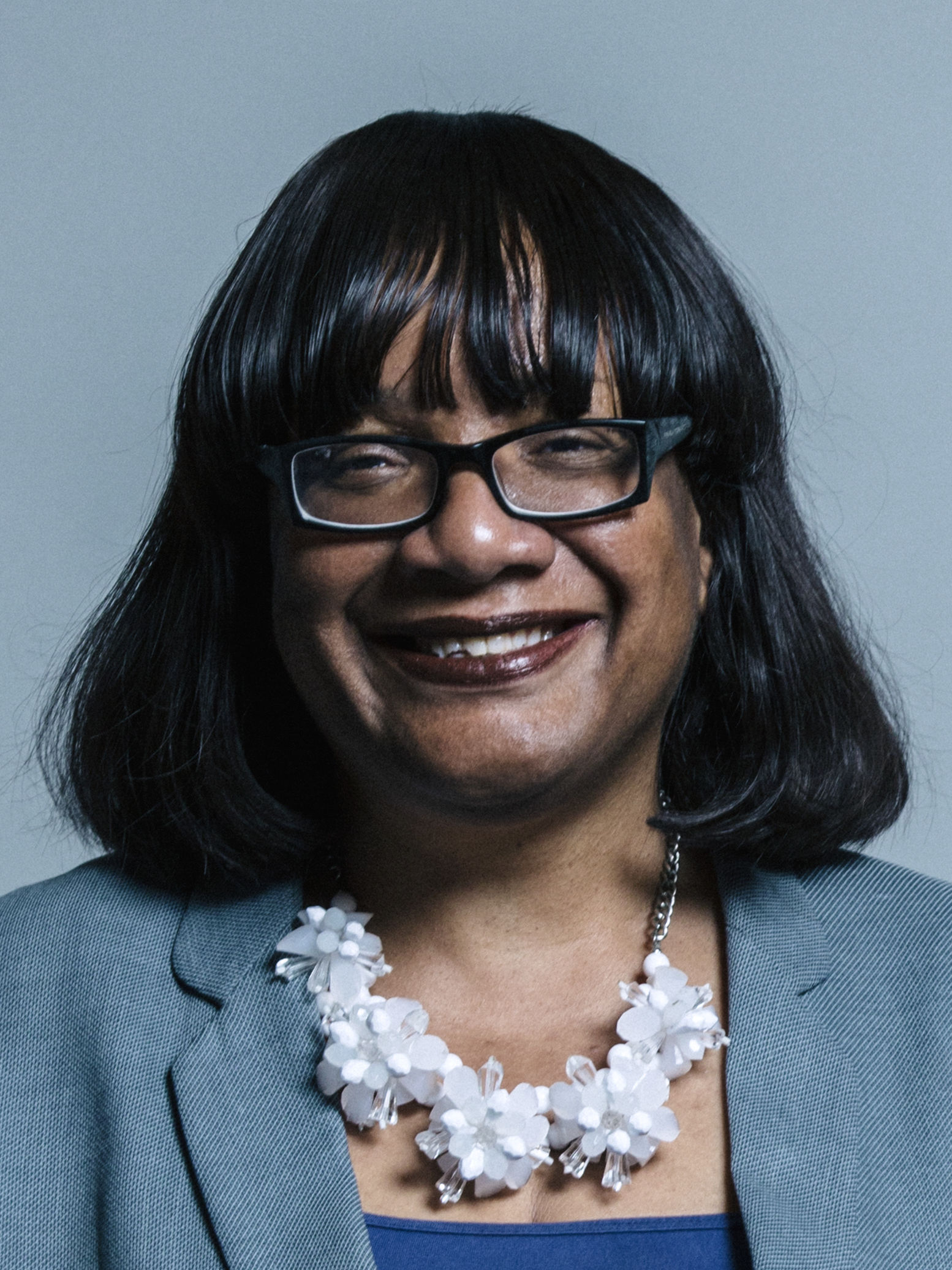
On 9 July 2024, Diane Abbott addressed the newly elected House of Commons as Mother of the House. She welcomed the new MPs and remembered the much less organised introduction she had received in 1987: a set of keys and an expectation that she would find her own way. She also marked a striking change in the chamber, from 40 women when she first arrived to 264 after the 2024 election. Her speech placed personal experience alongside the gradual transformation of an institution she had served for decades.1
Abbott became the first Black woman elected to the British Parliament in 1987. Her election established a place in parliamentary history, but it was the beginning of a working political career. Following her arguments about schools, citizenship and state power reveals the choices she made after crossing that first barrier, and the different ways she used her position.2
Education and a wider world
Born in London in 1953, Abbott attended Harrow County grammar school before going to Cambridge. Her parents had migrated from Jamaica: her father worked as a welder and her mother as a nurse. Education offered a route into institutions with which her family had little direct experience, although academic success did not remove the differences of class and race she encountered there.3, 4
In a 2019 interview about books, Abbott recalled her mother taking her to the public library and an uncle who worked as a railway porter bringing home books left on trains. She saved to buy Little Women, and fiction helped her imagine an adult life beyond the one immediately around her. Later, Alice Walker’s writing offered a feminism centred on Black women. Reading became a place where questions of ambition, independence and political belonging could meet, long before those questions occupied her working life.5
She arrived at Newnham College in 1973 to study history. Newnham’s account of those years records her recollection of meeting only one other Black student during her degree, an experience of isolation rather than a statistical count of the university. In 1975 she became one of the first student representatives elected to the history faculty board. During that term, the faculty introduced anonymous examination papers, revised its curriculum and created a dissertation option. These were collective institutional changes; her participation gave her early experience of how rules could be examined and altered.4
After Cambridge she worked as a Home Office civil servant, then for the National Council for Civil Liberties. Journalism followed, including freelance work and reporting for TV-am and Thames Television. Those jobs brought different encounters with public affairs: administering government, challenging its use of power, and explaining events to an audience. Her subsequent parliamentary work drew on concerns already visible in that varied professional background.3
Citizenship in her own family and constituency
In her maiden speech on 16 November 1987, Abbott opposed the Immigration Bill. She described her parents’ arrival from rural Jamaica in 1950 and their belief that they were coming as members of Britain and its Commonwealth. They had crossed the Atlantic to work and improve their children’s prospects. That family account gave the debate about immigration controls an immediate human setting.6
She also spoke as a representative of Hackney North and Stoke Newington, an area with a long history of receiving migrants. Constituents were approaching her in fear and confusion about registration requirements, fees and their nationality rights. Her objection concerned the gap between a promise of belonging and the administrative demands through which people could find that belonging questioned. Parliament’s language of citizenship had consequences at an office counter and within a family.6
Changing schools, staffrooms and expectations
Education remained a sustained concern. In a Commons debate on London teaching in June 2008, Abbott called for a more diverse teaching workforce. She explicitly rejected the idea that children could only be taught by teachers of their own ethnicity. Her case was that a staffroom with varied experiences could improve the understanding available to the whole school, while giving pupils a wider picture of who could hold authority.7
She extended the argument to school governors. Simply inviting parental involvement, she argued, could favour those already confident with meetings, paperwork and professional language. Work schedules, language barriers and intimidation could make participation much harder for other parents. She proposed training and support, and pressed ministers to consider whose voices were actually heard. The question was practical: changing a governing body’s composition required attention to the conditions that allowed people to take part.7
By June 2012 she told Parliament that she had run London Schools and the Black Child for at least a decade. She challenged low expectations and argued that disadvantage should not become an excuse for accepting poor outcomes. She also described pressing a Labour schools minister to break attainment figures into more useful categories. A broad comparison between white pupils and ethnic minorities, she recalled, concealed differences between communities and then between girls and boys.8
Her account made an apparently technical issue central to public responsibility. Without sufficiently detailed information, a government could celebrate an average improvement while missing a group whose experience had barely changed. She linked accurate measurement with the possibility of directing support effectively. She was willing to question her own party’s record on this point, presenting educational opportunity as a test of whether citizenship offered children a fair chance.8
Civil liberties and disagreement with government
Abbott’s willingness to challenge Labour ministers was particularly clear during the Counter-Terrorism Bill debate on 11 June 2008. She opposed the proposed extension of detention without charge to 42 days. Ministers argued that complex investigations could require more time; she questioned whether the evidence justified the power and warned about the pressure that prolonged detention could place on an innocent person.9
She connected those concerns with her political formation during the conflicts over policing in the 1980s. Protecting the rights of an unpopular or suspected community, she argued, was a demanding test of Parliament. She was especially concerned about the effect on Muslim constituents and their families. Her speech acknowledged the pull of loyalty to a Labour prime minister but refused to make that the deciding consideration. The relationship between a government and the people subject to its powers took precedence in her argument.9
The front bench and Windrush
She later held several opposition portfolios. Parliament records her service as shadow public health minister from 2010 to 2013, followed by shadow international development secretary from September 2015 and shadow health secretary from June 2016. From October 2016 until April 2020 she was shadow home secretary. That position gave her a leading role in questioning government policy on policing, immigration and the treatment of people within the Home Office system.10
On 30 April 2018 she brought an urgent question about the Windrush crisis. Sajid Javid, newly appointed home secretary, acknowledged that people who had lived in Britain for decades had faced serious difficulties because they lacked documents proving their status. Abbott asked what would be done for those detained, deported or refused re-entry, and what compensation would mean in practice. She also asked about the position of Commonwealth migrants from south Asia and west Africa.11
Her questions returned to the relationship between migration, work and belonging that had appeared in her maiden speech. She identified the Windrush generation as her parents’ generation and challenged the government to explain the consequences of its immigration policies. The exchange shows the difference between expressing regret and answering specific questions about repair: who had been harmed, how they would be found, and what action would follow. Abbott pressed for the latter while Javid described an existing taskforce, promised further help with documentation and reaffirmed plans for a compensation scheme.11
Visibility, abuse and telling her own story
The public attention accompanying her career included severe racist and sexist abuse. Amnesty International’s analysis of tweets mentioning 177 women MPs found that Abbott received 45.14 per cent of the abusive tweets identified during the six weeks before the 2017 general election. That figure describes a particular study and period, rather than all abuse directed at politicians. The research used automated classification supported by human review, with acknowledged limitations. Even with those qualifications, it documented a striking concentration of hostility towards one woman, much of it targeting race and gender. Scrutiny of an MP’s decisions and threats against her safety are different features of public life; the latter can affect who feels able to enter it.12
Abbott also reached audiences beyond Westminster through broadcasting. She was a regular contributor to the BBC’s This Week for twelve years. In 2024 she published her memoir, A Woman Like Me, bringing her own account of family, education and politics into print. The book adds a personal perspective to the public record of speeches and decisions. That perspective can be read alongside parliamentary documents and other accounts when considering how she understands her career.13
Party disputes and an enduring parliamentary presence
Her later career has included serious disputes with Labour. She was suspended in 2023 following a letter about differences between forms of racism, and returned before the 2024 general election. In July 2025 she was suspended again after a BBC interview in which she defended distinctions she had drawn between racism based on skin colour and that experienced by Jewish and Traveller people. Those disputes form part of her record as well as her campaigning against discrimination.14
On 30 July 2026 Labour readmitted her and restored the whip. Abbott said she had received a formal warning over a separate social-media post that conflated the Israeli military with the Jewish community, and apologised for the hurt caused. Jewish organisations criticised her readmission. Parliament’s career record lists her as a Labour MP again from that date; she continues to represent Hackney North and Stoke Newington.10, 15, 16
A portrait in Parliament offers another way into her place in its history. Abbott asked that Stuart Pearson Wright’s close-up painting show no clothing, deliberately unsettling the convention of portraits of white male MPs in suits. The decision reflects an awareness that institutions represent themselves through images as well as rules. Her career leaves material for examining both: who becomes visible in Parliament, and what they do with the opportunity to speak there.2
Sources and further reading
1. Hansard, UK Parliament: Opening of Parliament: Mother of the House, 9 July 2024.
2. UK Parliament Heritage Collections: The First Asian and Black Parliamentarians.
3. Diane Abbott MP: About Diane.
4. Newnham College, University of Cambridge: Diane Abbott: Feminist and Radical Histories.
5. Penguin Books: Shelf Life: Diane Abbott.
6. Hansard, UK Parliament: Immigration Bill: Diane Abbott’s maiden speech, 16 November 1987.
7. Hansard, UK Parliament: Teaching (London), 25 June 2008.
8. Hansard, UK Parliament: BME Communities (Educational Attainment), 26 June 2012.
9. Hansard, UK Parliament: Counter-Terrorism Bill, 11 June 2008.
10. UK Parliament: Parliamentary career for Ms Diane Abbott.
11. Hansard, UK Parliament: Windrush: urgent question, 30 April 2018.
12. Amnesty International UK: Black and Asian women MPs abused more online.
13. Penguin Books: A Woman Like Me: publisher’s book information.
14. ITV News London: Diane Abbott suspended from Labour Party after interview on comments about racism, 17 July 2025.
15. ITV News: MP Diane Abbott readmitted into Labour Party following suspension, 30 July 2026.
16. Diane Abbott MP, reproduced by Labour Outlook: Diane Abbott’s statement on readmission to the Labour Party.