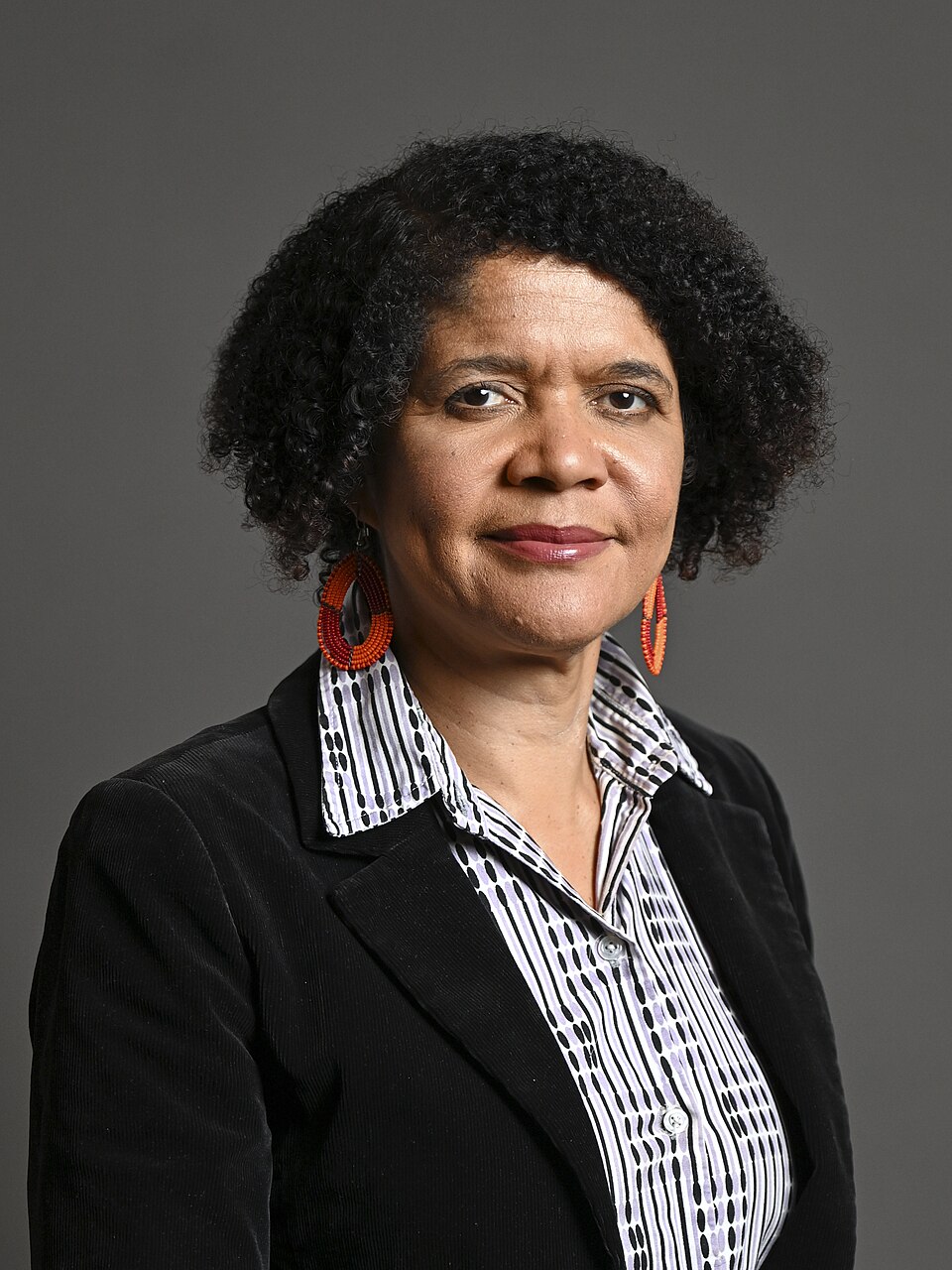
Chi Onwurah worked on telecommunications networks before entering Parliament. Her engineering career involved companies operating across national borders and a later role at the regulator Ofcom. The experience gave her knowledge of how technical systems, commercial decisions and public rules interact. 1
Engineering across borders
Born in Wallsend, Onwurah attended Kenton Comprehensive School in Newcastle. She studied electrical engineering at Imperial College London and later completed an MBA at Manchester Business School. Her work included engineering and management roles with Cable & Wireless and Nortel in Britain and France, followed by product strategy and market development. As a partner in the consultancy Hammatan Ventures, she worked on mobile-communications markets in Nigeria and South Africa. At Ofcom, she examined what new generations of telecommunications networks meant for competition and regulation. Her professional experience encompassed both building services and considering the conditions under which businesses supplied them. 1
Newcastle’s industrial future
In her maiden speech on 8 June 2010, Onwurah described growing up in a single-parent household on Newcastle’s North Kenton estate. She credited schools, housing, public services and healthcare with helping her become an engineer. Her grandfather had worked in the Tyne shipyards, and she placed the work of ordinary people alongside the city’s famous industrial names. The speech developed an economic argument: the loss of manufacturing had damaged whole communities, and renewal required long-term investment. She pointed to local engineering firms using expensive machinery expected to last for decades. Apprenticeships, transport links, regional institutions and support for innovation belonged together in her account of what manufacturing needed. 4
Science policy in opposition
Onwurah entered the Commons as Labour MP for Newcastle upon Tyne Central in May 2010. Her frontbench responsibilities began that October in the business brief and later included the Cabinet Office, digital policy and industrial strategy. She held the industrial-strategy portfolio from October 2016 to April 2020, followed by science, research and innovation responsibilities through May 2024. These were opposition appointments, involving scrutiny and the development of Labour policy. In July 2024 she was elected for the revised constituency of Newcastle upon Tyne Central and West. 3
Experience and representation in engineering
Returning to Imperial in October 2018, Onwurah spoke about the isolation she had experienced as a Black woman in engineering. She had graduated there in 1987 and later presented to large professional audiences in which few people shared her background. She described assumptions that questioned her qualifications and, after her election, whether she would represent everyone in her constituency. Her argument connected workplace experience with the design of technology: limited representation could affect which needs designers noticed. She also discussed racist material encountered during her student years. For her, diversity involved the culture in which people trained and worked, as well as entry into a profession. 2
Chairing parliamentary scrutiny
On 11 September 2024, Onwurah was elected chair of the Science, Innovation and Technology Committee. MPs chose the chair through a ballot, with the result announced by the Speaker in the Commons. The appointment opened a new stage of her parliamentary work, leading a committee concerned with fields she had previously covered from Labour’s front bench. 5
In December 2024, the committee launched an inquiry into how research and innovation could support regional economic growth. It asked how national and local government encouraged innovation, and how investment reached different parts of the country. The questions covered research clusters, infrastructure, regulation and finance for new businesses and university spin-outs. Onwurah emphasised the need to examine benefits across the UK. The inquiry placed the geography of scientific investment alongside its overall scale: funding a strong research base also raised questions about where new enterprises could develop and which regional institutions helped them do so. 6
That concern with practical delivery continued in her response to the June 2025 Spending Review. Onwurah welcomed the commitment to research and development, while saying that the committee would examine the detail behind the headline funding. She identified forthcoming questioning of UK Research and Innovation’s outgoing chief executive, Ottoline Leyser, and work on NHS digitisation within the committee’s digital-government inquiry. Her response linked spending commitments to the organisations responsible for using them. It also connected scientific investment with public services, reflecting the range of decisions through which research and technology enter everyday life. 7
Sources and further reading
1. Chi Onwurah. Newcastle University.
2. MP Chi Onwurah: As an engineer, I was often the only Black person in the room. Imperial College London.
3. Parliamentary career for Dame Chi Onwurah. UK Parliament.
4. Maiden speech, 8 June 2010. House of Commons Hansard.
5. Chi Onwurah elected as Chair of Science, Innovation and Technology Committee. UK Parliament.
6. How can science and tech innovation boost regional economic growth?. UK Parliament.
7. Spending Review: Chi Onwurah comments on R&D funding. UK Parliament.
Featured image. Chi Onwurah in her official parliamentary portrait from July 2024. © House of Commons, 25 July 2024, via Wikimedia Commons; source-provided crop. Image record · CC BY 3.0
