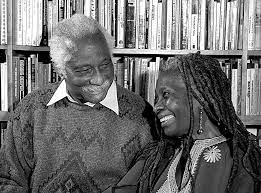
Jessica Huntley combined publishing with political organising. With her husband Eric, she supported campaigns, educational projects and cultural institutions while building an independent publishing business.2
From British Guiana to Britain
Her political involvement began before she settled in London. In May 1953, in British Guiana, she helped found the Women’s Progressive Organization. Connected to the People’s Progressive Party’s independence struggle, it placed women’s rights within the movement against colonial rule. Huntley moved to Britain in 1958 and continued grassroots campaigning. Her public work included opposition to the use of “sus” laws in policing, bringing her into struggles over the treatment of Black people by British institutions.1
Making room for Black authors
By the late 1960s, Jessica and Eric were creating Bogle-L’Ouverture Publications. The radical publishing house provided space for Black authors when mainstream British bookshops gave little room to their work. Its first book was Walter Rodney’s The Groundings with My Brothers in 1969; How Europe Underdeveloped Africa followed in 1972. The catalogue expanded to include Andrew Salkey, Linton Kwesi Johnson, Lemn Sissay and Valerie Bloom. Rodney’s political scholarship appeared alongside poetry and fiction. The Huntleys initially ran their bookselling enterprise from home, before moving to commercial premises. Their bookshop was later renamed in Rodney’s memory after his assassination in 1980.3
Huntley also organised opportunities for visiting political figures to speak in London. In 1974, she arranged a solidarity event at the Keskidee Centre addressed by the American activist Angela Davis. The gathering connected her local organising with an international political visitor.6
A bookshop and a meeting place
By the mid-1970s, the Huntleys had premises at 5a Chignell Place in West Ealing. The literary opening featured Linton Kwesi Johnson, Accabre Huntley and George Lamming. The shop offered readings and practical advice: parents, teachers and students came with questions about study, employment and racism. The programme brought novelists, poets and performers to Ealing: readers could attend events involving Ngũgĩ wa Thiong’o or Sam Selvon, while visiting groups included Jamaica’s Sistren Theatre Collective. Jessica combined this public role with the daily business of bookselling, writing letters, answering enquiries and making telephone calls.4
Keeping that space open brought conflict. Between 1977 and 1979, racists targeted the bookshop with abusive graffiti, threatening calls and broken windows. The Huntleys worked with other booksellers through Bookshop Joint Action. They produced leaflets, held public meetings and picketed the Home Office, drawing attention to attacks on their businesses.4
Her campaigning continued into the 1980s, when she joined a demonstration outside the Queen Elizabeth II Centre in Westminster against attacks on Black bookshops.6
Campaigns beyond the counter
Jessica and Eric supported the supplementary schools movement and participated in the Black Parents Movement, which organised legal defence for Black and Asian people arrested during disturbances in Southall in 1979. They were also involved in the New Cross Massacre Action Committee, which organised the 1981 Black People’s Day of Action. Their political commitments extended overseas, including opposition to apartheid in South Africa and to political repression in Guyana. Educational work and public protest formed part of the same network of activity.2
An international book fair
In 1982, Huntley and John La Rose became joint directors of the first International Book Fair of Radical Black and Third World Books. Its founding organisations were Bogle-L’Ouverture, New Beacon Books and Race Today Publications. The fair at Islington Town Hall put bookselling alongside cultural and political events. Participants came from Britain, Africa, the Caribbean, Asia, the Americas and continental Europe. They could distribute and order books while taking part in readings, performances and forums. Recurring themes of the series included women’s writing, education and collective action. An organising committee and volunteers supported the work. The format connected the practical circulation of books with discussion about how communities could organise and whose writing reached readers.5
A record of shared work
In 2005, the Huntleys deposited their archives with London Metropolitan Archives. They had earlier hoped to establish a local centre in Ealing where the documents could be consulted. Their collections covered publishing and political campaigns, education and family life.2
Sources and further reading
1. Jessica Huntley: radical publisher — The Fawcett Society.
2. Eric and Jessica Huntley papers, LMA/4463 — The London Archives; AIM25.
3. Bogle-L’Ouverture Publications — FHALMA.
4. Walter Rodney Bookshop — Michael McMillan; No Colour Bar.
5. The International Book Fairs — George Padmore Institute.
6. Black Archives in Action — FHALMA; Huntley Archives.
Featured image. The former home of Eric and Jessica Huntley at 141 Coldershaw Road, London, photographed in May 2022. Photograph: Spudgun67, 15 May 2022, via Wikimedia Commons. Image record · CC BY-SA 4.0
