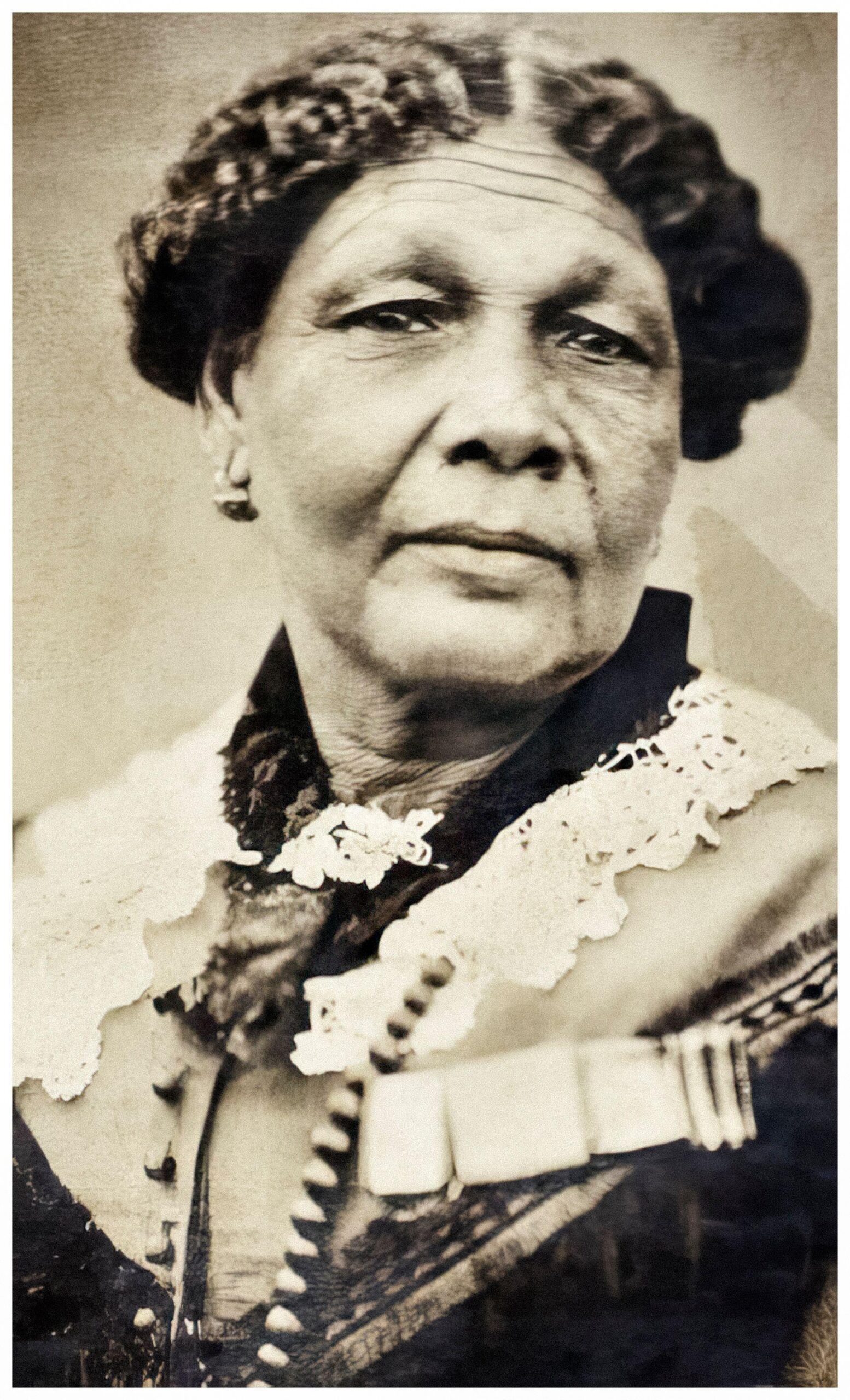
Mary Seacole’s story begins long before the Crimean War. By the time she reached the Crimea in 1855, she had travelled across the Atlantic, run businesses and cared for people during epidemics in Jamaica and Central America. Her experience came from households, boarding houses and the practical demands of earning a living. Following that longer life helps explain the woman who established the British Hotel near the fighting: a carer, trader and traveller with considerable confidence in her own judgement.1
Learning in Jamaica
Born Mary Jane Grant in Kingston in 1805, Seacole was the daughter of a Jamaican mother and a Scottish soldier. Her mother kept a boarding house and treated sick people, including military visitors. In her autobiography, Seacole described watching this work closely and learning from it. She called her mother a “doctress”, a term for a woman who practised healing. These skills belonged to a Jamaican setting in which caring for patients and accommodating travellers could happen under the same roof.12
Her account places curiosity and practice at the centre of this education. It also makes clear how much knowledge passed between women outside formal institutions. That matters when reading a life often presented only through its wartime episode. Seacole arrived in the Crimea with an established understanding of sickrooms, food, supplies and the work required to keep an enterprise running. The boarding house offered experience in all of them.1
Travel widened that experience. Seacole visited Britain when she was young and took West Indian preserves and pickles to sell in London. She also travelled to places including Cuba and Haiti. Commerce helped make movement possible, while journeys created new opportunities for trade. Marriage to Edwin Seacole in 1836 did not end that working life; after his death in 1844, she continued to support herself through business and care.13
Work across the Caribbean and Central America
In 1851, Seacole travelled to Cruces, in what is now Panama, where her brother had a hotel. The route through the region carried travellers heading towards California. She established a business there, serving a population in transit, and became involved in caring for people during a cholera outbreak. Her memoir describes the pressures of treating neighbours and strangers while running an establishment of her own.1
Seacole wrote confidently about the remedies she used, but her book records a practitioner’s experience rather than a clinical assessment of their effectiveness. It includes fear, exhaustion and deaths as well as recoveries. She also described falling ill herself. On returning to Jamaica, she worked during the yellow fever epidemic of 1853. These passages show a woman familiar with uncertainty and loss, whose willingness to care developed through repeated encounters with serious illness.1
Creating the British Hotel
When war brought British forces to the Crimea, Seacole travelled to London in 1854 and tried to obtain a place in the official nursing effort. Her applications were unsuccessful. In her memoir, she asked whether the colour of her skin had counted against her. That question belongs in her story: it tells us how she understood the experience. The surviving account does not establish the precise motives behind every refusal.1
Seacole then made her own arrangements. With her business partner Thomas Day, she opened the British Hotel near Balaclava in 1855. Its name can be misleading to a modern reader. It combined a shop and refreshment business with somewhere soldiers could obtain food, supplies and care. It was a private enterprise operating close to an army at war, rather than an official military hospital.2
In Seacole’s account, the work stretched beyond the premises. She described taking refreshments and medical supplies towards the battlefield, helping wounded men and preparing food for patients. Some customers paid; she also recalled assisting people who could not. Commercial exchange and personal generosity coexisted. The practical detail is revealing: obtaining ingredients, producing something a sick person could eat and maintaining stocks were central to the service she offered.1
The memoir gives particular weight to her relationships with soldiers and to the affection expressed in the name “Mother Seacole”. This was also how she chose to present her work to readers. She wanted recognition for her competence and for the risks she had taken. Reading her voice closely allows those ambitions to remain visible alongside her accounts of kindness.1
Writing after the war
Peace brought a business crisis. When the war ended in 1856, the British Hotel was left with stock it could no longer sell on the same terms and money still owed. Seacole and Day suffered heavy losses, and she was declared bankrupt later that year. Supporters organised assistance, including a military festival in London in 1857. Her public reputation brought help, although wartime popularity had not made her financially secure.3
In 1857 she published Wonderful Adventures of Mrs. Seacole in Many Lands, with a preface by the war correspondent William Howard Russell. The book brought her travels, work and financial difficulties into a single public account. London Museum holds an early copy. Its survival gives readers access to a Black Caribbean woman describing her own place in the Victorian world, with humour, strong opinions and a clear sense of what she had achieved.4
Autobiography involves selection. Seacole wrote for an audience whose goodwill mattered, and her recollections contain the racial language and imperial assumptions of her period. They reward attentive reading rather than simple hero worship. Her pride in serving British soldiers sits alongside accounts of prejudice; her generosity appears beside calculations about trade. Together, these details give the life its human scale.1
A changing place in public memory
An 1869 portrait by Albert Charles Challen, now in the National Portrait Gallery, records Seacole’s continuing public presence. She wears medals in the painting, but the Gallery notes that she received no official British honour. The image therefore needs careful interpretation: the medals cannot simply be treated as proof that the British state decorated her for her Crimean service.5
Her memoir returned to print in the 1980s, helping new generations encounter her words. Public commemoration also changed. On 30 June 2016, Floella Benjamin unveiled Martin Jennings’s statue of Seacole in the gardens of St Thomas’ Hospital, following a twelve-year campaign. The memorial marks a later decision to recognise her life; it should not be taken to mean she worked at that hospital.46
Behind the statue is a life that moved between places and occupations. Its fullest record remains a book in which Seacole explains how she worked, earned, travelled and cared. Beginning with those activities gives her a history of her own, grounded in Jamaican knowledge and the choices she made across a changing nineteenth-century world.1
Sources and further reading
1. Wonderful Adventures of Mrs. Seacole in Many Lands (1857) — Mary Seacole; original text hosted by Project Gutenberg.
2. Mary Seacole: The doctress of the Crimean War — London Museum.
3. Mary Seacole: Blue plaque — English Heritage.
4. Wonderful Adventures of Mrs Seacole in Many Lands: Collection object — London Museum.
5. Mary Seacole, by Albert Charles Challen: Extended catalogue entry — National Portrait Gallery.
6. Mary Seacole statue unveiled — Guy’s and St Thomas’ NHS Foundation Trust.
Image credit. William Simpson, sketch of Mary Seacole, circa 1855. Public domain, via Wikimedia Commons. View the image record.
