In December 1788, Francis Barber wrote to Thomas Percy about bills he could not pay. Illness had affected him, his wife and their eldest daughter, and Christmas was approaching—the time when tradespeople presented their accounts. Barber asked for £50 from the legacy left to him by Samuel Johnson. His letter brings into view a husband and father trying to keep a household going. 1
That family life is easily overshadowed by his famous employer. Barber had been Johnson’s servant and became his principal heir, but he was also a man who pursued other work, went to sea, continued his education and helped preserve the memories on which Johnson’s biographers relied. 1
From Jamaica to England
Barber was born into slavery in Jamaica around 1742, probably on the Orange River sugar estate in St Mary parish. His earliest known name was Quashey. The estate belonged to Colonel Richard Bathurst, who brought him to England around 1750 while disposing of his Jamaican property. The child had no recorded say in that move, and the reasons Bathurst selected him are unclear. 2
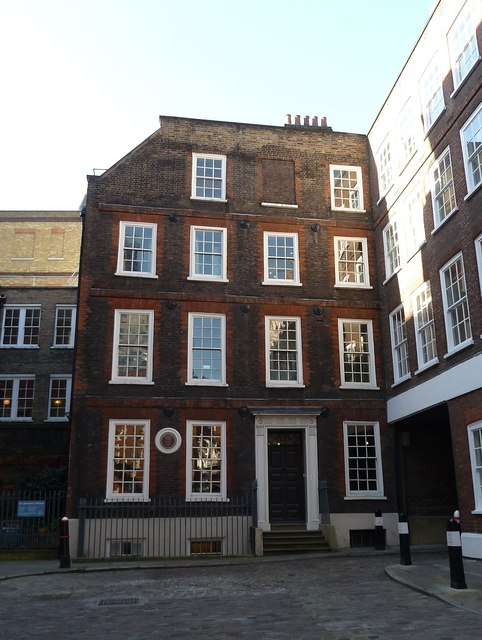
In Britain he acquired the name Francis Barber and spent some time at school in Yorkshire. Bathurst’s son, also Richard, was a physician and a friend of Samuel Johnson. Through that connection Barber joined Johnson’s London household in 1752, shortly after the death of Johnson’s wife Elizabeth, known as Tetty. Barber was still a child entering a house organised around an adult writer’s work and grief. 2
The elder Bathurst’s will, made in 1754, provided for Barber’s freedom and a payment of £12. This was the source of his formal manumission, or release from slavery. Johnson’s later care and financial provision should not be confused with that earlier act. 2
Choosing work beyond the household
Barber’s duties included errands and waiting at table. Johnson’s household also brought him into contact with the writers and artists who visited. At different times it included the poet Anna Williams and the medical practitioner Robert Levet. It was a busy and sometimes difficult shared home, with several adults depending on one another’s work. 3, 4
In 1756 Barber left to work for an apothecary in Cheapside. Two years later he joined the navy, serving during the Seven Years’ War. For part of his young adult life, he therefore pursued work beyond Johnson’s circle, among people practising different trades and living by the demands of commercial and naval employment. 3
Johnson disliked the idea of life at sea and used his connections to secure Barber’s discharge in 1760. James Boswell’s account corrects the suggestion that Barber had been forced into the navy. Boswell says he had joined voluntarily and reports Barber’s own statement that he had not wished to be discharged. The intervention could express Johnson’s attachment while also cutting across Barber’s preference. 5, 3
Education and the work of remembering
After returning to Johnson’s service, Barber continued his education at Bishop’s Stortford Grammar School. A letter Johnson sent him on 25 September 1770 survives at Harvard. Johnson promised continued support but expected evidence that Barber had used his time well. The exchange shows an adult education extending beyond the brief schooling he had received as a child. 6
A surviving sheet of handwriting practice, reproduced by Dr Johnson’s House, carries Barber’s name repeatedly across the page. Learning to write later enabled him to make requests, manage correspondence and participate in the affairs of his own family. His education had uses beyond helping an employer produce books. 3
Barber also supplied Boswell with knowledge of Johnson’s life before the two writers met. Boswell explicitly names him as a trusted source for the period following Tetty’s death. Through Barber’s recollections, readers encounter the people who visited Gough Square, Johnson’s circumstances and his efforts to assist friends. Familiarity with everyday life became evidence that a celebrated literary biography needed. 5
Elizabeth Ball and the inheritance
On 28 January 1773, Barber married Elizabeth Ball at St Dunstan’s in London. Michael Bundock’s research identifies the officiating vicar and the two witnesses. Elizabeth was a young white woman, and their marriage took place in a society where such relationships could attract hostility. She and Francis nevertheless established a family that became part of Johnson’s household. 7
Their children included two boys named Samuel, the second receiving the name after the first had died. In 1783 the whole family moved into Johnson’s home in Bolt Court. During his last years, the house accommodated parents and children alongside a network of friends and helpers, with Francis and Elizabeth’s family forming part of its daily life. 4
When Johnson died in December 1784, he made Barber the principal beneficiary of his estate, including provision for an annual income of £70. The inheritance was administered through trustees. It expressed an attachment built over decades, but it did not give the Barbers an unlimited supply of ready money. Francis’s later applications for funds arose within that arrangement. 5, 3
A family in Staffordshire
The Barbers moved to Lichfield in 1786. Two years later, his neighbours elected Francis as a dozener, a local official. He later settled in nearby Burntwood, where he became a schoolmaster. These activities placed him within the civic and educational life of Staffordshire, among people who knew him as a neighbour as well as through his association with Johnson. 8
Financial difficulty continued. Barber’s signed Poor Law examination of 1799 records details of his family and residence. It is evidence of an attempt to secure his household’s position, not proof that assistance was actually paid: the Birthplace Museum notes that no such payment is shown in the surviving record. 1
Francis Barber died at Stafford Infirmary on 13 January 1801. Elizabeth survived him and continued supporting the family; she and a daughter were involved in running a school. Their lives carried on beyond the famous inheritance and the literary circle through which Francis is usually remembered. 3
Barber’s place in British history comes into sharper focus when his choices are allowed to stand beside Johnson’s intentions. He joined a ship, studied, married, raised children and supplied information that became part of a major biography. The letters and recollections do not reveal everything about him, but they preserve the actions of a person whose own life deserves attention. 5, 8
Sources and further reading
1. Francis Barber in the Birthplace collection. Samuel Johnson Birthplace Museum / Lichfield City Council.
2. Francis Barber’s Lincolnshire connections. University of Lincoln, Reimagining Lincolnshire.
3. Francis Barber. Dr Johnson’s House Trust.
4. Dr Johnsons House, List Entry 1192738. Historic England.
5. Boswell’s Life of Johnson. Project Gutenberg; 1917 abridgement edited by Charles Grosvenor Osgood. Public-domain historical text.
6. Samuel Johnson: Letter to Frank Barber, 25 September 1770. Houghton Library, Harvard University.
7. ‘Nobody but Frank’, chapter 11 of The Fortunes of Francis Barber. Yale University Press / Yale Scholarship Online.
8. Francis Barber is celebrated in new City Plaque. Samuel Johnson Birthplace Museum / Lichfield City Council.
Featured image. 17 Gough Square, London, photographed in February 2015. Francis Barber joined Samuel Johnson’s household here in 1752. Photograph by Rob Farrow, 18 February 2015, via Geograph. Used unchanged under CC BY-SA 2.0. Image record · CC BY-SA 2.0